Leighton Philip A, Morales Jacqueline, Harriman William D, Ching Kathryn H
Ligand Pharmaceuticals, Emeryville, CA, United States.
Front Immunol. 2018 Jun 11;9:1317. doi: 10.3389/fimmu.2018.01317. eCollection 2018.
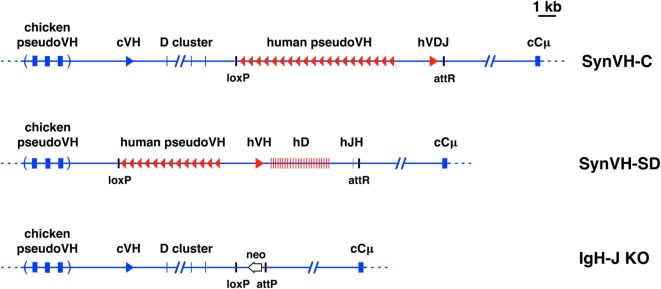
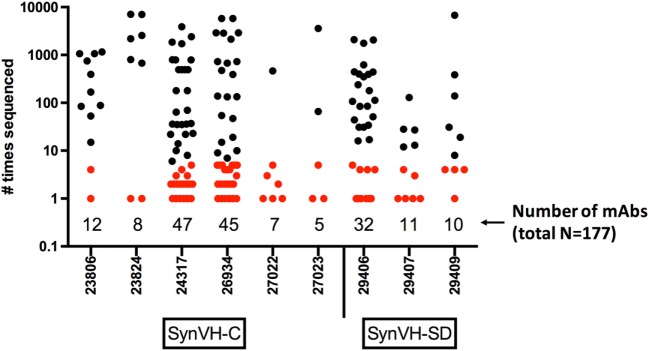
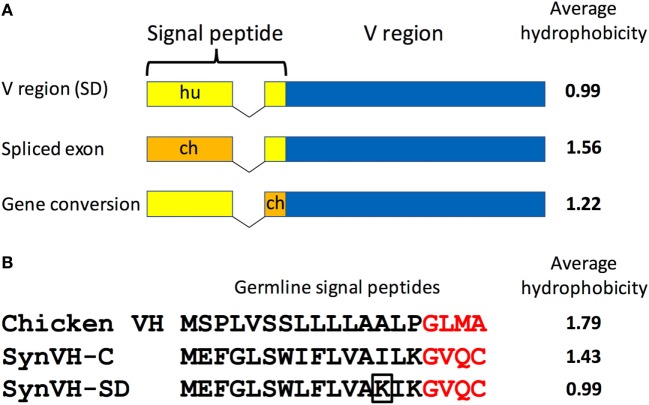
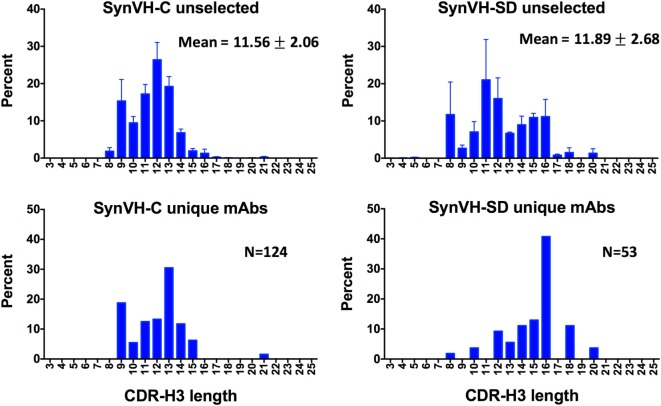
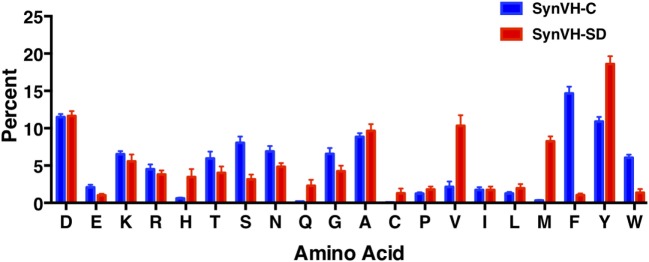
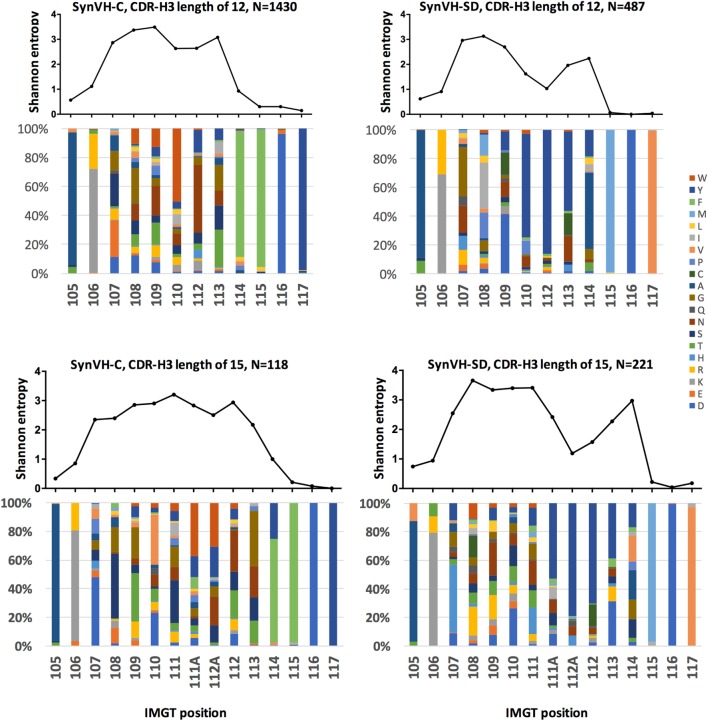
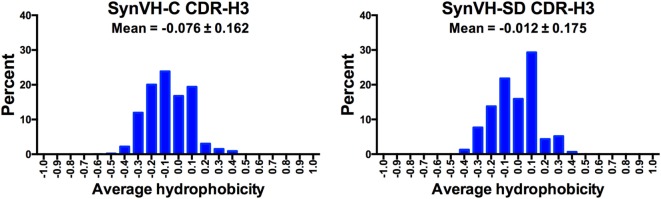
An important characteristic of chickens is that the antibody repertoire is based on a single framework, with diversity found mainly in the CDRs of the light and heavy chain variable regions. Despite this apparent limitation in the antibody repertoire, high-affinity antibodies can be raised to a wide variety of targets, including those that are highly conserved. Transgenic chickens have previously been generated that express a humanized antibody repertoire, with a single framework that incorporates diversity by the process of gene conversion, as in wild-type chickens. Here, we compare the sequences and antibodies that are generated purely by gene conversion/somatic hypermutation of a pre-rearranged heavy chain, with the diversity obtained by V(D)J rearrangement followed by gene conversion and somatic hypermutation. In a gene converting species, CDR-H3 lengths are more variable with V(D)J rearrangement, but similar levels of amino acid diversity are obtainable with gene conversion/somatic hypermutation alone.
鸡的一个重要特征是其抗体库基于单一框架,多样性主要存在于轻链和重链可变区的互补决定区(CDR)中。尽管抗体库存在这种明显的局限性,但仍可针对多种靶标产生高亲和力抗体,包括那些高度保守的靶标。此前已培育出转基因鸡,其表达人源化抗体库,具有与野生型鸡一样通过基因转换过程纳入多样性的单一框架。在这里,我们比较了由预重排重链的基因转换/体细胞超突变纯生产生的序列和抗体,以及通过V(D)J重排随后进行基因转换和体细胞超突变获得的多样性。在基因转换物种中,CDR-H3长度在V(D)J重排时更具变异性,但仅通过基因转换/体细胞超突变也可获得相似水平的氨基酸多样性。