Malota Zbigniew, Glowacki Jan, Sadowski Wojciech, Kostur Marcin
Biocybernetics Laboratory, Prof. Z. Religa Foundation of Cardiac Surgery Development, Wolnosci st. 345a, 41-800, Zabrze, Poland.
Department of Radiology, Silesian Medical University, 3-go Maja st. 13/15, 41-800, Zabrze, Poland.
BMC Cardiovasc Disord. 2018 Jun 28;18(1):132. doi: 10.1186/s12872-018-0865-6.
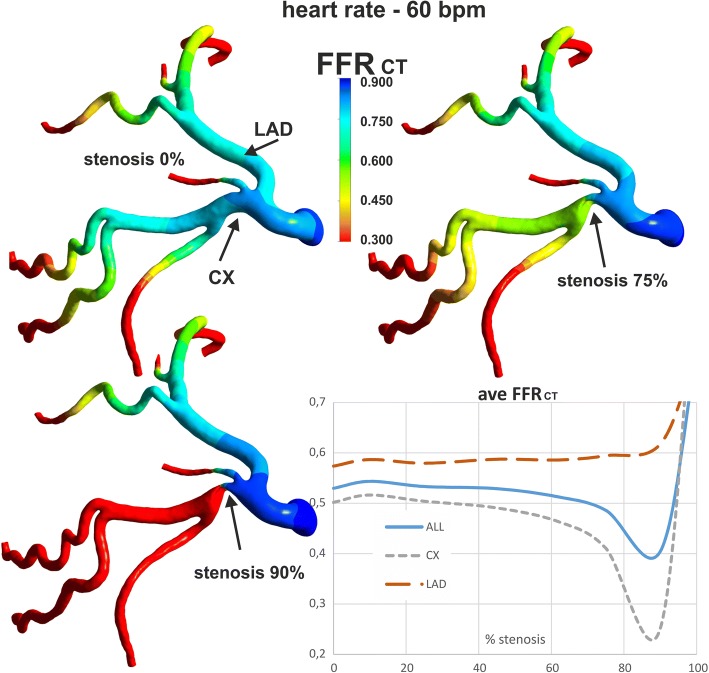
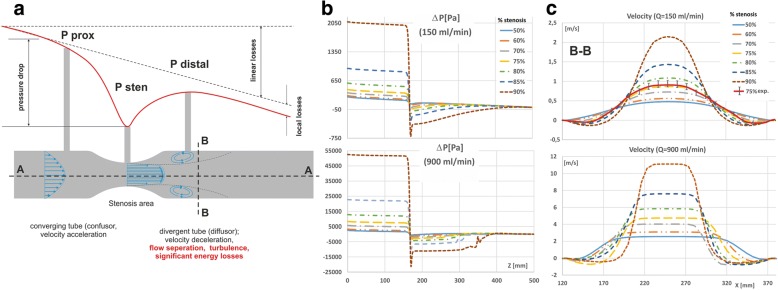
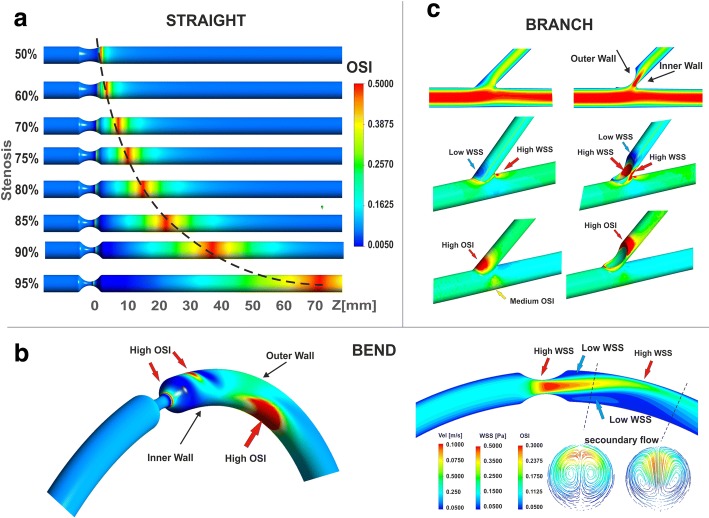
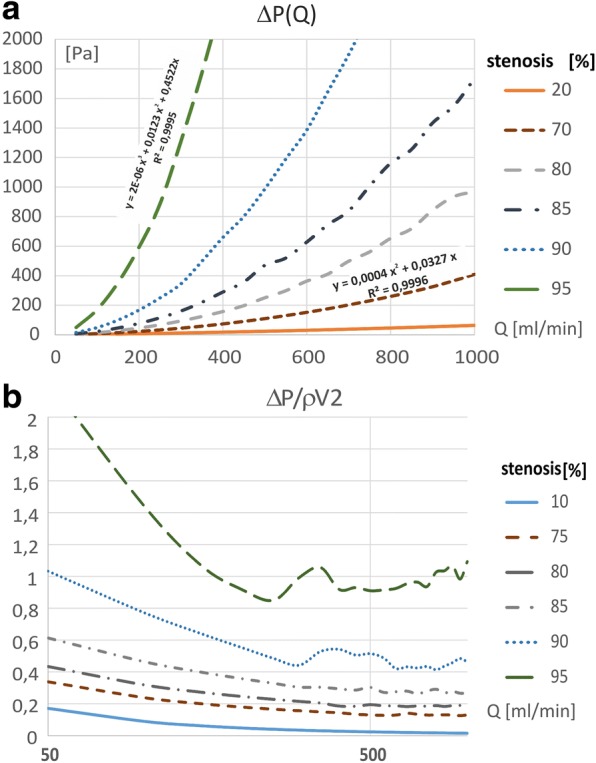
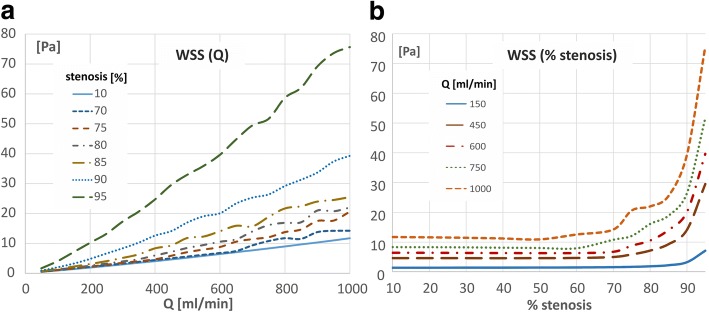
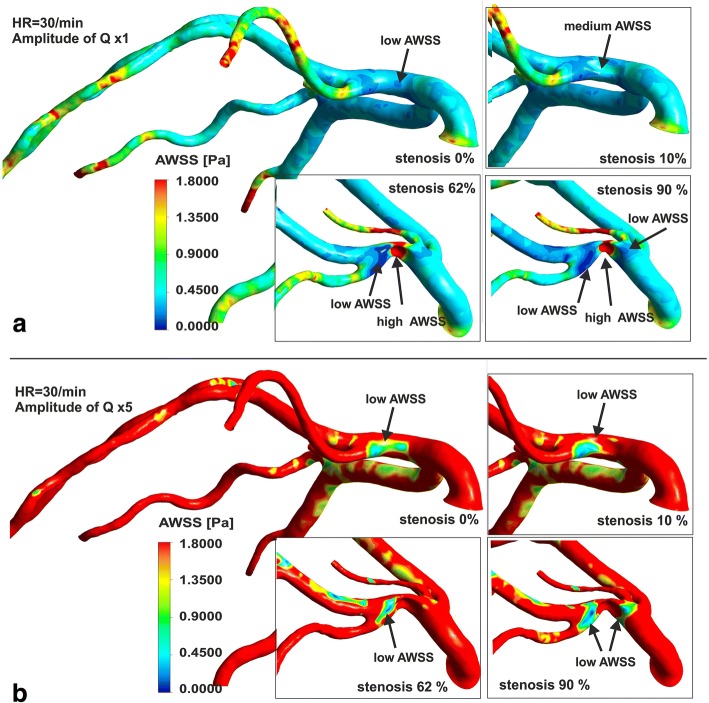
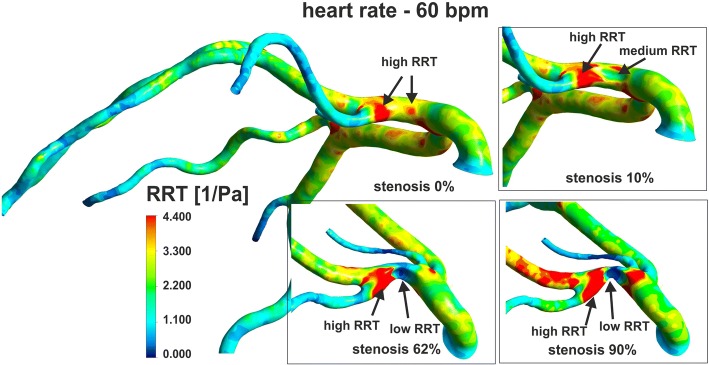
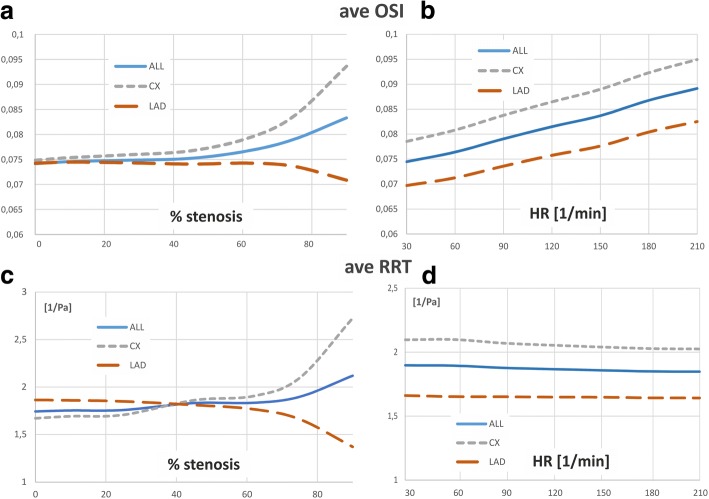
The stenosis of the coronary arteries is usually caused by atherosclerosis. Hemodynamic significance of patient-specific coronary stenoses and the risk of its progression may be assessed by comparing the hemodynamic effects induced by flow disorders. The present study shows how stenosis degree and variable flow conditions in coronary artery affect the oscillating shear index, residence time index, pressure drop coefficient and fractional flow reserve. We assume that changes in the hemodynamic indices in relation to variable flow conditions and geometries evaluated using the computational fluid dynamics may be an additional factor for a non-invasive assessment of the coronary stenosis detected on multi-slice computed tomography.
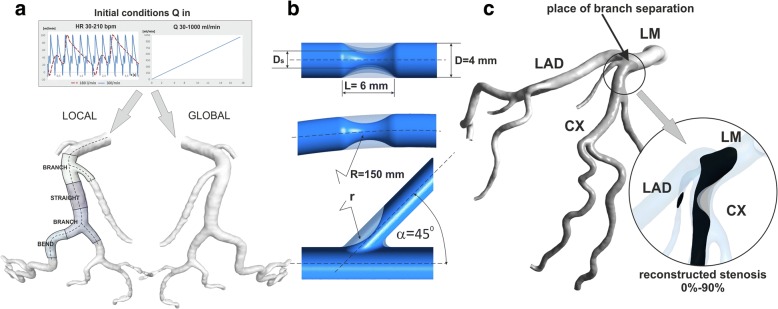
The local-parametrised models of basic shapes of the vessels, such as straight section, bend, and bifurcation as well as the global-patient-specific models of left coronary artery were used for numerical simulation of flow in virtually reconstructed stenotic vessels. Calculations were carried out for vessels both without stenosis, and vessels of 10 to 95% stenosis. The flow rate varied within the range of 20 to 1000 ml/min, and heart rate frequency within the range of 30 to 210 cycles/min. The computational fluid dynamics based on the finite elements method verified by the experimental measurements of the velocity profiles was used to analyse blood flow in the coronary arteries.
The results confirm our preliminary assumptions. There is significant variation in the coronary hemodynamic indices value caused by disturbed flow through stenosis in relation to variable flow conditions and geometry of vessels.
Variations of selected hemodynamic indexes induced by change of flow rate, heart rate and vessel geometry, obtained during a non-invasive study, may assist in evaluating the risk of stenosis progression and in carrying out the assessment of the hemodynamic significance of coronary stenosis. However, for a more accurate assessment of the variability of indices and coronary stenosis severity both local (near the narrowing) and global (in side branches) studies should be used.
冠状动脉狭窄通常由动脉粥样硬化引起。通过比较血流紊乱所诱导的血流动力学效应,可评估特定患者冠状动脉狭窄的血流动力学意义及其进展风险。本研究展示了冠状动脉狭窄程度和血流条件变化如何影响振荡剪切指数、停留时间指数、压降系数和血流储备分数。我们假设,利用计算流体动力学评估的血流动力学指数相对于血流条件和血管几何形状的变化,可能是对多层计算机断层扫描检测到的冠状动脉狭窄进行无创评估的一个额外因素。
使用血管基本形状(如直管段、弯曲段和分叉处)的局部参数化模型以及左冠状动脉的整体患者特异性模型,对虚拟重建的狭窄血管中的血流进行数值模拟。对无狭窄血管以及狭窄程度为10%至95%的血管进行计算。流速在20至1000毫升/分钟范围内变化,心率频率在30至210次/分钟范围内变化。基于有限元方法并经速度剖面实验测量验证的计算流体动力学,用于分析冠状动脉中的血流。
结果证实了我们的初步假设。与血流条件和血管几何形状变化相关的、通过狭窄处的紊乱血流导致冠状动脉血流动力学指数值存在显著差异。
在无创研究中获得的、由流速、心率和血管几何形状变化所诱导的选定血流动力学指标的变化,可能有助于评估狭窄进展风险以及对冠状动脉狭窄的血流动力学意义进行评估。然而,为了更准确地评估指标变异性和冠状动脉狭窄严重程度,应同时采用局部(狭窄附近)和整体(侧支内)研究。