Department of Medicine, Division of Hematology/Oncology, University of Pittsburgh School of Medicine and Cancer Institute, PA, USA.
Division of Hematology/Oncology, College of Physicians and Surgeons, Columbia University, New York, NY, USA.
Haematologica. 2018 Oct;103(10):1688-1697. doi: 10.3324/haematol.2018.188227. Epub 2018 Jun 28.
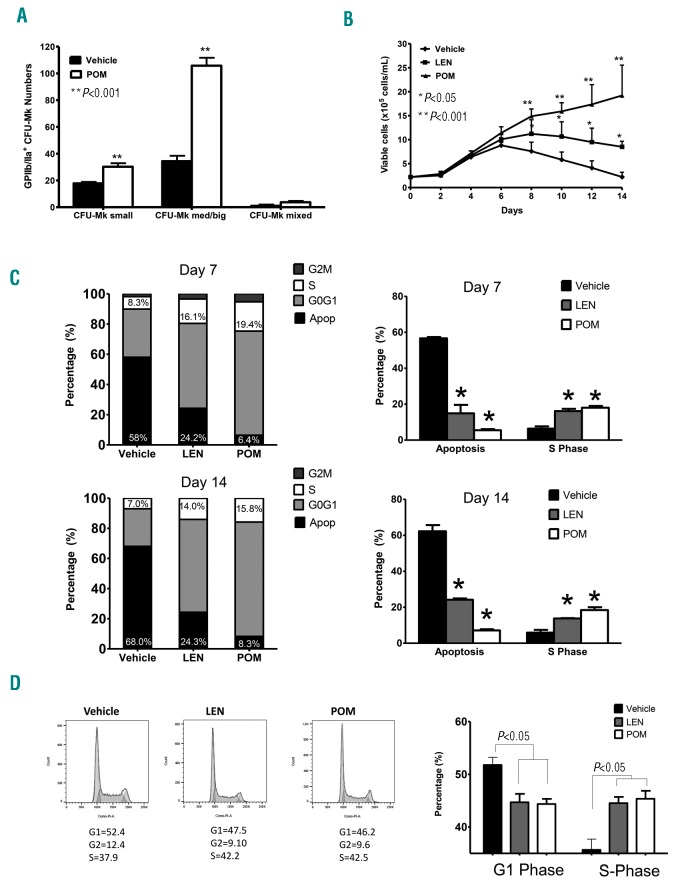
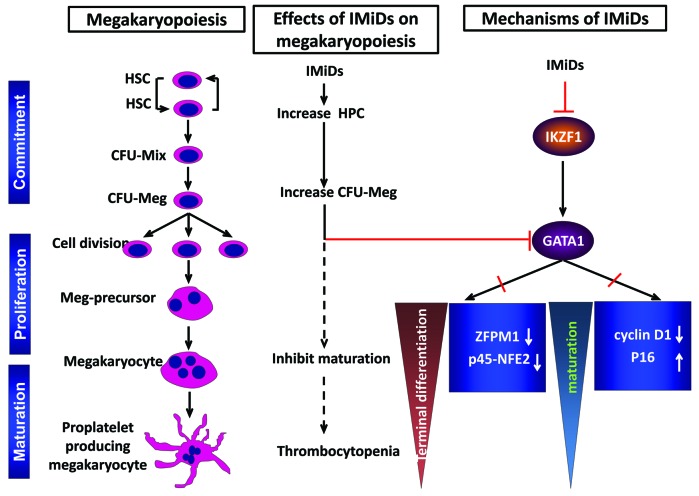
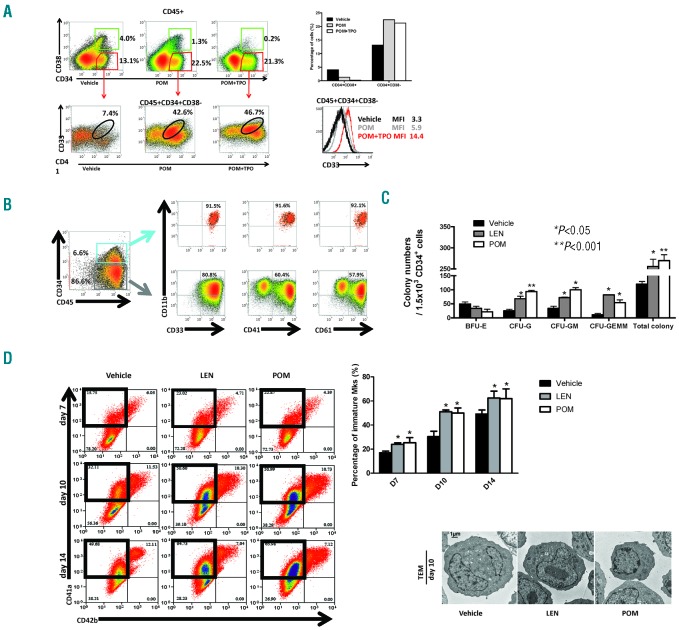
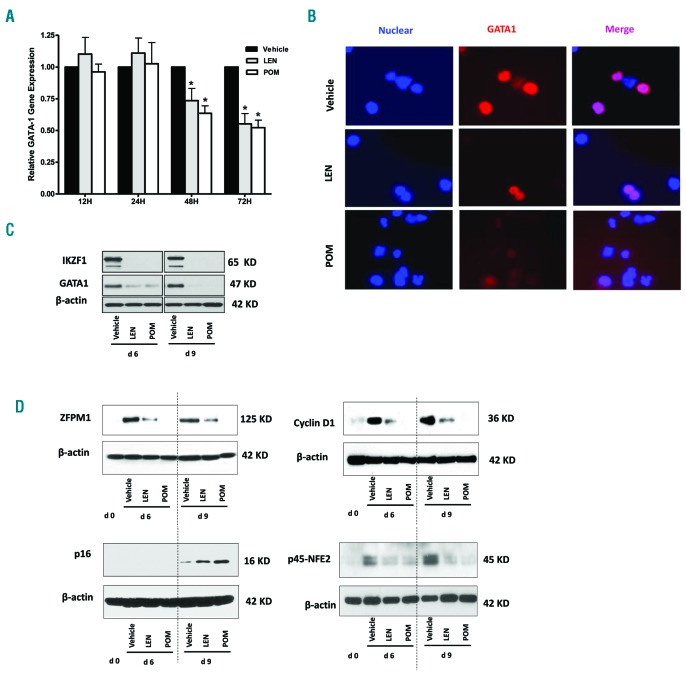
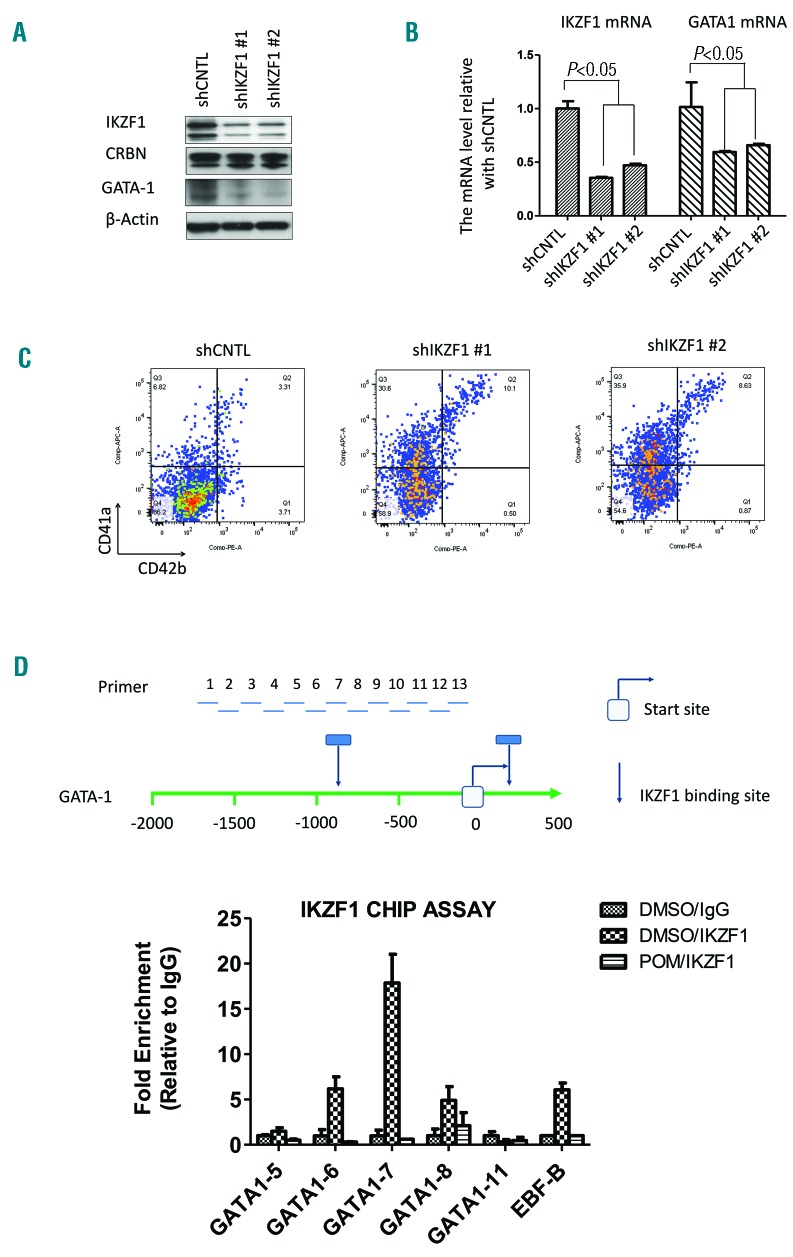
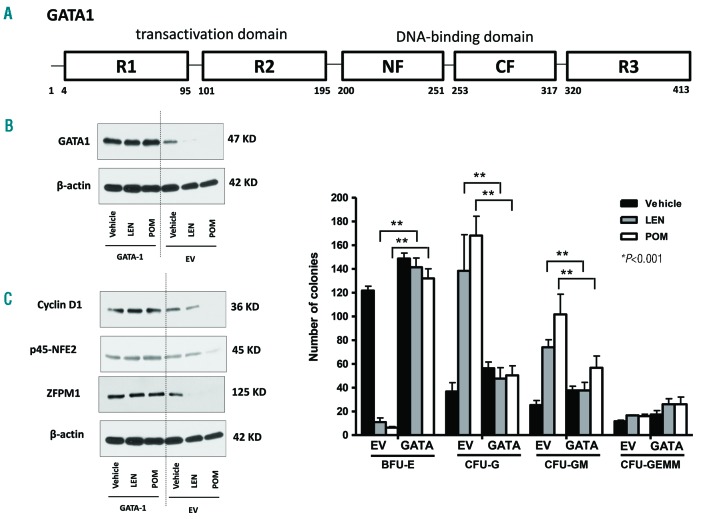
The immunomodulatory drugs, lenalidomide and pomalidomide yield high response rates in multiple myeloma patients, but are associated with a high rate of thrombocytopenia and increased risk of secondary hematologic malignancies. Here, we demonstrate that the immunomodulatory drugs induce self-renewal of hematopoietic progenitors and upregulate megakaryocytic colonies by inhibiting apoptosis and increasing proliferation of early megakaryocytic progenitors via down-regulation of IKZF1. In this process, the immunomodulatory drugs degrade IKZF1 and subsequently down-regulate its binding partner, GATA1. This results in the decrease of GATA1 targets such as ZFPM1 and NFE2, leading to expansion of megakaryocytic progenitors with concomitant inhibition of maturation of megakaryocytes. The down-regulation of GATA1 further decreases CCND1 and increases CDKN2A expression. Overexpression of GATA1 abrogated the effects of the immunomodulatory drugs and restored maturation of megakaryocytic progenitors. Our data not only provide the mechanism for the immunomodulatory drugs induced thrombocytopenia but also help to explain the higher risk of secondary malignancies and long-term cytopenia induced by enhanced cell cycling and subsequent exhaustion of the stem cell pool.
免疫调节药物来那度胺和泊马度胺在多发性骨髓瘤患者中产生了很高的反应率,但与血小板减少症的高发生率和继发性血液恶性肿瘤的风险增加有关。在这里,我们证明免疫调节药物通过抑制凋亡和增加早期巨核细胞祖细胞的增殖来诱导造血祖细胞的自我更新,并上调巨核细胞集落。在这个过程中,免疫调节药物降解 IKZF1,随后下调其结合伙伴 GATA1。这导致 GATA1 靶标如 ZFPM1 和 NFE2 的减少,导致巨核细胞祖细胞的扩增,同时抑制巨核细胞的成熟。GATA1 的下调进一步降低了 CCND1 并增加了 CDKN2A 的表达。GATA1 的过表达消除了免疫调节药物的作用,并恢复了巨核细胞祖细胞的成熟。我们的数据不仅为免疫调节药物引起的血小板减少症提供了机制,也有助于解释增强细胞循环和随后干细胞库枯竭所导致的继发性恶性肿瘤和长期细胞减少症的高风险。