National Key Laboratory of Crop Genetic Improvement, Center of Integrative Biology, College of Life Science and Technology, Huazhong Agricultural University, Wuhan, China.
Department of Genetics, School of Life Sciences, Fudan University, Shanghai, China.
Nat Commun. 2018 Jun 28;9(1):2523. doi: 10.1038/s41467-018-04952-9.
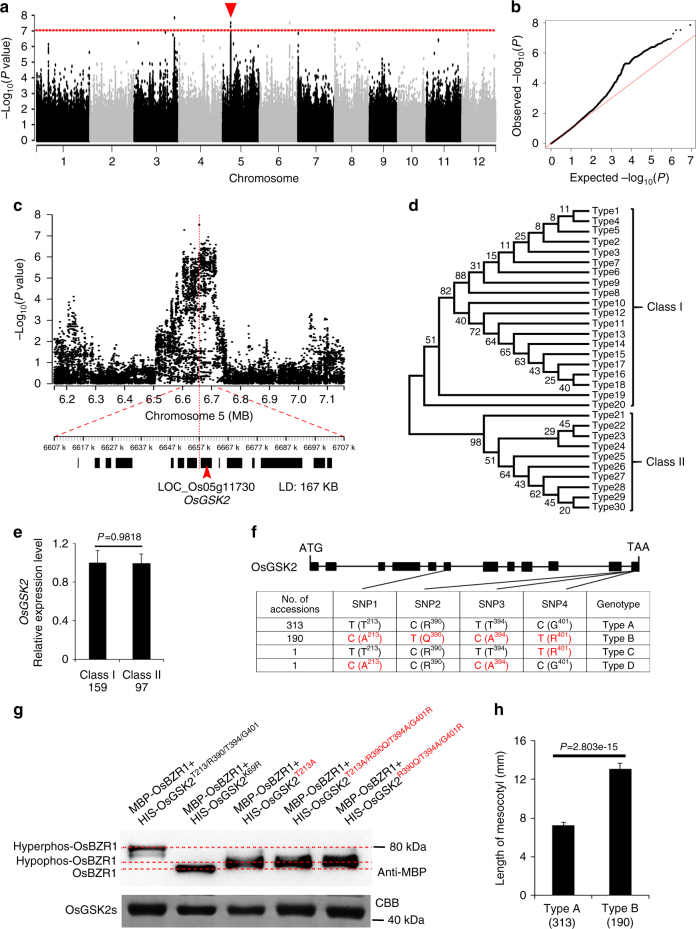
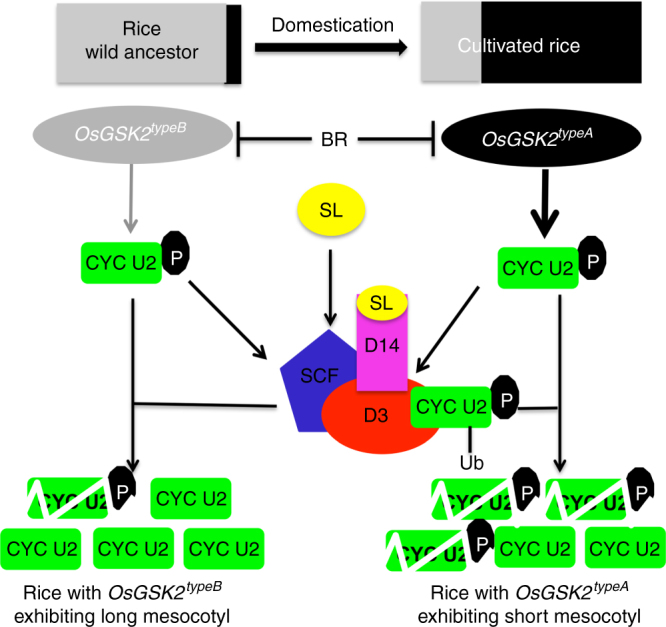
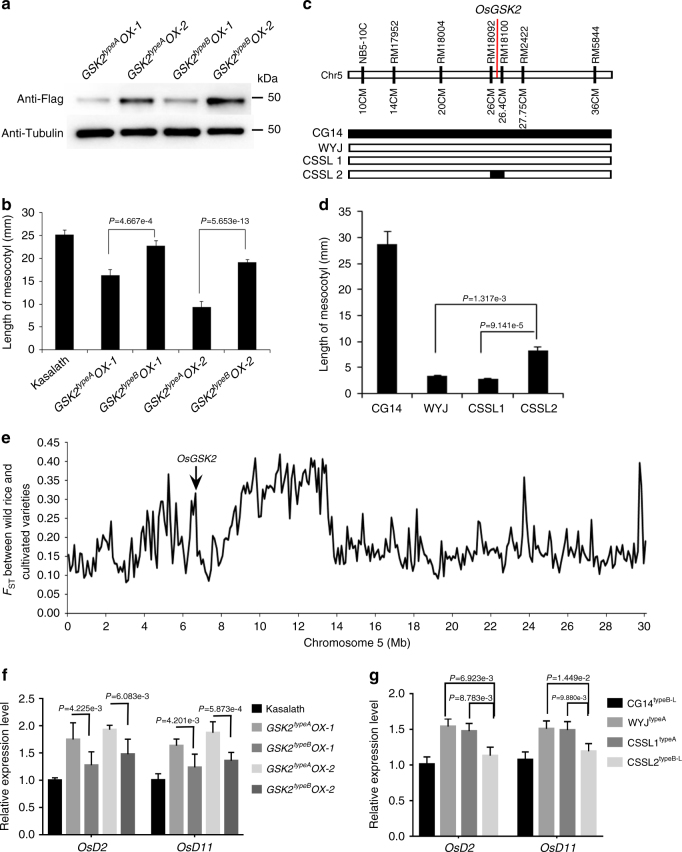
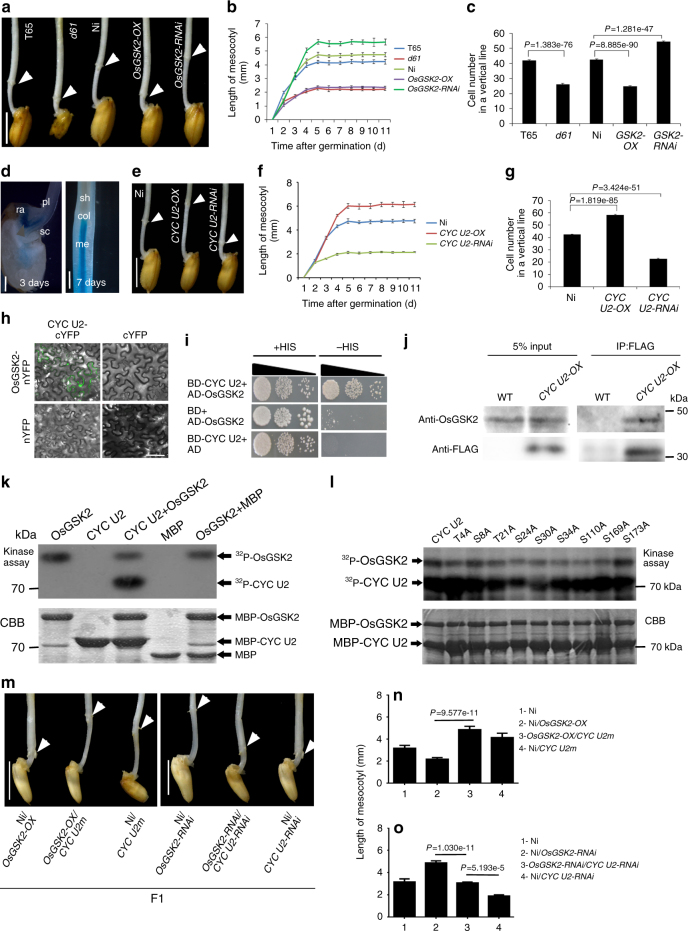
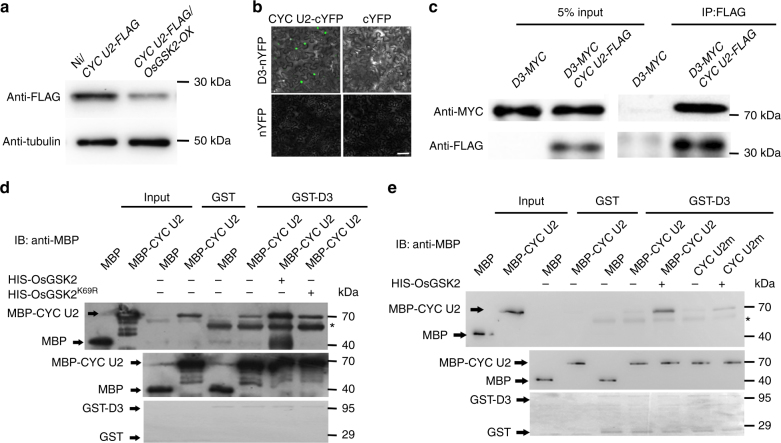
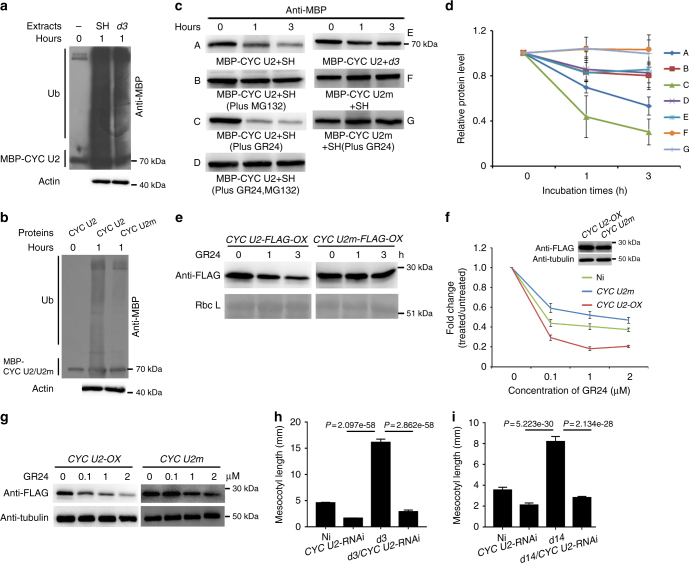
Mesocotyl is the crucial organ for pushing buds out of deep water or soil after germination in monocots. Deep direct seeding or mechanized dry seeding cultivation practice requires rice cultivars having long mesocotyl. However, the mechanisms of mesocotyl elongation and domestication remain unknown. Here, our genome-wide association study (GWAS) reveals that natural variations of OsGSK2, a conserved GSK3-like kinase involved in brassinosteroid signaling, determine rice mesocotyl length variation. Variations in the coding region of OsGSK2 alter its kinase activity. It is selected for mesocotyl length variation during domestication. Molecular analyses show that brassinosteroid-promoted mesocotyl elongation functions by suppressing the phosphorylation of an U-type cyclin, CYC U2, by OsGSK2. Importantly, the F-box protein D3, a major positive component in strigolactone signaling, can degrade the OsGSK2-phosphorylated CYC U2 to inhibit mesocotyl elongation. Together, these results suggest that OsGSK2 is selected to regulate mesocotyl length by coordinating strigolactone and brassinosteroid signaling during domestication.
中胚轴是单子叶植物在萌发后将芽推出深水或土壤的关键器官。深直播或机械化干播栽培实践需要中胚轴较长的水稻品种。然而,中胚轴伸长和驯化的机制尚不清楚。在这里,我们的全基因组关联研究(GWAS)揭示了参与油菜素内酯信号转导的保守 GSK3 样激酶 OsGSK2 的自然变异决定了水稻中胚轴长度的变异。OsGSK2 编码区的变异改变了其激酶活性。它在驯化过程中被选择用于中胚轴长度的变异。分子分析表明,油菜素内酯促进的中胚轴伸长通过抑制 U 型细胞周期蛋白 CYC U2 的磷酸化来发挥作用,而 OsGSK2 则起到了抑制作用。重要的是,F-box 蛋白 D3 是独脚金内酯信号中的一个主要正调控因子,它可以降解 OsGSK2 磷酸化的 CYC U2 来抑制中胚轴伸长。总之,这些结果表明,OsGSK2 是通过在驯化过程中协调独脚金内酯和油菜素内酯信号来被选择来调节中胚轴长度的。