School of Environmental Studies, University of Victoria, Victoria, BC, Canada.
Department of Zoology, University of British Columbia, Vancouver, BC, Canada.
Sci Rep. 2018 Jun 28;8(1):9800. doi: 10.1038/s41598-018-28012-w.
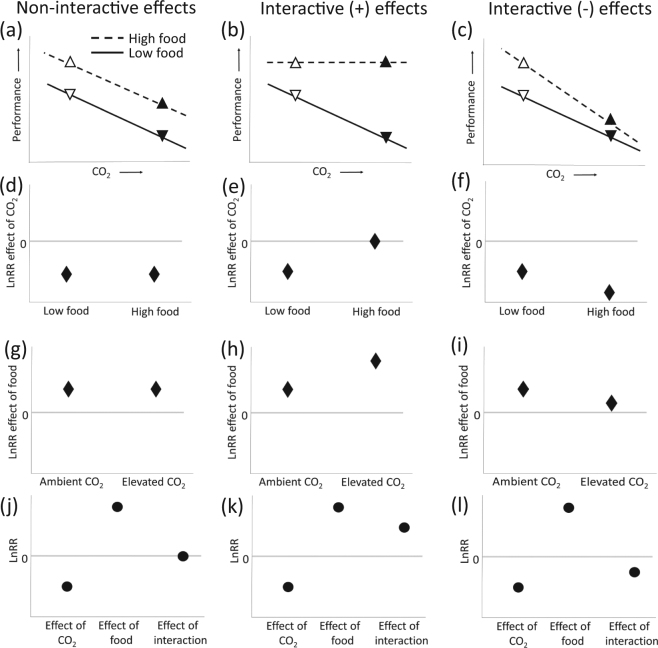
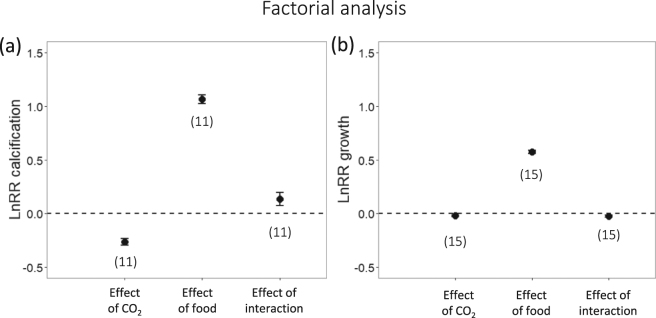
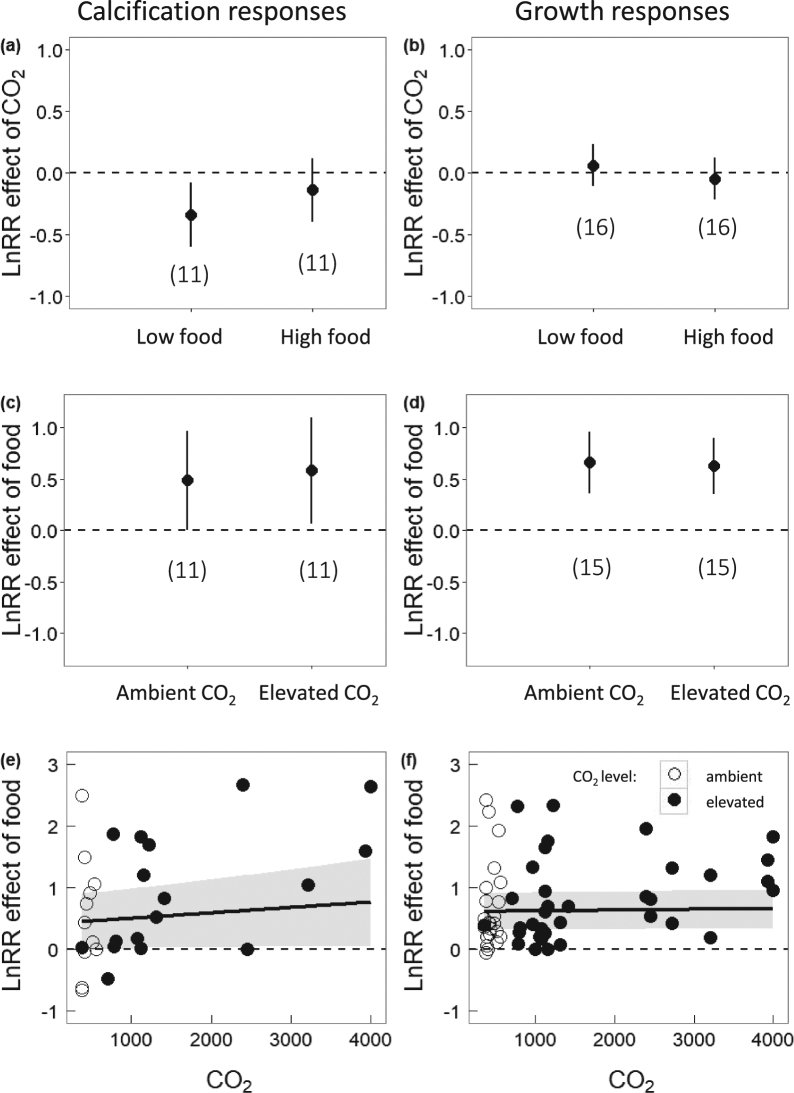
Because many of the negative effects of ocean acidification on marine life may result from underlying energetic short-falls associated with increased metabolic demands, several studies have hypothesized that negative responses to high CO could be reduced by energy input. Although this hypothesis was supported by a recent meta-analysis, we believe that the meta-analytic calculation used was not appropriate to test the stated hypothesis. Here, we first clarify the hypothesis put forward, the crux being that the effects of increased food supply and CO interact statistically. We then test this hypothesis by examining the available data in a more appropriate analytical framework. Using factorial meta-analysis, we confirm that food addition has a positive effect and CO has a negative effect on both growth and calcification. For calcification, food addition did indeed reduce CO impacts. Surprisingly, however, we found that food addition actually exacerbated the effects of acidification on growth, perhaps due to increased scope upon which CO effects can act in food-replete situations. These interactive effects were undetectable using a multilevel meta-analytic approach. Ongoing changes in food supply and carbonate chemistry, coupled with under-described, poorly understood, and potentially surprising interactive outcomes for these two variables, suggest that the role of food should remain a priority in ocean acidification research.Arising from: L. Ramajo et al., Sci. Rep. 6: 19374 (2016).
由于海洋酸化对海洋生物的许多负面影响可能源于与代谢需求增加相关的潜在能量不足,因此一些研究假设通过能量输入可以减少对高 CO 的负面反应。尽管最近的一项荟萃分析支持了这一假设,但我们认为所使用的荟萃分析计算方法不适合检验所提出的假设。在这里,我们首先澄清所提出的假设,关键是增加的食物供应和 CO 的影响在统计学上相互作用。然后,我们通过在更合适的分析框架中检查现有数据来检验这一假设。使用析因荟萃分析,我们确认食物添加有积极的影响,而 CO 对生长和钙化都有负面影响。对于钙化,食物添加确实减少了 CO 的影响。然而,令人惊讶的是,我们发现食物添加实际上加剧了酸化对生长的影响,这可能是由于在食物充足的情况下 CO 作用的范围增加了。使用多层次荟萃分析方法无法检测到这些交互作用。由于食物供应和碳酸盐化学的持续变化,以及对这两个变量的描述不足、理解不佳且可能令人惊讶的交互作用结果,食物的作用在海洋酸化研究中应仍然是一个优先事项。原始研究:L. Ramajo 等人,Sci. Rep. 6: 19374 (2016)。