Center of Reproductive Biotechnology - Scientific and Technological Bioresource Nucleus (CEBIOR - BIOREN), University of La Frontera, Temuco 4811230, Chile.
Center of Excellence in Translational Medicine, University of La Frontera, Temuco 4810296, Chile.
Asian J Androl. 2018 Nov-Dec;20(6):600-607. doi: 10.4103/aja.aja_29_18.
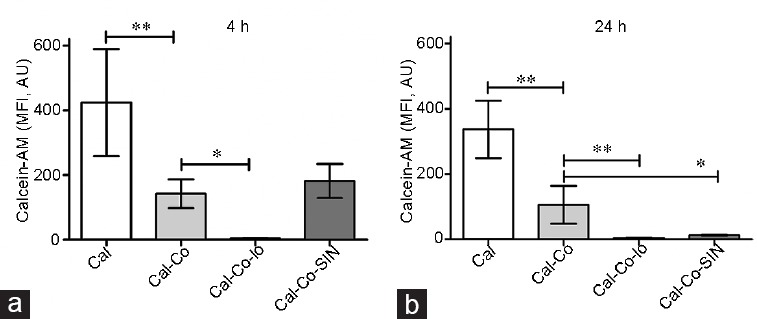
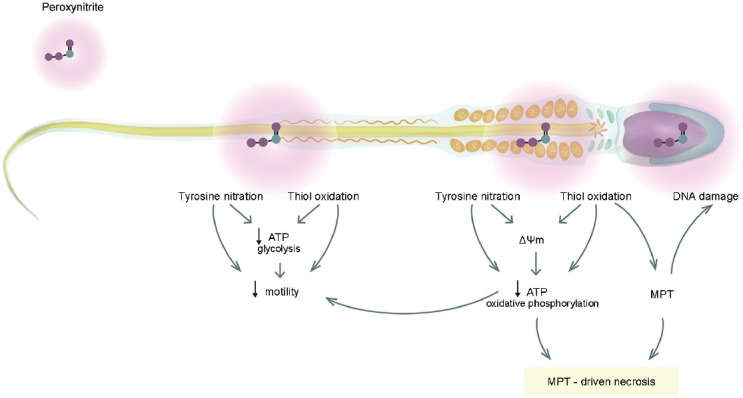
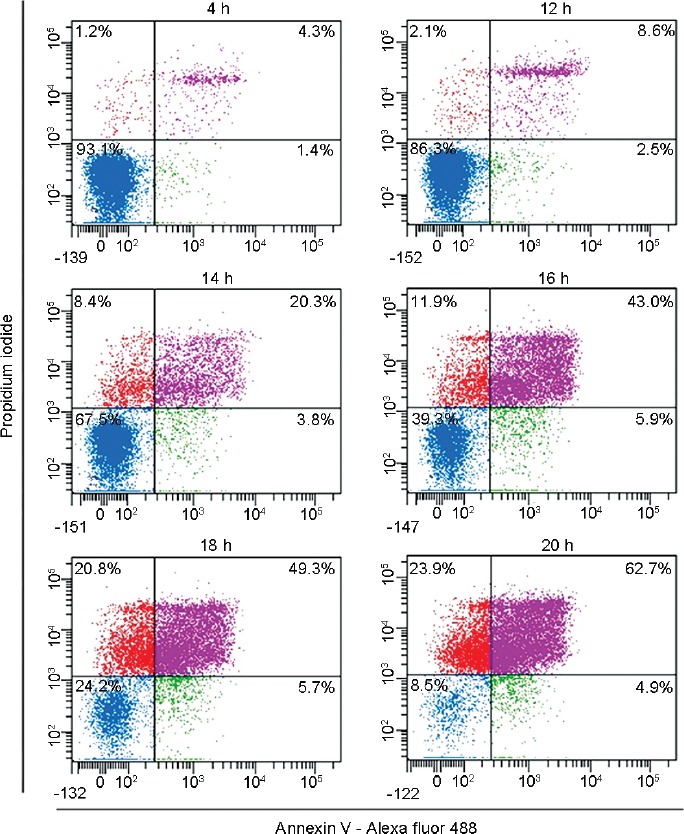
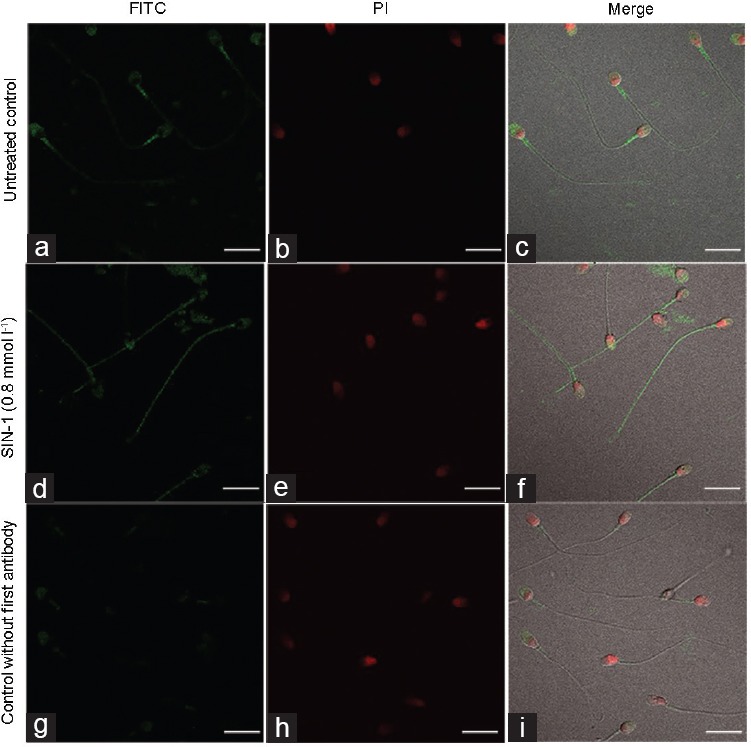
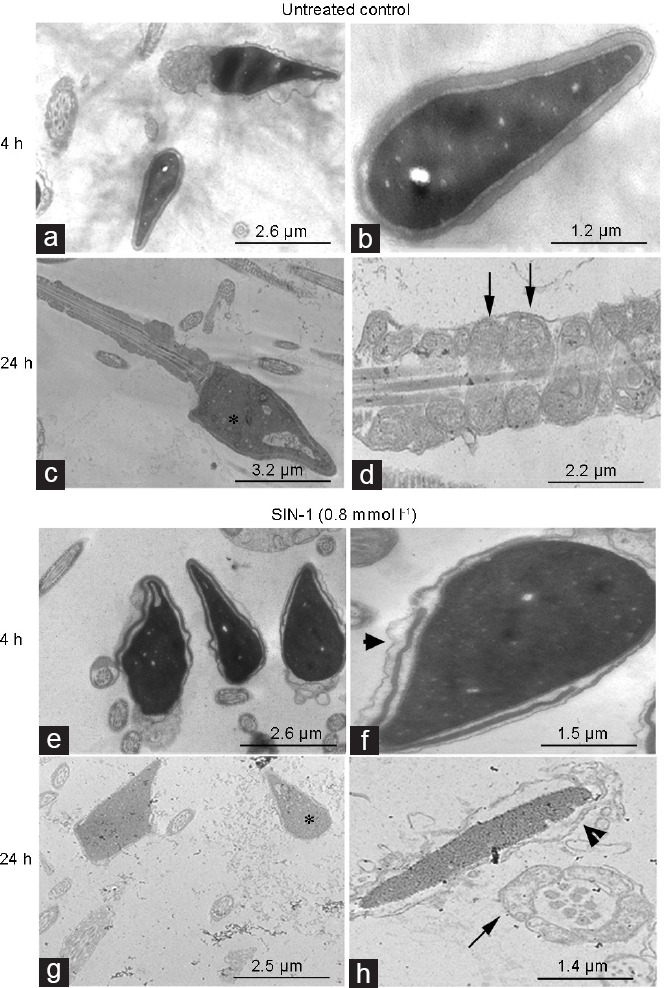
Peroxynitrite is a highly reactive nitrogen species and a potent inducer of apoptosis and necrosis in somatic cells. Peroxynitrite-induced nitrosative stress has emerged as a major cause of impaired sperm function; however, its ability to trigger cell death has not been described in human spermatozoa. The objective here was to characterize biochemical and morphological features of cell death induced by peroxynitrite-mediated nitrosative stress in human spermatozoa. For this, spermatozoa were incubated with and without (untreated control) 3-morpholinosydnonimine (SIN-1), in order to generate peroxynitrite. Sperm viability, mitochondrial permeability transition (MPT), externalization of phosphatidylserine, DNA oxidation and fragmentation, caspase activation, tyrosine nitration, and sperm ultrastructure were analyzed. The results showed that at 24 h of incubation with SIN-1, the sperm viability was significantly reduced compared to untreated control (P < 0.001). Furthermore, the MPT was induced (P < 0.01) and increment in DNA oxidation (P < 0.01), DNA fragmentation (P < 0.01), tyrosine nitration (P < 0.0001) and ultrastructural damage were observed when compared to untreated control. Caspase activation was not evidenced, and although phosphatidylserine externalization increased compared to untreated control (P < 0.001), this process was observed in <10% of the cells and the gradual loss of viability was not characterized by an important increase in this parameter. In conclusion, peroxynitrite-mediated nitrosative stress induces the regulated variant of cell death known as MPT-driven necrosis in human spermatozoa. This study provides a new insight into the pathophysiology of nitrosative stress in human spermatozoa and opens up a new focus for developing specific therapeutic strategies to better preserve sperm viability or to avoid cell death.
过氧亚硝酸盐是一种高反应性氮物种,是体细胞凋亡和坏死的有效诱导剂。过氧亚硝酸盐诱导的硝化应激已成为精子功能受损的主要原因;然而,其在人精子中引发细胞死亡的能力尚未被描述。本研究的目的是描述过氧亚硝酸盐介导的硝化应激诱导的人精子细胞死亡的生化和形态特征。为此,精子与 3-吗啉代-sydnonimine(SIN-1)孵育或不孵育(未处理对照),以产生过氧亚硝酸盐。分析精子活力、线粒体通透性转换(MPT)、磷脂酰丝氨酸外化、DNA 氧化和片段化、半胱氨酸天冬氨酸蛋白酶激活、酪氨酸硝化和精子超微结构。结果显示,与未处理对照相比,孵育 24 小时后,SIN-1 处理组的精子活力明显降低(P<0.001)。此外,与未处理对照相比,MPT 被诱导(P<0.01),DNA 氧化(P<0.01)、DNA 片段化(P<0.01)、酪氨酸硝化(P<0.0001)和超微结构损伤增加。未检测到半胱氨酸天冬氨酸蛋白酶激活,尽管与未处理对照相比,磷脂酰丝氨酸外化增加(P<0.001),但该过程仅在<10%的细胞中观察到,并且活力逐渐丧失并未通过该参数的重要增加来表征。总之,过氧亚硝酸盐介导的硝化应激诱导了人精子中已知的调控型细胞死亡变体,即 MPT 驱动的坏死。这项研究为人类精子硝化应激的病理生理学提供了新的见解,并为开发特定的治疗策略以更好地保留精子活力或避免细胞死亡开辟了新的焦点。