Huygens-Kamerlingh Onnes Laboratory , Leiden University , Niels Bohrweg 2 , 2333 CA Leiden , The Netherlands.
Nano Lett. 2018 Aug 8;18(8):5217-5223. doi: 10.1021/acs.nanolett.8b02176. Epub 2018 Jul 9.
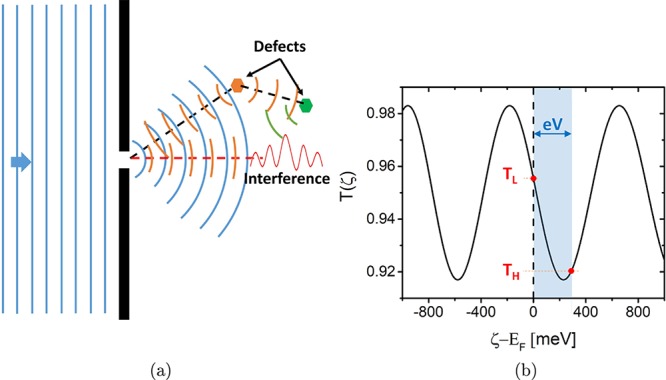
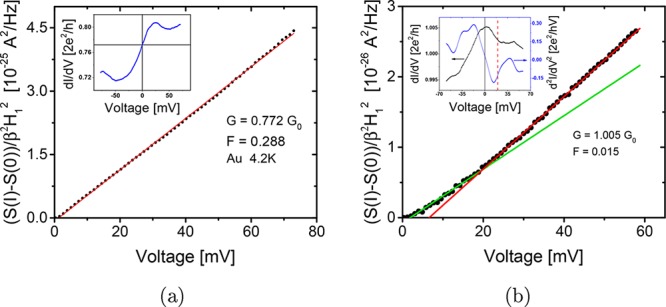
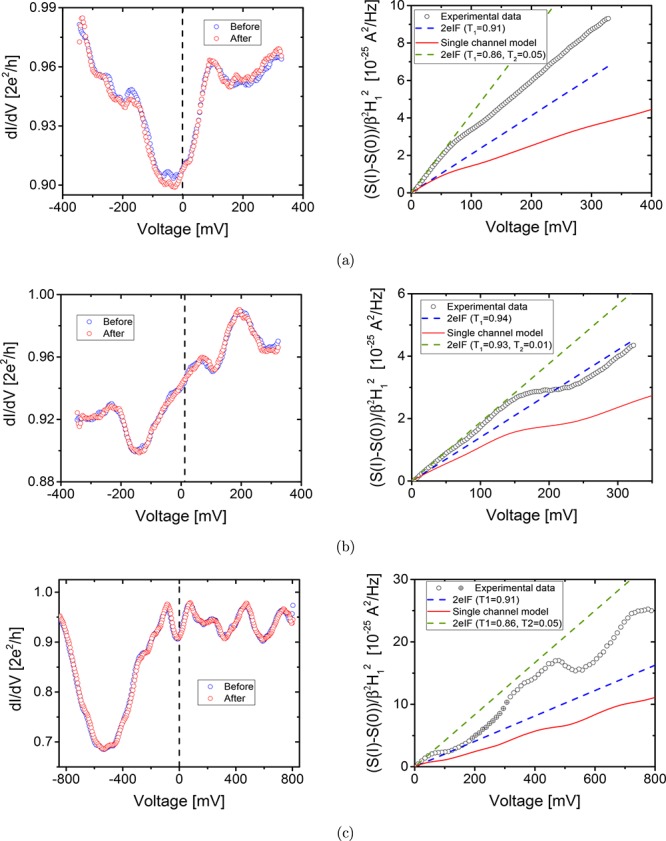
Since the work of Walter Schottky, it is known that the shot-noise power for a completely uncorrelated set of electrons increases linearly with the time-averaged current. At zero temperature and in the absence of inelastic scattering, the linearity relation between noise power and average current is quite robust, in many cases even for correlated electrons. Through high-bias shot-noise measurements on single Au atom point contacts, we find that the noise power in the high-bias regime shows highly nonlinear behavior even leading to a decrease in shot noise with voltage. We explain this nonlinearity using a model based on quantum interference of electron waves with varying path difference due to scattering from randomly distributed defect sites in the leads, which makes the transmission probability for these electrons both energy and voltage dependent.
自沃尔特·肖特基的工作以来,人们已经知道,对于一组完全不相关的电子,散粒噪声功率随时间平均电流线性增加。在零温度和不存在非弹性散射的情况下,噪声功率与平均电流之间的线性关系相当稳健,在许多情况下,即使对于相关电子也是如此。通过对单个 Au 原子点接触的高偏压散粒噪声测量,我们发现高偏压下的噪声功率表现出高度的非线性行为,甚至导致噪声随电压降低。我们使用基于电子波由于来自引线中随机分布的缺陷位置的散射而导致的路径差变化的量子干涉的模型来解释这种非线性,这使得这些电子的传输概率既依赖于能量又依赖于电压。