Department of Clinical Sciences of Companion Animals, Faculty of Veterinary Medicine, Utrecht University, Utrecht, The Netherlands.
Hubrecht Institute-KNAW and University Medical Centre Utrecht, Utrecht, The Netherlands.
Biotechnol Bioeng. 2018 Nov;115(11):2807-2816. doi: 10.1002/bit.26784. Epub 2018 Sep 17.
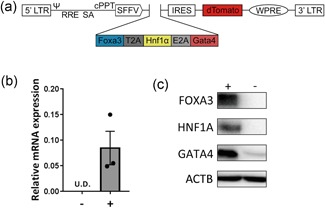
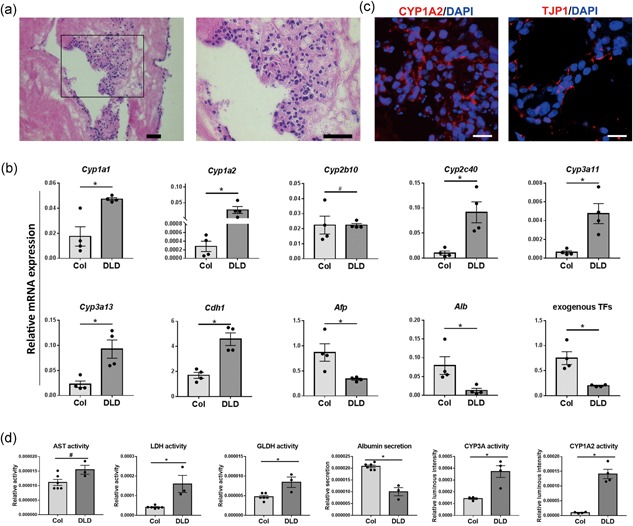
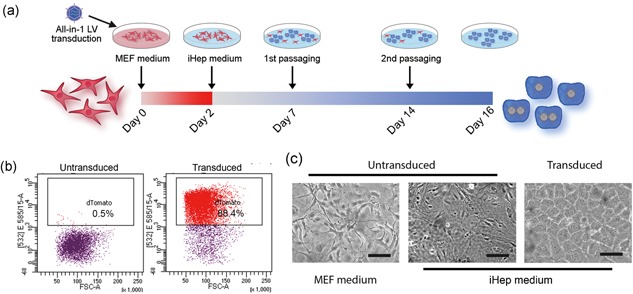
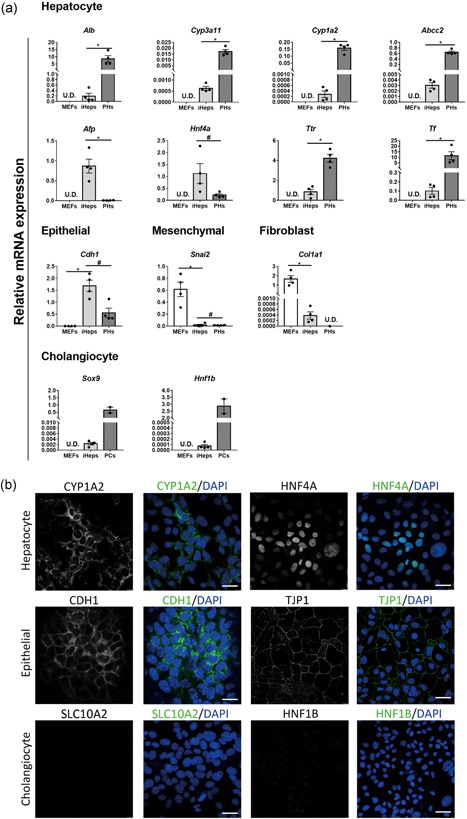
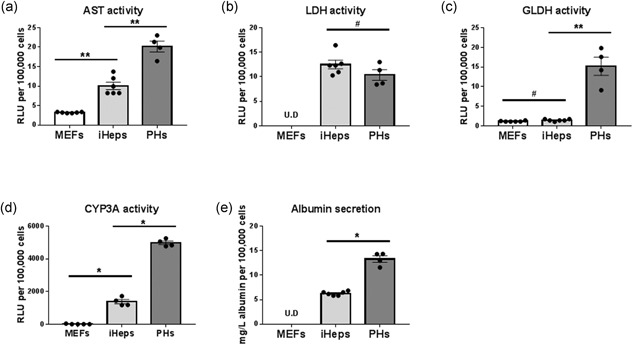
Direct reprogramming represents an easy technique to generate induced hepatocytes (iHeps) from somatic cells. However, current protocols are accompanied by several drawbacks as iHeps are heterogenous and lack fully mature phenotypes of primary hepatocytes. Here, we established a polycistronic expression system to induce the direct reprogramming of mouse embryonic fibroblasts towards hepatocytes. The resulting iHeps are homogenous and display key properties of primary hepatocytes, such as expression of hepatocyte markers, albumin secretion, and presence of liver transaminases. iHeps also possess the capacity to repopulate decellularized liver tissue and exhibit enhanced hepatic maturation. As such, we present a novel strategy to generate homogenous and functional iHeps for applications in tissue engineering and cell therapy.
直接重编程代表了一种从体细胞生成诱导性肝细胞(iHeps)的简单技术。然而,目前的方案伴随着几个缺点,因为 iHeps 是异质的,缺乏原代肝细胞的完全成熟表型。在这里,我们建立了一个多顺反子表达系统,诱导小鼠胚胎成纤维细胞向肝细胞的直接重编程。得到的 iHeps 是同质的,并表现出原代肝细胞的关键特性,如肝细胞标记物的表达、白蛋白分泌和肝转氨酶的存在。iHeps 还具有再定植去细胞化肝组织的能力,并表现出增强的肝成熟。因此,我们提出了一种生成同质且功能齐全的 iHeps 的新策略,可用于组织工程和细胞治疗。