Department of Cardiovascular Medicine, Yao Municipal Hospital, Osaka, Japan
Cardiovascular Division, Osaka National Hospital, Osaka, Japan.
J Am Heart Assoc. 2018 Jun 30;7(13):e009332. doi: 10.1161/JAHA.118.009332.
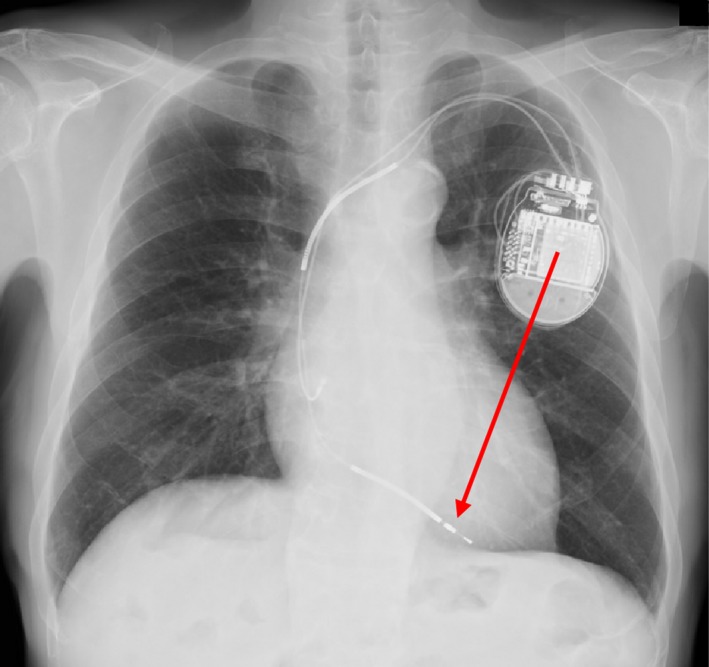
Newer implantable cardioverter defibrillators can monitor intracardiac ECGs , but their ability to detect ischemia is unclear. This study investigated the usefulness of implantable cardioverter defibrillators with an ST-monitoring function in coronary artery disease patients.
We conducted a prospective study of implantable cardioverter defibrillator patients with the ST-monitoring function. One hundred seventy-three patients who received implantable cardioverter defibrillators for primary or secondary prevention of sudden cardiac death. All patients underwent medical examinations at least every 6 months, with standard 12-lead ECGs and device checks that included analysis of the ST-monitoring function. Myocardial perfusion imaging or coronary angiography was performed during the follow-up. The mean follow-up duration was 23.3±7.7 months. Significant ST changes occurred in 15 patients (8.7%), of whom 14 were asymptomatic. The incidence of angina pectoris was significantly higher in the ST change (+) group than that in the ST change (-) group (28.6% versus 7.2%, =0.03). In the patients who underwent myocardial perfusion imaging, the sensitivity, specificity, and negative predictive value of the ST-monitoring feature to detect ischemia were 75.0%, 72.5%, and 93.5%, respectively. The sensitivity, specificity, and negative predictive value of the ST-monitoring feature to predict residual stenosis evaluated using coronary angiography were 76.9%, 83.5%, and 97.5%, respectively. The percentage of patients with a septal right ventricular lead was significantly lower in the ST change (+) group than in the ST change (-) group (13.5% versus 33.5%, =0.01).
If intracardiac ECGs ST changes are detected, it is necessary to use additional modalities even in asymptomatic patients.
URL: upload.umin.ac.jp. Unique identifier: UMIN000011824.
较新型的植入式心脏复律除颤器可以监测心内 ECG,但它们检测缺血的能力尚不清楚。本研究旨在探讨具有 ST 监测功能的植入式心脏复律除颤器在冠状动脉疾病患者中的应用价值。
我们进行了一项前瞻性研究,纳入了 173 例接受植入式心脏复律除颤器治疗的患者,这些患者接受植入式心脏复律除颤器治疗的目的是预防心源性猝死的发生。所有患者均接受了至少每 6 个月一次的医学检查,包括标准 12 导联心电图和设备检查,其中包括 ST 监测功能的分析。在随访期间进行心肌灌注成像或冠状动脉造影。平均随访时间为 23.3±7.7 个月。15 例(8.7%)患者出现明显的 ST 改变,其中 14 例为无症状患者。ST 改变(+)组心绞痛的发生率明显高于 ST 改变(-)组(28.6%比 7.2%,=0.03)。在接受心肌灌注成像的患者中,ST 监测功能检测缺血的敏感性、特异性和阴性预测值分别为 75.0%、72.5%和 93.5%。ST 监测功能预测冠状动脉造影评估的残余狭窄的敏感性、特异性和阴性预测值分别为 76.9%、83.5%和 97.5%。ST 改变(+)组中存在间隔部右心室导联的患者比例明显低于 ST 改变(-)组(13.5%比 33.5%,=0.01)。
如果检测到心内 ECG 的 ST 改变,即使是无症状患者,也需要使用其他方式进行评估。
URL:upload.umin.ac.jp。唯一标识符:UMIN000011824。