Perico Norberto, Casiraghi Federica, Todeschini Marta, Cortinovis Monica, Gotti Eliana, Portalupi Valentina, Mister Marilena, Gaspari Flavio, Villa Alessandro, Fiori Sonia, Introna Martino, Longhi Elena, Remuzzi Giuseppe
IRCCS - Istituto di Ricerche Farmacologiche Mario Negri, Bergamo, Italy.
Unit of Nephrology and Dialysis, Azienda Socio Sanitaria Territoriale Papa Giovanni XXIII, Bergamo, Italy.
Front Immunol. 2018 Jun 14;9:1359. doi: 10.3389/fimmu.2018.01359. eCollection 2018.
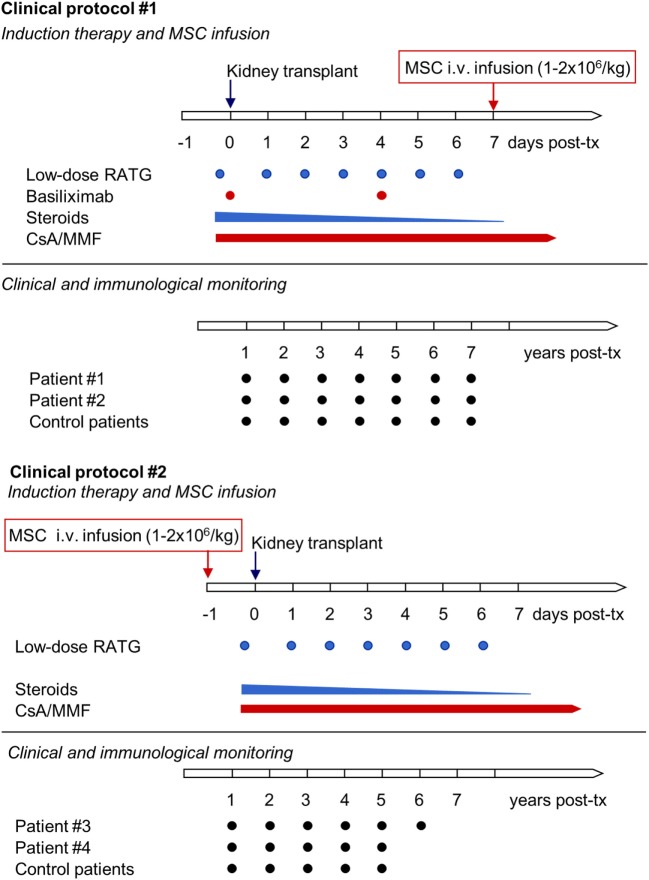
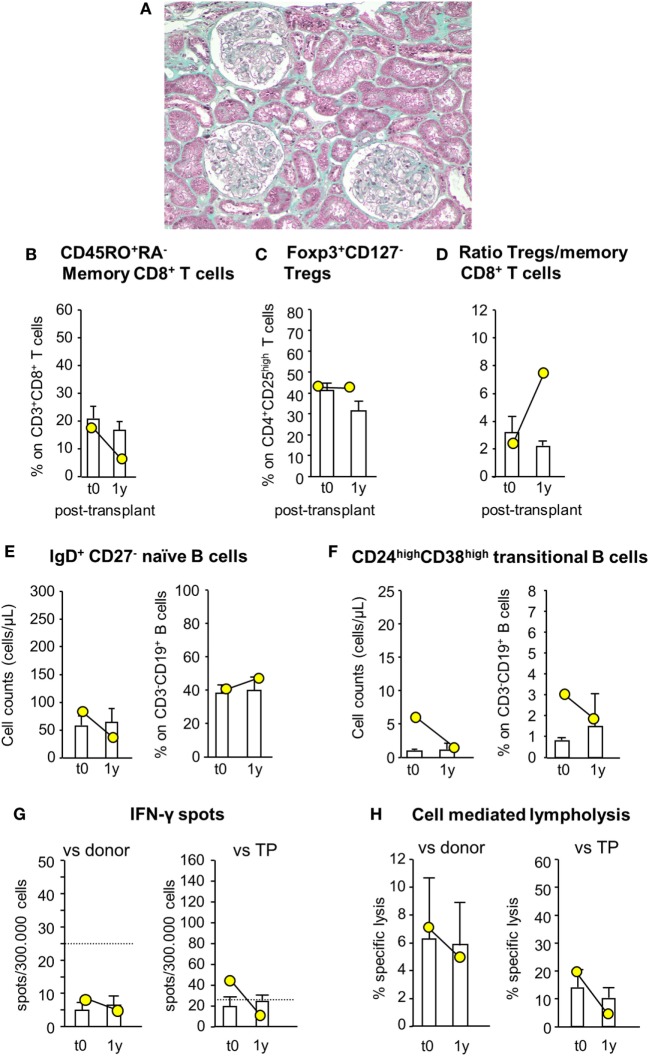
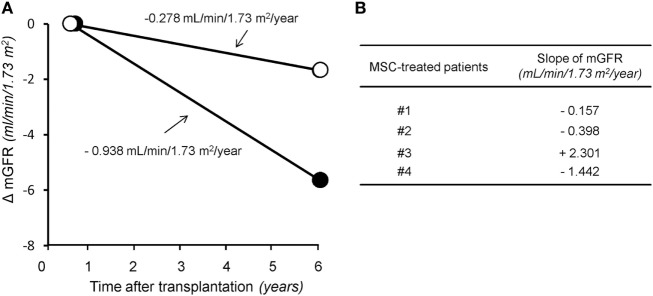
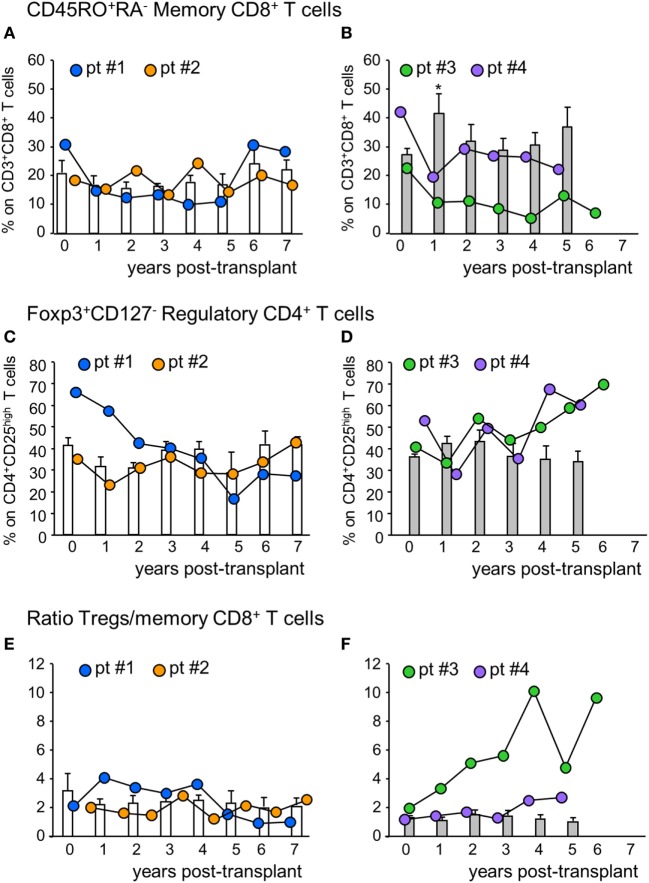
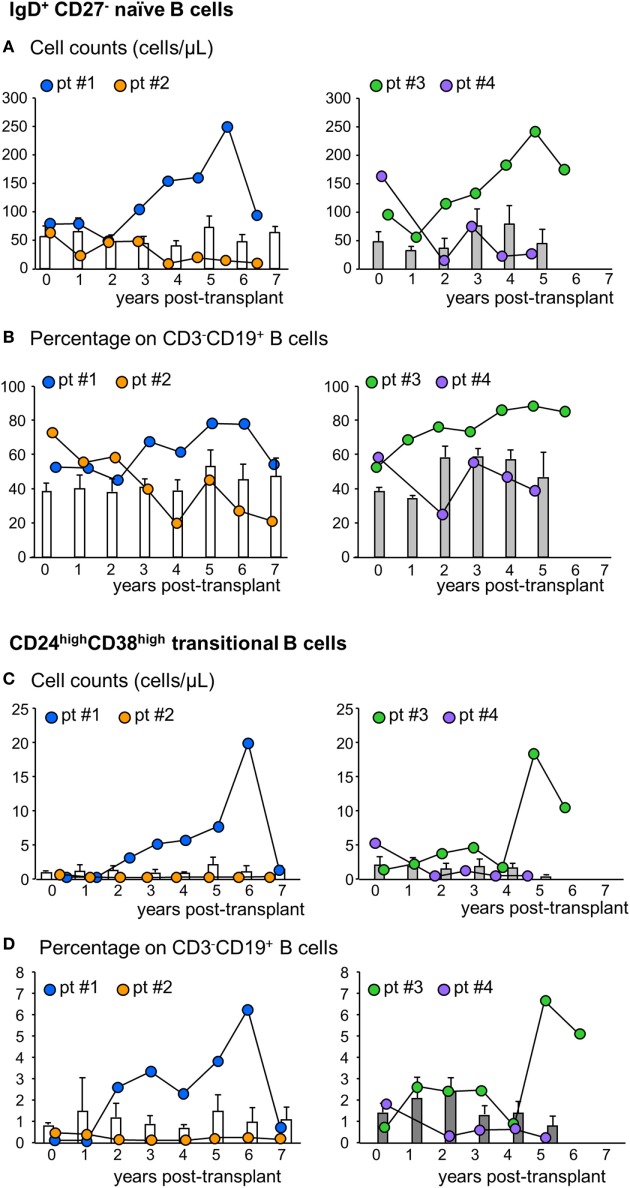
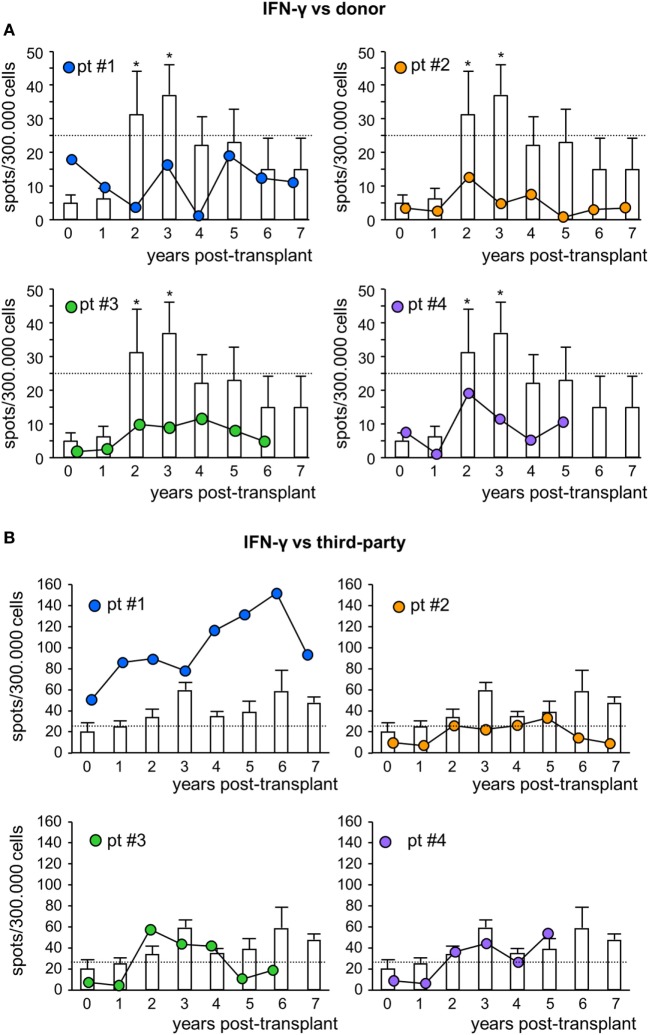
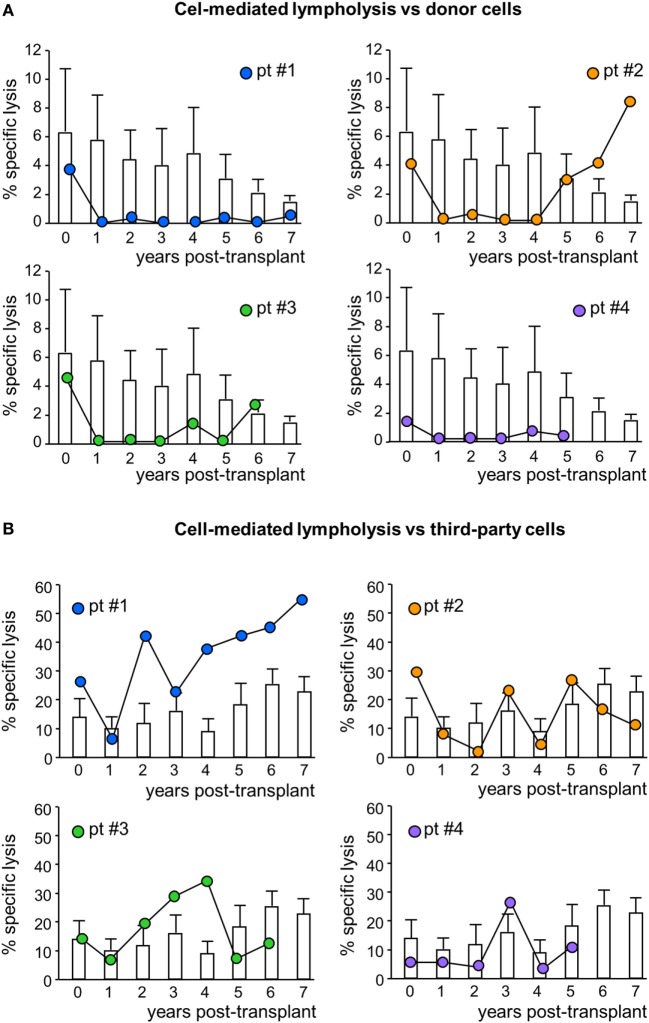
We report here the long-term clinical and immunological results of four living-donor kidney transplant patients given autologous bone marrow-derived mesenchymal stromal cells (MSCs) as part of a phase 1 study focused on the safety and feasibility of this cell therapy. According to study protocols implemented over time, based on initial early safety findings, the patients were given MSC at day 7 posttransplant ( = 2) or at day -1 pretransplant ( = 2) and received induction therapy with basiliximab and low-dose rabbit anti-thymocyte globulin (RATG) or RATG alone, and were maintained on low-dose ciclosporin (CsA)/mycophenolate mofetil (MMF). All MSC-treated patients had stable graft function during the 5- to 7-year follow-up, without increased susceptibility to infections or neoplasm. In three MSC recipients, but not historical control patients, circulating memory CD8 T cell percentages remained lower than basal, coupled with persistent reduction of donor-specific cytotoxicity. Two patients showed a long-lasting increase in the regulatory T cell/memory CD8 T cell ratio, paralleled by high circulating levels of naïve and transitional B cells. In one of these two patients, CsA was successfully discontinued, and currently the low-dose MMF monotherapy is on the tapering phase. The study shows that MSC therapy is safe in the long term and could promote a pro-tolerogenic environment in selected patients. Extensive immunomonitoring of MSC-treated kidney transplant recipients could help selection of patients for safe withdrawal of maintenance immunosuppressive drugs (NCT00752479 and NCT02012153).
我们在此报告4例活体供肾移植患者接受自体骨髓间充质基质细胞(MSC)治疗的长期临床和免疫学结果,该研究作为1期研究的一部分,重点关注这种细胞疗法的安全性和可行性。根据随时间实施的研究方案,基于最初的早期安全性发现,患者在移植后第7天(n = 2)或移植前第 -1天(n = 2)接受MSC治疗,并接受巴利昔单抗和低剂量兔抗胸腺细胞球蛋白(RATG)或仅接受RATG的诱导治疗,并维持低剂量环孢素(CsA)/霉酚酸酯(MMF)治疗。所有接受MSC治疗的患者在5至7年的随访期间移植肾功能稳定,未增加感染或肿瘤易感性。在3例接受MSC治疗的患者中,但在历史对照患者中未出现这种情况,循环记忆CD8 T细胞百分比仍低于基础水平,同时供体特异性细胞毒性持续降低。2例患者的调节性T细胞/记忆CD8 T细胞比值持续升高,同时幼稚和过渡性B细胞循环水平较高。在这2例患者中的1例中,成功停用了CsA,目前低剂量MMF单药治疗正处于逐渐减量阶段。该研究表明,MSC治疗长期安全,并且可以在选定患者中促进促耐受环境。对接受MSC治疗的肾移植受者进行广泛的免疫监测有助于选择安全停用维持性免疫抑制药物的患者(NCT00752479和NCT02012153)。