Department of Medicine Solna, Unit of Immunology and Allergy, Karolinska Institutet, Stockholm, Sweden.
Department of Surgical and Perioperative Sciences, Urology and Andrology, Umeå University Hospital, Umeå, Sweden.
PLoS One. 2018 Jul 2;13(7):e0200079. doi: 10.1371/journal.pone.0200079. eCollection 2018.
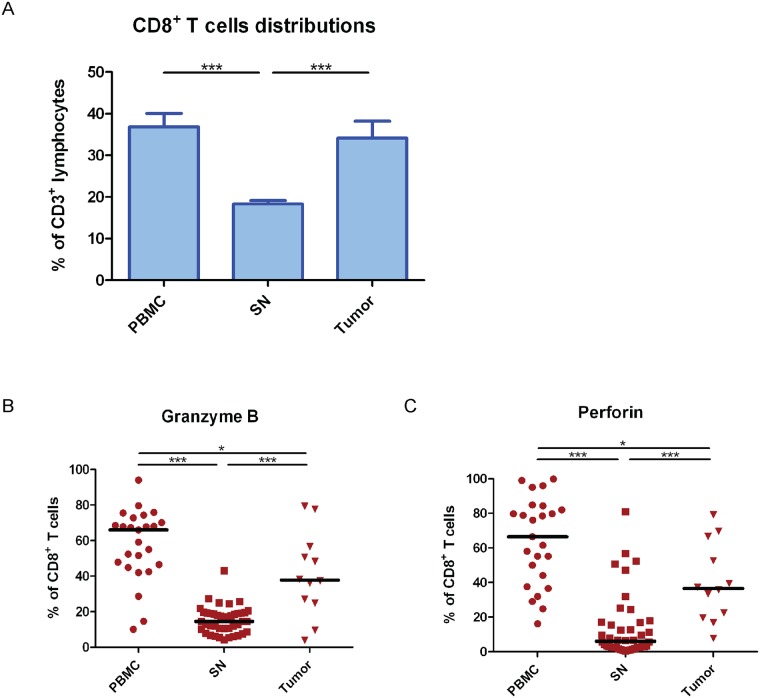
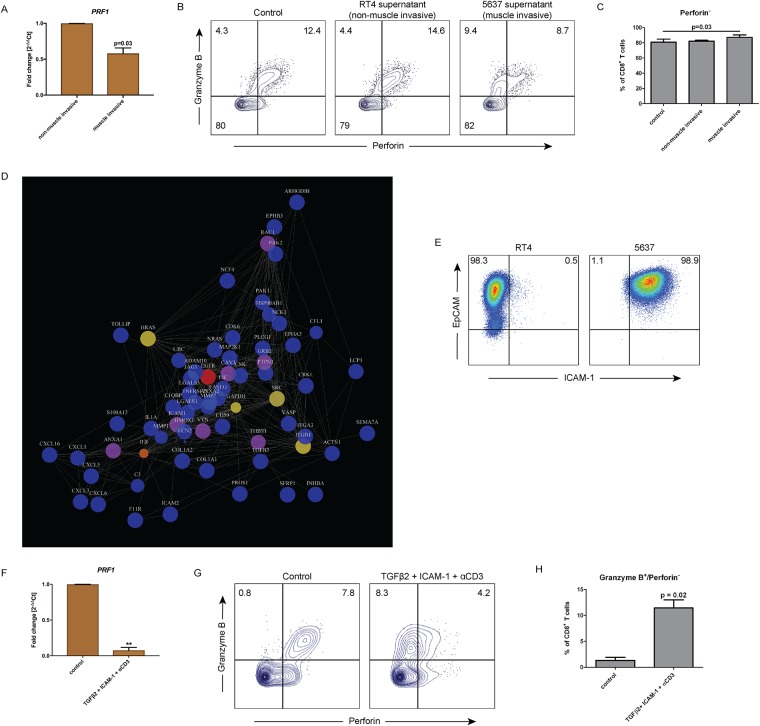
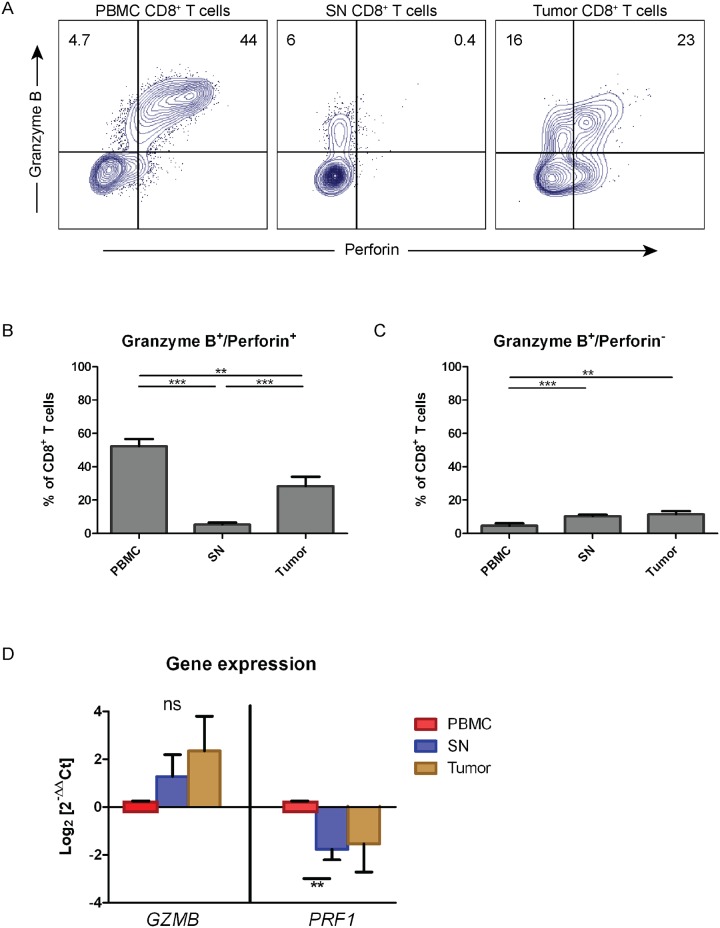
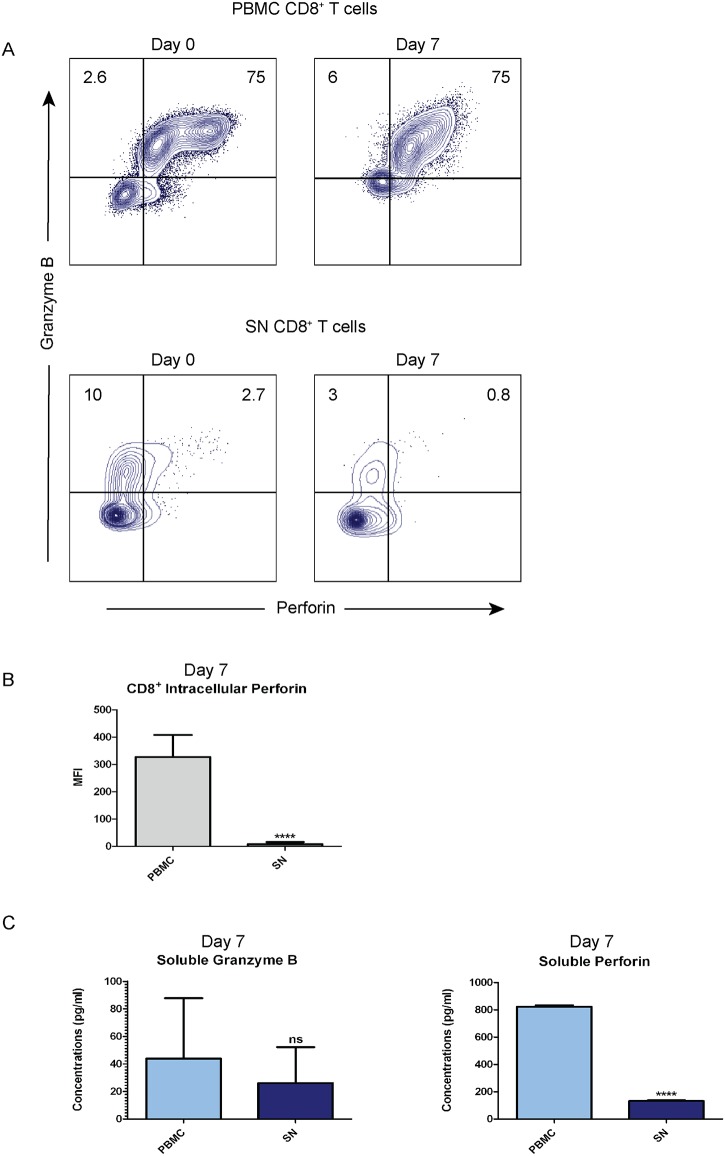
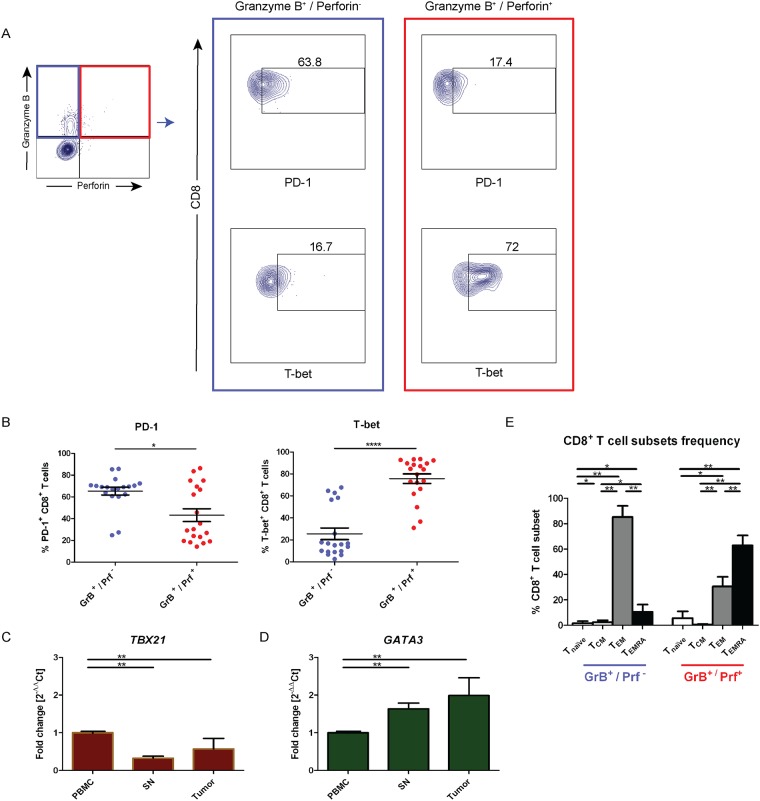
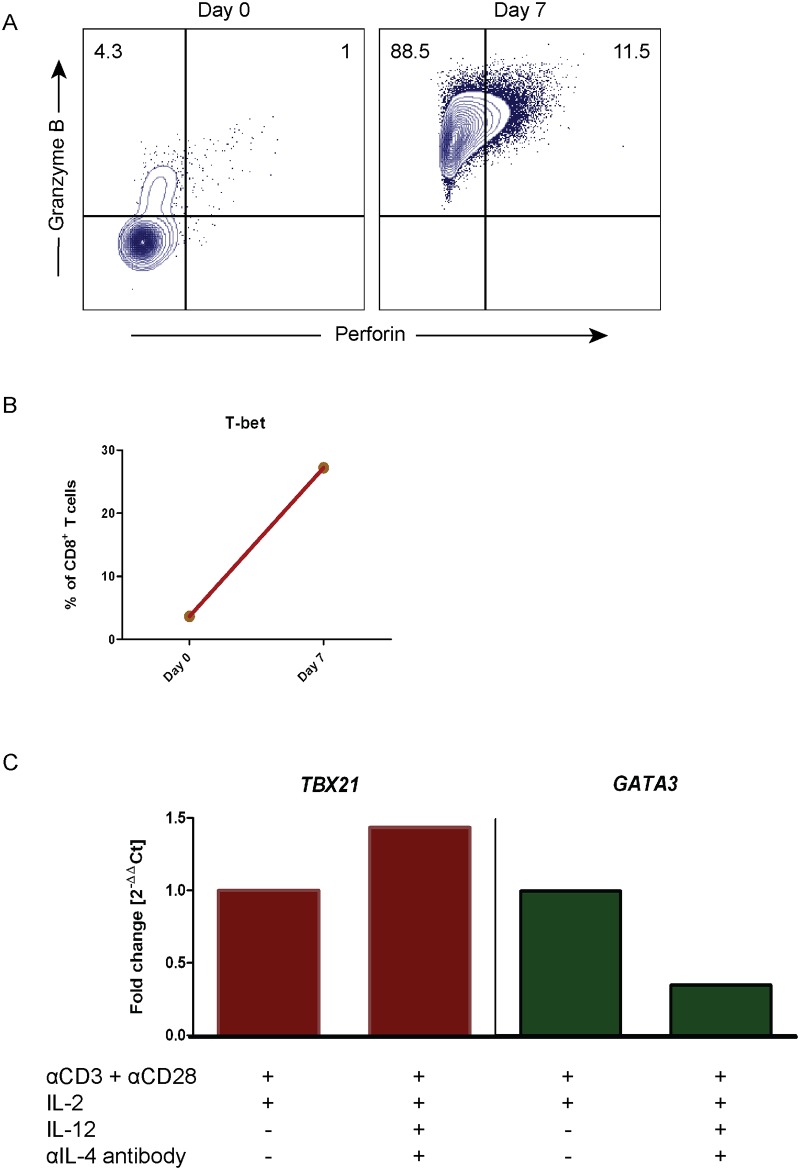
The immune system plays a significant role in urothelial bladder cancer (UBC) progression, with CD8+ T cells being capable to directly kill tumor cells using perforin and granzymes. However, tumors avoid immune recognition by escape mechanisms. In this study, we aim to demonstrate tumor immune escape mechanisms that suppress CD8+ T cells cytotoxicity. 42 patients diagnosed with UBC were recruited. CD8+ T cells from peripheral blood (PB), sentinel nodes (SN), and tumor were analyzed in steady state and in vitro-stimulated conditions by flow cytometry, RT-qPCR, and ELISA. Mass spectrometry (MS) was used for identification of proteins from UBC cell line culture supernatants. Perforin was surprisingly found to be low in CD8+ T cells from SN, marked by 1.8-fold decrease of PRF1 expression, with maintained expression of granzyme B. The majority of perforin-deficient CD8+ T cells are effector memory T (TEM) cells with exhausted Tc2 cell phenotype, judged by the presence of PD-1 and GATA-3. Consequently, perforin-deficient CD8+ T cells from SN are low in T-bet expression. Supernatant from muscle invasive UBC induces perforin deficiency, a mechanism identified by MS where ICAM-1 and TGFβ2 signaling were causatively validated to decrease perforin expression in vitro. Thus, we demonstrate a novel tumor escape suppressing perforin expression in CD8+ T cells mediated by ICAM-1 and TGFβ2, which can be targeted in combination for cancer immunotherapy.
免疫系统在尿路上皮膀胱癌(UBC)的进展中起着重要作用,CD8+T 细胞能够通过穿孔素和颗粒酶直接杀死肿瘤细胞。然而,肿瘤通过逃逸机制避免免疫识别。在这项研究中,我们旨在证明抑制 CD8+T 细胞细胞毒性的肿瘤免疫逃逸机制。招募了 42 名诊断为 UBC 的患者。通过流式细胞术、RT-qPCR 和 ELISA 在稳态和体外刺激条件下分析来自外周血 (PB)、前哨淋巴结 (SN) 和肿瘤的 CD8+T 细胞。质谱 (MS) 用于鉴定 UBC 细胞系培养上清液中的蛋白质。令人惊讶的是,SN 中 CD8+T 细胞中的穿孔素水平较低,PRF1 表达降低了 1.8 倍,颗粒酶 B 的表达保持不变。大多数穿孔素缺陷的 CD8+T 细胞是效应记忆 T(TEM)细胞,表现出耗尽的 Tc2 细胞表型,这可以通过 PD-1 和 GATA-3 的存在来判断。因此,SN 中的穿孔素缺陷 CD8+T 细胞中 T-bet 的表达水平较低。肌层浸润性 UBC 的上清液诱导穿孔素缺陷,MS 确定 ICAM-1 和 TGFβ2 信号通路是体外降低穿孔素表达的因果关系。因此,我们证明了一种新的肿瘤逃逸机制,即通过 ICAM-1 和 TGFβ2 抑制 CD8+T 细胞中的穿孔素表达,这可以作为癌症免疫治疗的联合靶点。