Laboratory of Animal Biology, National Institute for Research and Development for Biology and Animal Nutrition, Calea Bucuresti No. 1, Balotesti, 077015 Ilfov, Romania.
Department of Functional Genomics and Experimental Pathology, Research Center for Functional Genomics, Biomedicine and Translational Medicine, "Iuliu Hatieganu" University of Medicine and Pharmacy, Str. V. Babes, No. 8, 400000 Cluj-Napoca, Romania.
Int J Mol Sci. 2018 Jun 30;19(7):1923. doi: 10.3390/ijms19071923.
Food and feed supplements containing microorganisms with probiotic potential are of increasing interest due to their healthy promoting effect on human and animals. Their mechanism of action is still unknown. Using a microarray approach, the aim of this study was to investigate the differences in genome-wide gene expression induced by a mixture of three strains (, , and ) in intestinal porcine epithelial cells (IPEC-1) and to identify the genes and pathways involved in intestinal barrier functions.
Undifferentiated IPEC-1 cells seeded at a density of 2.0 × 10⁵/mL in 24-wells culture plates were cultivated at 37 °C and 5% CO₂ until they reached confluence (2⁻3 days). Confluent cells monolayer were then cultivated with 1 mL of fresh lactobacilli (LB) mixture suspension prepared for a concentration of approximately 3.3 × 10⁷ CFU/mL for each strain (1 × 10⁸ CFU/mL in total) for 3 h and analyzed by microarray using Gene Spring GX v.11.5.
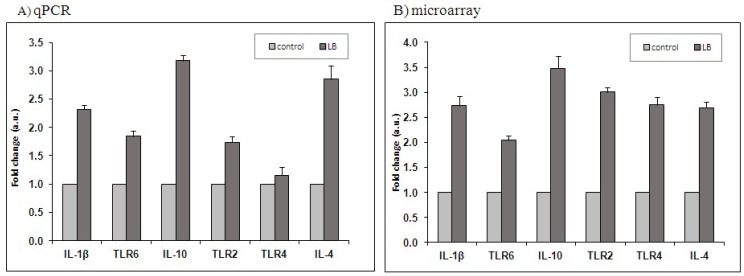
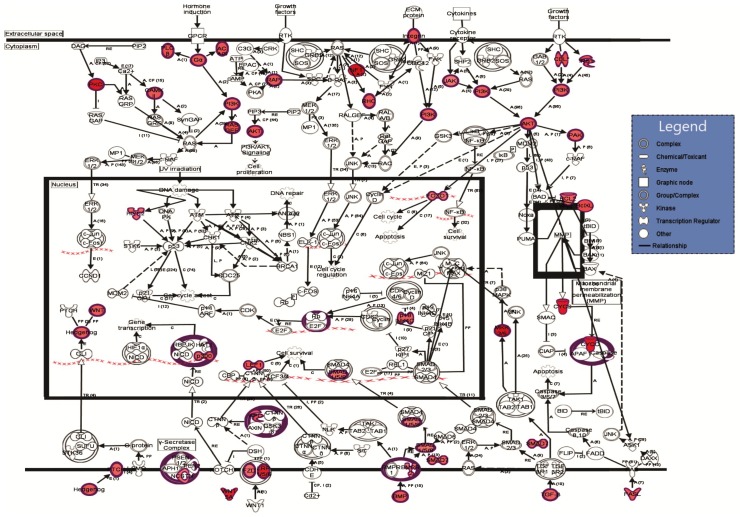
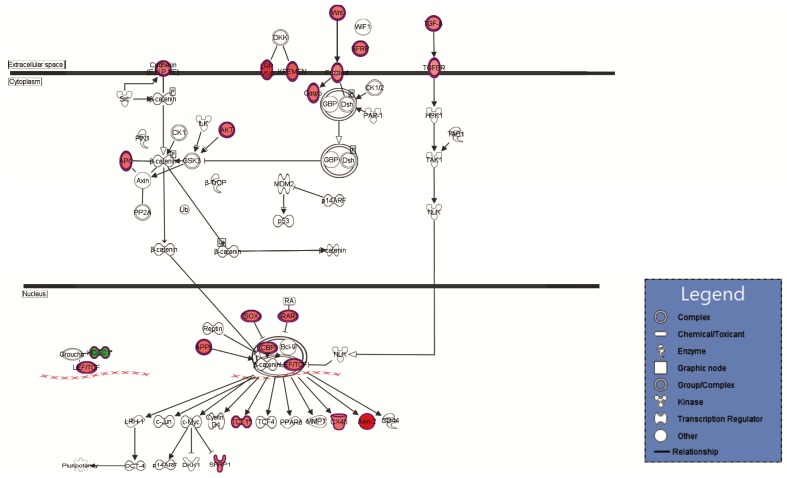
The functional analysis showed that 1811 of the genes modulated by LB treatment are involved in signaling (95% up-regulation, 121 genes with a fold change higher than 10). The most enhanced expression was registered for (axis inhibition protein 2-) gene (13.93 Fc, = 0.043), a negative regulator of β-catenin with a key role in human cancer. LB affected the cellular proliferation by increasing 10 times (Fc) the NF1 gene encoding for the neurofibromin protein, a tumor suppressor that prevent cells from uncontrolled proliferation. The induction of genes like , (), (), ), (), and the suppression of / (), (), and of pro-inflammatory () genes highlights the protective role of lactobacilli in epithelial barrier function against inflammation and in the activation of immune response.
Gene overexpression was the predominant effect produced by lactobacilli treatment in IPEC-1 cells, genes related to signaling pathways being the most affected. The protective role of lactobacilli in epithelial barrier function against inflammation and in the activation of immune response was also noticed.
由于对人类和动物具有促进健康的作用,含有具有益生菌潜力的微生物的食品和饲料补充剂越来越受到关注。其作用机制尚不清楚。本研究采用微阵列方法,旨在研究三种混合菌株(、和)混合物在猪肠上皮细胞(IPEC-1)中诱导的全基因组基因表达差异,并鉴定参与肠道屏障功能的基因和途径。
将未分化的 IPEC-1 细胞以 2.0×10⁵/mL 的密度接种于 24 孔培养板中,在 37°C 和 5%CO₂下培养至汇合(2-3 天)。然后将汇合的细胞单层用新鲜的乳酸菌(LB)混合物悬浮液培养 1 mL,每种菌株的浓度约为 3.3×10⁷ CFU/mL(总共 1×10⁸ CFU/mL),培养 3 小时,并用 Gene Spring GX v.11.5 进行微阵列分析。
功能分析表明,LB 处理调节的 1811 个基因参与信号转导(95%上调,121 个基因的倍数变化高于 10)。上调最明显的是 (轴抑制蛋白 2-)基因(13.93 Fc,=0.043),该基因是一种 β-连环蛋白的负调节剂,在人类癌症中具有关键作用。LB 通过增加 10 倍(Fc)NF1 基因(编码神经纤维瘤蛋白)的表达来影响细胞增殖,神经纤维瘤蛋白是一种肿瘤抑制因子,可以防止细胞不受控制地增殖。基因如 、 ()、 ()、 ()、 ()的诱导和 / ()、 ()和促炎 ()基因的抑制突出了乳酸菌在防止上皮屏障功能炎症和激活免疫反应方面的保护作用。
在 IPEC-1 细胞中,乳酸菌处理主要产生基因过表达,受影响最严重的是与信号通路相关的基因。还注意到乳酸菌在防止上皮屏障功能炎症和激活免疫反应方面的保护作用。