Albarracin Leonardo, Kobayashi Hisakazu, Iida Hikaru, Sato Nana, Nochi Tomonori, Aso Hisashi, Salva Susana, Alvarez Susana, Kitazawa Haruki, Villena Julio
Laboratory of Immunobiotechnology, Reference Centre for Lactobacilli (CERELA-CONICET), Tucuman, Argentina; Immunobiotics Research Group, Tucuman, Argentina; Food and Feed Immunology Group, Laboratory of Animal Products Chemistry, Graduate School of Agricultural Science, Tohoku University, Sendai, Japan.
Food and Feed Immunology Group, Laboratory of Animal Products Chemistry, Graduate School of Agricultural Science, Tohoku University, Sendai, Japan; Livestock Immunology Unit, International Education and Research Center for Food Agricultural Immunology (CFAI), Graduate School of Agricultural Science, Tohoku University, Sendai, Japan.
Front Immunol. 2017 Feb 2;8:57. doi: 10.3389/fimmu.2017.00057. eCollection 2017.
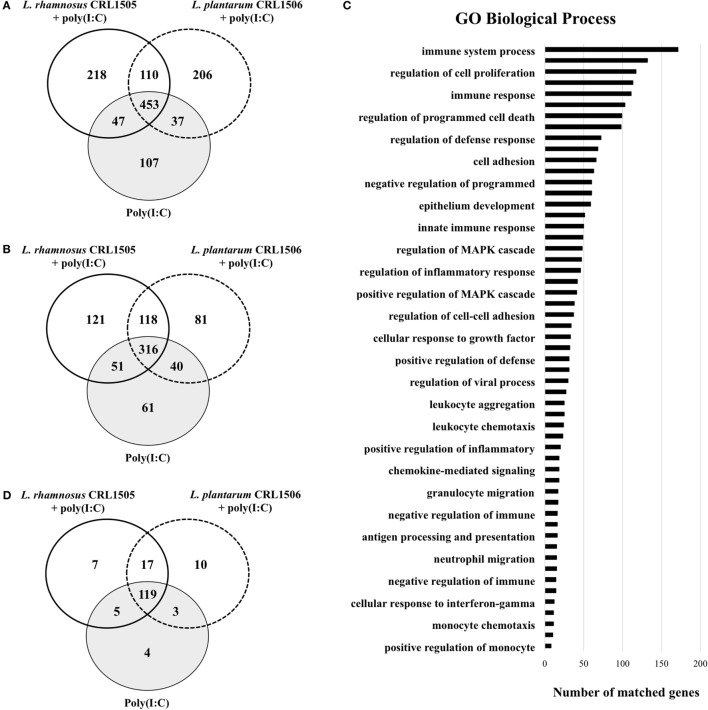
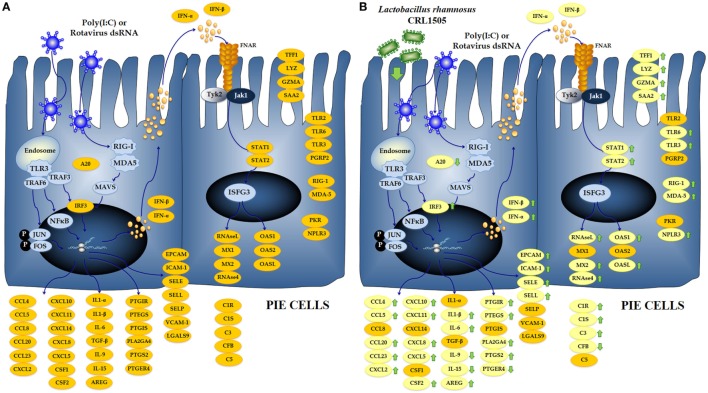
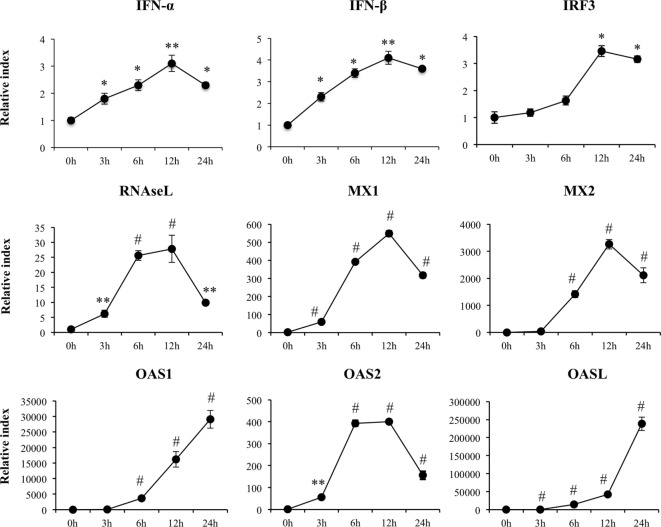
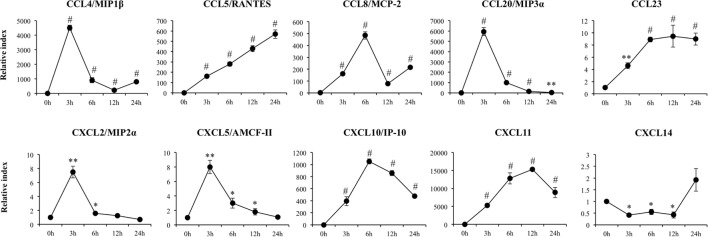
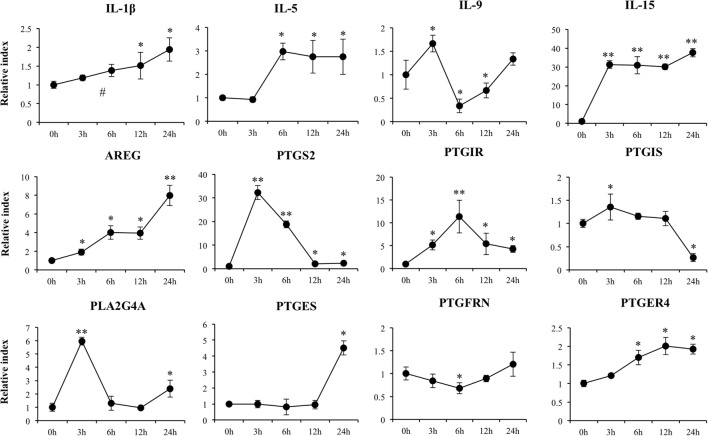
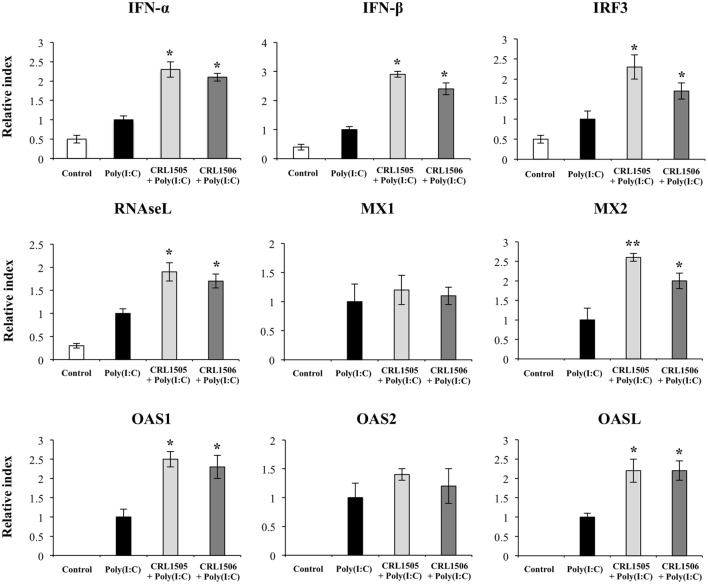
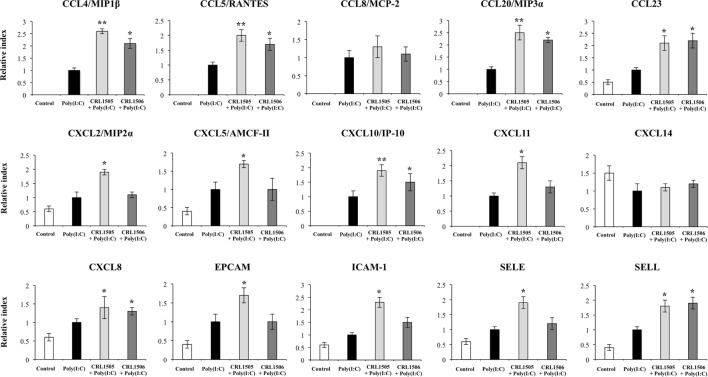
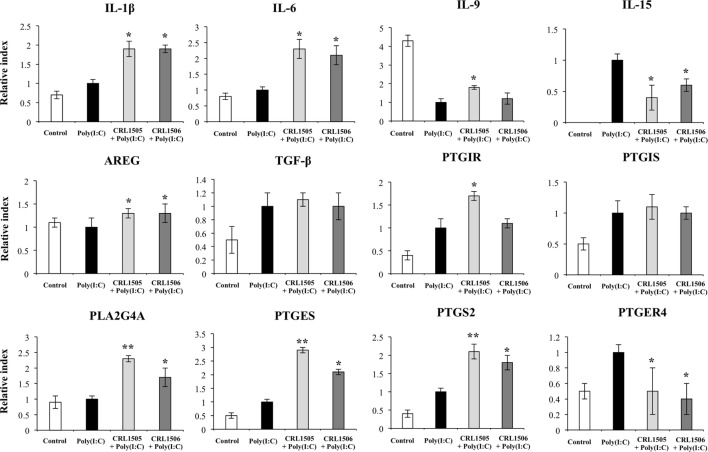
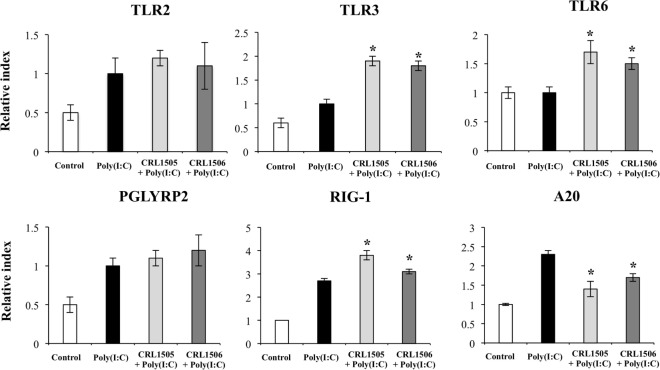
CRL1505 and CRL1506 are immunobiotic strains able to increase protection against viral intestinal infections as demonstrated in animal models and humans. To gain insight into the host-immunobiotic interaction, the transcriptomic response of porcine intestinal epithelial (PIE) cells to the challenge with viral molecular associated pattern poly(I:C) and the changes in the transcriptomic profile induced by the immunobiotics strains CRL1505 and CRL1506 were investigated in this work. By using microarray technology and reverse transcription PCR, we obtained a global overview of the immune genes involved in the innate antiviral immune response in PIE cells. Stimulation of PIE cells with poly(I:C) significantly increased the expression of α and β, several interferon-stimulated genes, cytokines, chemokines, adhesion molecules, and genes involved in prostaglandin biosynthesis. It was also determined that lactobacilli differently modulated immune gene expression in poly(I:C)-challenged PIE cells. Most notable changes were found in antiviral factors (α, β, , and ) and cytokines/chemokines (β, , and ) that were significantly increased in lactobacilli-treated PIE cells. Immunobiotics reduced the expression of and genes that mediate poly(I:C) inflammatory damage. In addition, lactobacilli treatments increased the expression , and that are involved in prostaglandin E2 biosynthesis CRL1505 and CRL1506 showed quantitative and qualitative differences in their capacities to modulate the innate antiviral immune response in PIE cells, which would explain the higher capacity of the CRL1505 strain when compared to CRL1506 to protect against viral infection and inflammatory damage . These results provided valuable information for the deeper understanding of the host-immunobiotic interaction and their effect on antiviral immunity. The comprehensive transcriptomic analyses successfully identified a group of genes (β, , and ), which can be used as prospective biomarkers for the screening of new antiviral immunobiotics in PIE cells and for the development of novel functional food and feeds, which may help to prevent viral infections.
CRL1505和CRL1506是免疫益生菌株,在动物模型和人类研究中均已证明其能够增强对病毒性肠道感染的防护能力。为深入了解宿主与免疫益生菌之间的相互作用,本研究调查了猪肠道上皮(PIE)细胞对病毒分子相关模式多聚肌苷酸胞嘧啶核苷酸(poly(I:C))刺激的转录组反应,以及免疫益生菌株CRL1505和CRL1506诱导的转录组谱变化。通过使用微阵列技术和逆转录PCR,我们全面了解了PIE细胞中参与先天性抗病毒免疫反应的免疫基因。用poly(I:C)刺激PIE细胞可显著增加α和β、几种干扰素刺激基因、细胞因子、趋化因子、黏附分子以及参与前列腺素生物合成的基因的表达。研究还确定,乳酸杆菌对poly(I:C)刺激的PIE细胞中免疫基因表达的调节方式有所不同。在抗病毒因子(α、β、 和 )以及细胞因子/趋化因子(β、 和 )方面发现了最显著的变化,这些因子在乳酸杆菌处理的PIE细胞中显著增加。免疫益生菌降低了介导poly(I:C)炎症损伤的 和 基因的表达。此外,乳酸杆菌处理增加了参与前列腺素E2生物合成的 、 和 基因的表达。CRL1505和CRL1506在调节PIE细胞先天性抗病毒免疫反应的能力上表现出数量和质量上的差异,这可以解释与CRL1506相比,CRL1505菌株在预防病毒感染和炎症损伤方面具有更高能力的原因。这些结果为更深入理解宿主与免疫益生菌之间的相互作用及其对抗病毒免疫的影响提供了有价值的信息。全面的转录组分析成功鉴定出一组基因(β、 和 ),这些基因可作为潜在生物标志物,用于在PIE细胞中筛选新型抗病毒免疫益生菌以及开发新型功能性食品和饲料,这可能有助于预防病毒感染。