Niess Jan Hendrik, Hruz Petr, Kaymak Tanay
Department of Biomedicine, University of Basel, Basel, Switzerland.
Department of Gastroenterology and Hepatology, University Hospital of Basel, Basel, Switzerland.
Front Immunol. 2018 Jun 18;9:1373. doi: 10.3389/fimmu.2018.01373. eCollection 2018.
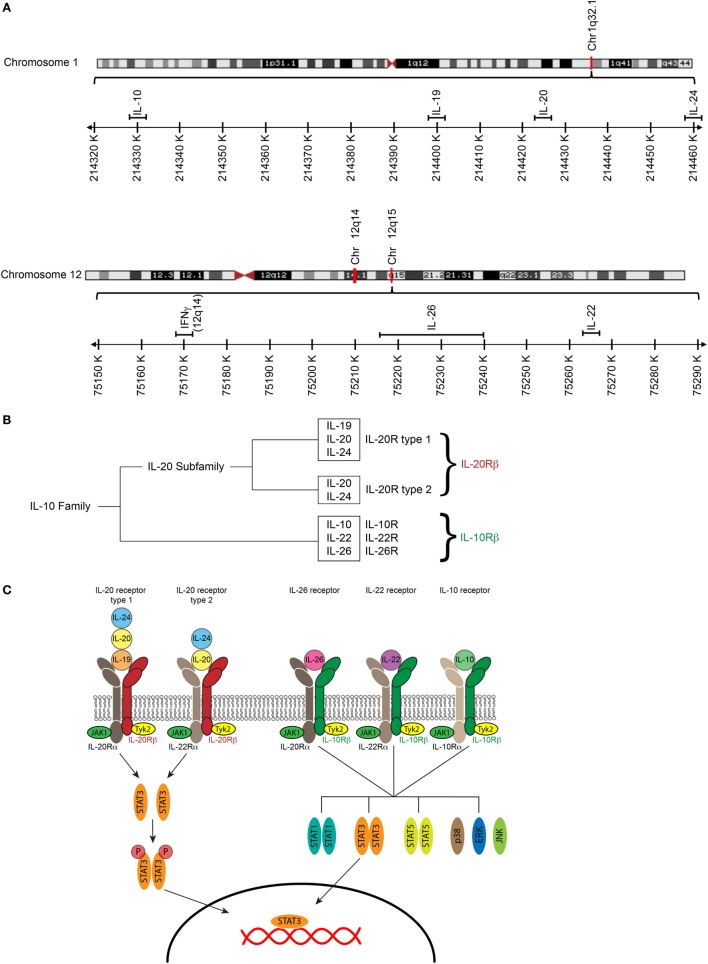
Autoimmune/inflammatory intestinal diseases, such as Crohn's disease and ulcerative colitis, infectious gastrointestinal diseases, and gastrointestinal cancers, such as colorectal cancer, are worldwide a significant health problem. Intercellular communication and direct contact with the environment as the microbiota colonizes the gastrointestinal surface facilitates these diseases. Cytokines mediate the intercellular communication to maintain the equilibrium between host and environment and to regulate immune responses. One cytokine family that exchange information between immune cells and epithelial cells is the IL-20 cytokine family which includes the cytokines IL-19, IL-20, IL-22, IL-24, and IL-26. These cytokines share common receptor subunits and signaling pathways. IL-22 is the most intensively studied cytokine within this family in contexts of gastrointestinal disease, but the importance of other family members is more and more appreciated. In this review, the potential function of IL-20 cytokines concerning gastrointestinal conditions is discussed.
自身免疫性/炎症性肠道疾病,如克罗恩病和溃疡性结肠炎、感染性胃肠疾病以及胃肠癌,如结直肠癌,在全球范围内都是重大的健康问题。随着微生物群在胃肠道表面定殖,细胞间通讯以及与环境的直接接触促进了这些疾病的发生。细胞因子介导细胞间通讯,以维持宿主与环境之间的平衡并调节免疫反应。在免疫细胞和上皮细胞之间交换信息的一个细胞因子家族是白细胞介素-20(IL-20)细胞因子家族,其包括细胞因子IL-19、IL-20、IL-22、IL-24和IL-26。这些细胞因子共享共同的受体亚基和信号通路。在胃肠疾病的背景下,IL-22是该家族中研究最深入的细胞因子,但其他家族成员的重要性也越来越受到重视。在本综述中,讨论了IL-20细胞因子在胃肠道疾病中的潜在作用。