a Department of Orthopedics , The Second Xiangya Hospital, Central South University , Changsha , China.
b School of Medicine , University of Colorado Anschutz Medical Campus , Aurora , CO , USA.
Cell Cycle. 2018;17(8):985-996. doi: 10.1080/15384101.2018.1464849. Epub 2018 Jul 3.
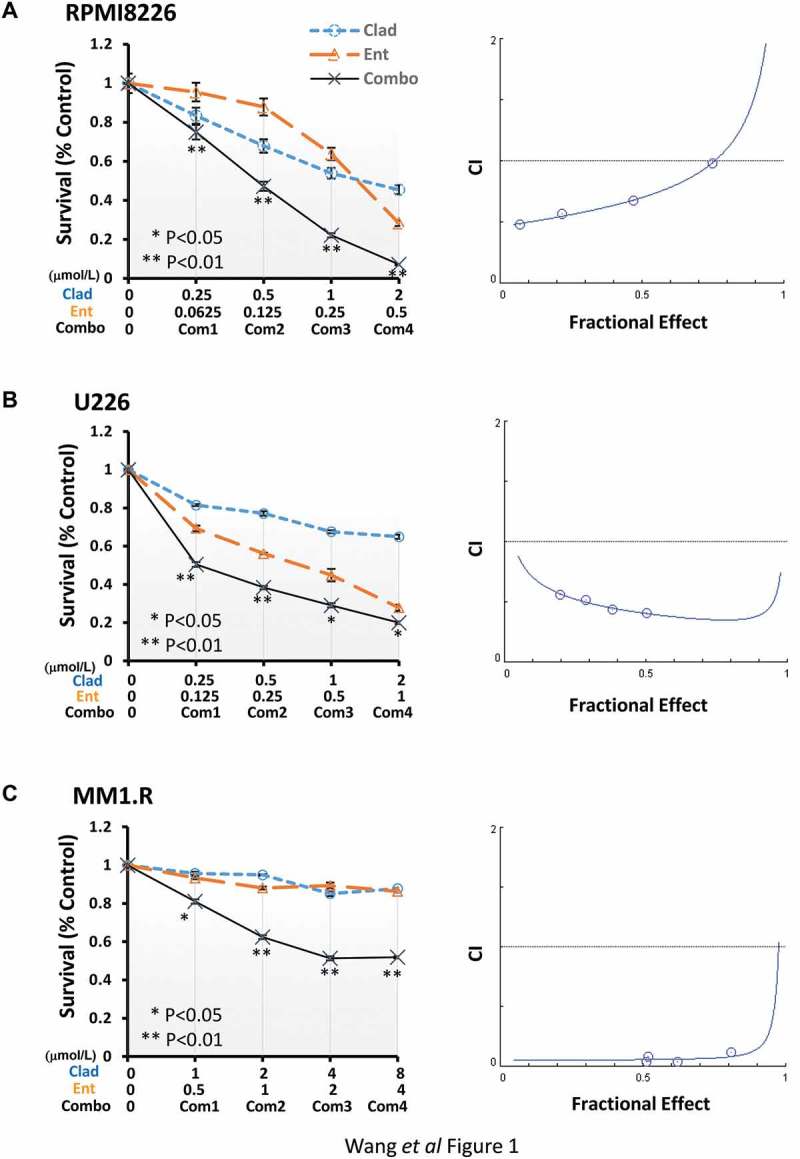
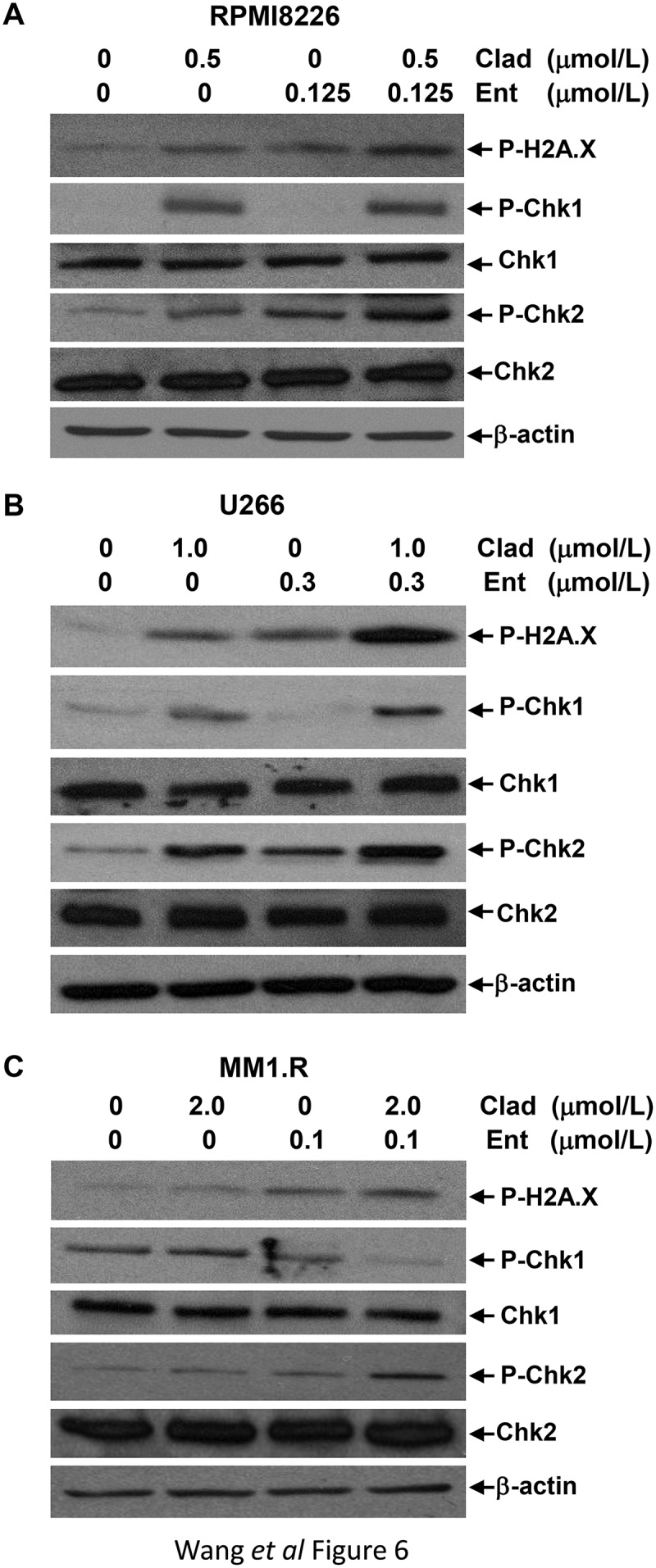
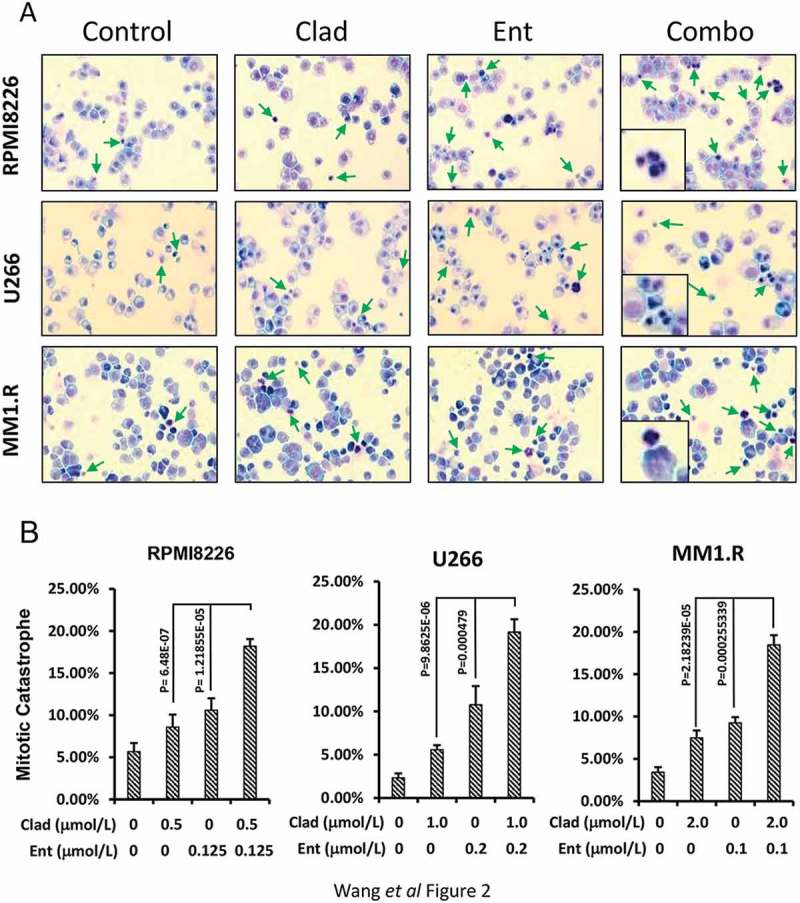
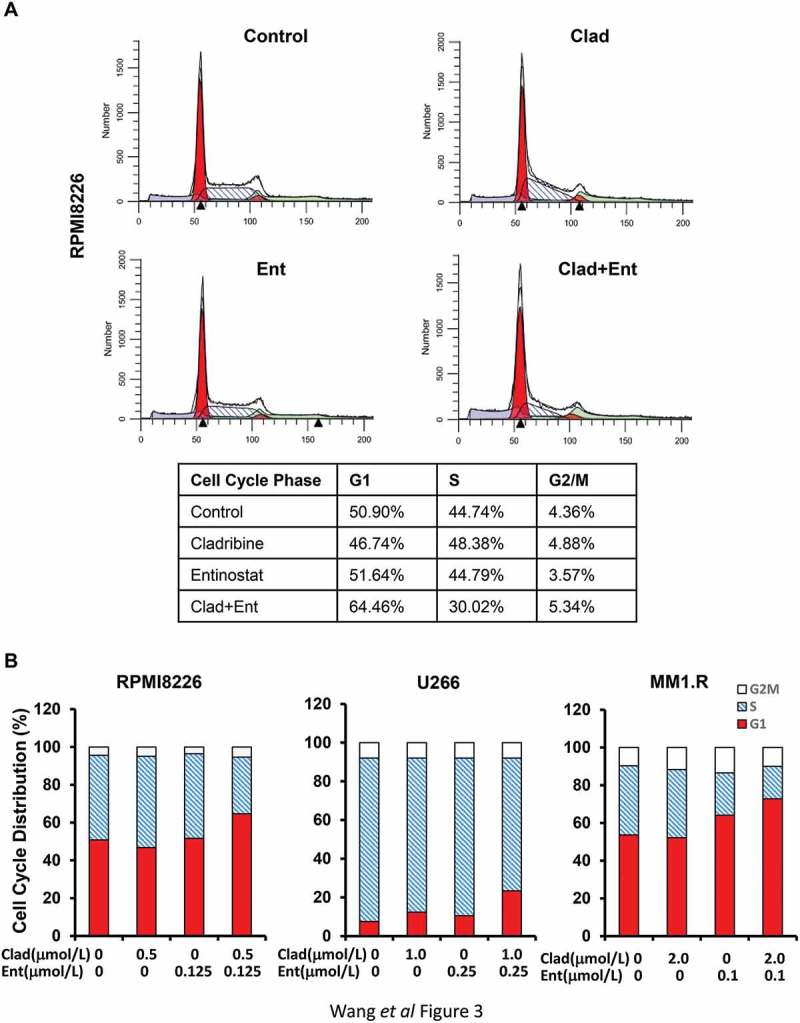
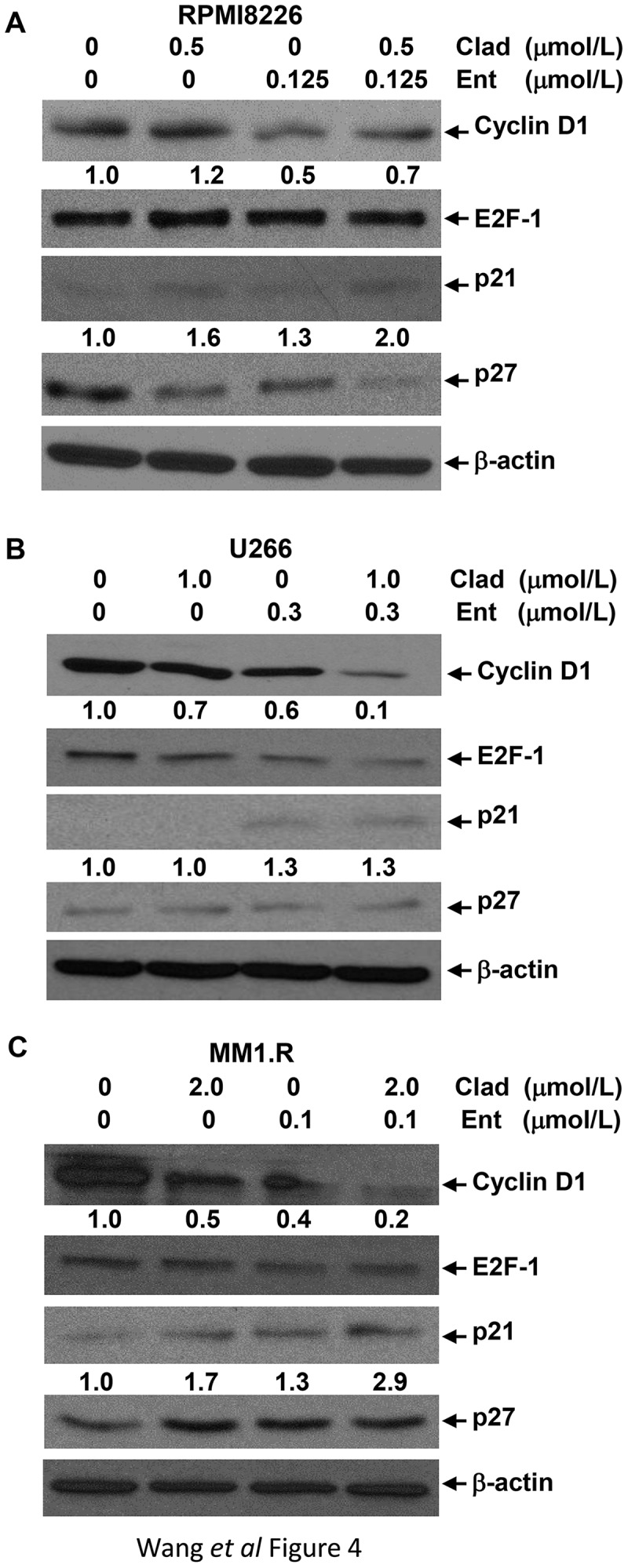
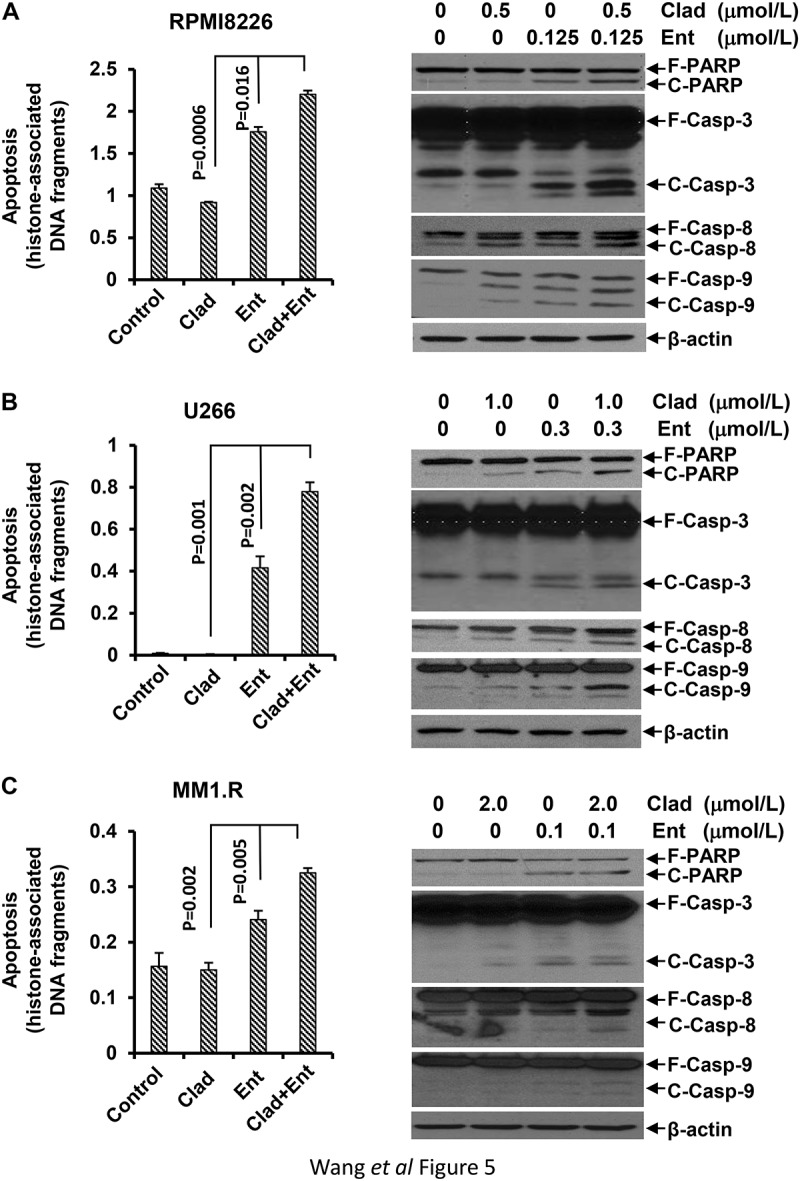
Cladribine (2CdA), a synthetic purine analog interfering with DNA synthesis, is a medication used to treat hairy cell leukemia (HCL) and B-cell chronic lymphocytic leukemia. Entinostat, a selective class I histone deacetylase (HDAC) inhibitor, shows antitumor activity in various human cancers, including hematological malignancies. The therapeutic potential of cladribine and entinostat against multiple myeloma (MM) remains unclear. Here we investigate the combinatorial effects of cladribine and entinostat within the range of their clinical achievable concentrations on MM cells. While either agent alone inhibited MM cell proliferation in a dose-dependent manner, their combinations synergistically induced anti-proliferative/anti-survival effects on all MM cell lines (RPMI8226, U266, and MM1.R) tested. Further studies showed that the combinations of cladribine and entinostat as compared to either agent alone more potently induced mitotic catastrophe in the MM cells, and resulted in a marked increase of the cells at G1 phase associated with decrease of Cyclin D1 and E2F-1 expression and upregulation of p21. Apoptotic ELISA and western blot analyses revealed that the combinations of cladribine and entinostat exerted a much more profound activity to induce apoptosis and DNA damage response, evidenced by enhanced phosphorylation of histone H2A.X and the DNA repair enzymes Chk1 and Chk2. Collectively, our data demonstrate that the combinations of cladribine and entinostat exhibit potent activity to induce anti-proliferative/anti-survival effects on MM cells via induction of cell cycle G1 arrest, apoptosis, and DNA damage response. Regimens consisting of cladribine and/or entinostat may offer a new treatment option for patients with MM.
MM, multiple myeloma; HCL, hairy cell leukemia; HDAC, histone deacetylase; Ab, antibody; mAb, monoclonal Ab; FBS, fetal bovine serum; CI, combination index; PAGE, polyacrylamide gel electrophoresis; ELISA, enzyme-linked immunosorbent assay; PARP, poly(ADP-ribose) polymerase; MTS, 3-(4,5-dimethylthiazol-2-yl)-5-(3-carboxymethoxyphenyl)-2-(4-sulfophenyl)-2H-tetrazolium,inner salt.
克拉屈滨(2CdA)是一种合成嘌呤类似物,可干扰 DNA 合成,用于治疗毛细胞白血病(HCL)和 B 细胞慢性淋巴细胞白血病。恩替诺特是一种选择性的 I 类组蛋白去乙酰化酶(HDAC)抑制剂,在包括血液恶性肿瘤在内的各种人类癌症中显示出抗肿瘤活性。克拉屈滨和恩替诺特治疗多发性骨髓瘤(MM)的潜在作用尚不清楚。在这里,我们在临床可达到的浓度范围内研究了克拉屈滨和恩替诺特联合使用对 MM 细胞的组合效应。虽然单独使用任一药物都能以剂量依赖的方式抑制 MM 细胞的增殖,但它们的组合对所有测试的 MM 细胞系(RPMI8226、U266 和 MM1.R)协同诱导抗增殖/抗存活效应。进一步的研究表明,与单独使用任一药物相比,克拉屈滨和恩替诺特的组合更能有效地诱导 MM 细胞发生有丝分裂灾难,并导致细胞在 G1 期显著增加,同时伴随细胞周期蛋白 D1 和 E2F-1 表达减少,p21 上调。凋亡 ELISA 和 Western blot 分析显示,克拉屈滨和恩替诺特的组合能更有效地诱导细胞凋亡和 DNA 损伤反应,证据是组蛋白 H2A.X 和 DNA 修复酶 Chk1 和 Chk2 的磷酸化增强。总的来说,我们的数据表明,克拉屈滨和恩替诺特的组合通过诱导细胞周期 G1 期阻滞、凋亡和 DNA 损伤反应,对 MM 细胞表现出强大的抗增殖/抗存活作用。包含克拉屈滨和/或恩替诺特的方案可能为 MM 患者提供新的治疗选择。
MM,多发性骨髓瘤;HCL,毛细胞白血病;HDAC,组蛋白去乙酰化酶;Ab,抗体;mAb,单克隆抗体;FBS,胎牛血清;CI,组合指数;PAGE,聚丙烯酰胺凝胶电泳;ELISA,酶联免疫吸附测定;PARP,多(ADP-核糖)聚合酶;MTS,3-(4,5-二甲基噻唑-2-基)-5-(3-羧甲基甲氧基苯基)-2-(4-磺苯基)-2H-四唑,内盐。