International Medical Centre of PLA General Hospital, Beijing, PR China.
BMC Cancer. 2011 Jun 16;11:255. doi: 10.1186/1471-2407-11-255.
Cladribine or 2-chlorodeoxyadenosine (2-CDA) is a well-known purine nucleoside analog with particular activity against lymphoproliferative disorders, such as hairy cell leukemia (HCL). Its benefits in multiple myeloma (MM) remain unclear. Here we report the inhibitory effects of cladribine on MM cell lines (U266, RPMI8226, MM1.S), and its therapeutic potential in combination with a specific inhibitor of the signal transducer and activator of transcription 3 (STAT3).
MTS-based proliferation assays were used to determine cell viability in response to cladribine. Cell cycle progression was examined by flow cytometry analysis. Cells undergoing apoptosis were evaluated with Annexin V staining and a specific ELISA to quantitatively measure cytoplasmic histone-associated DNA fragments. Western blot analyses were performed to determine the protein expression levels and activation.
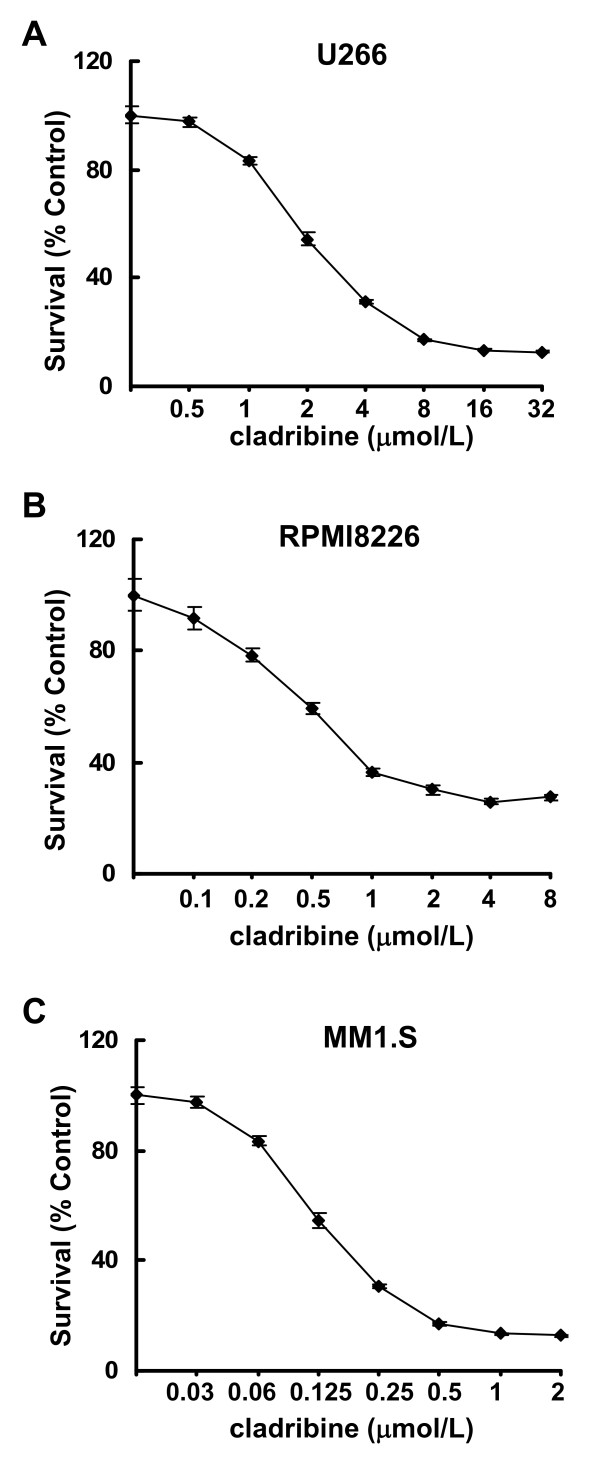
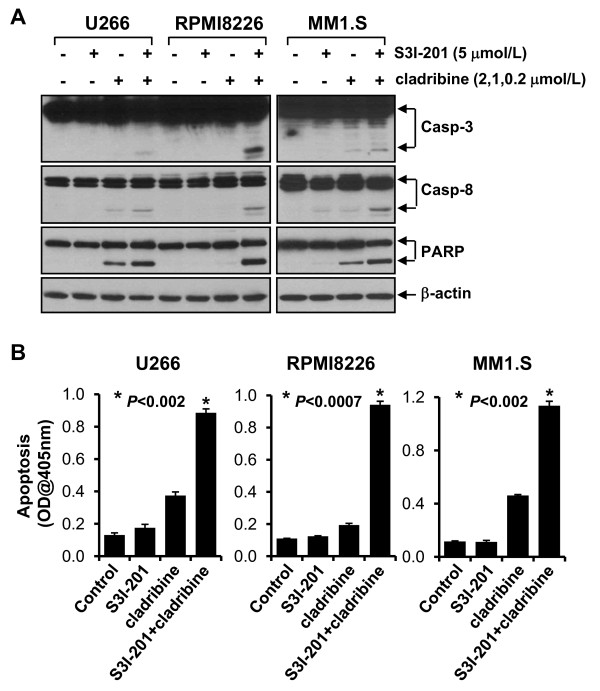
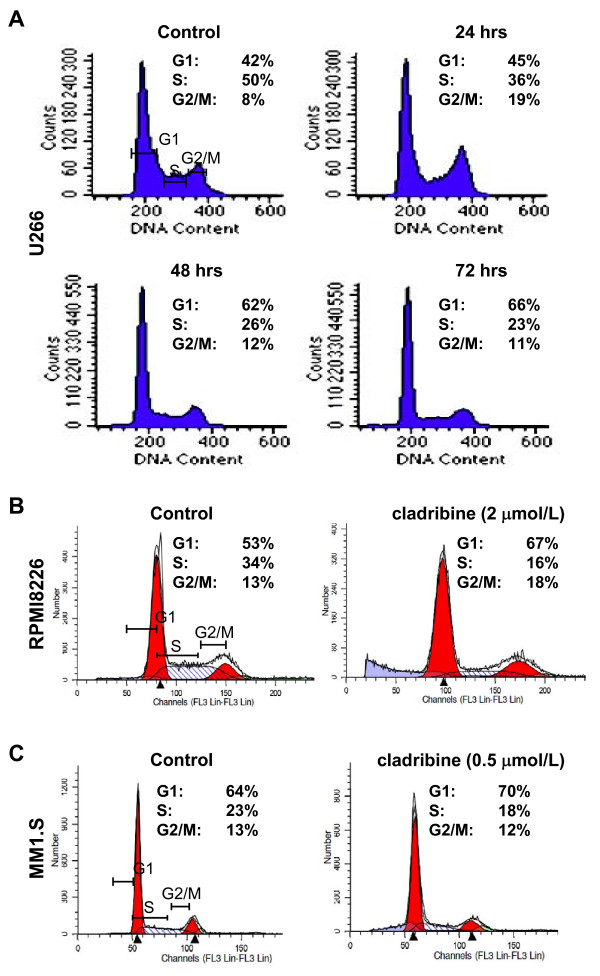
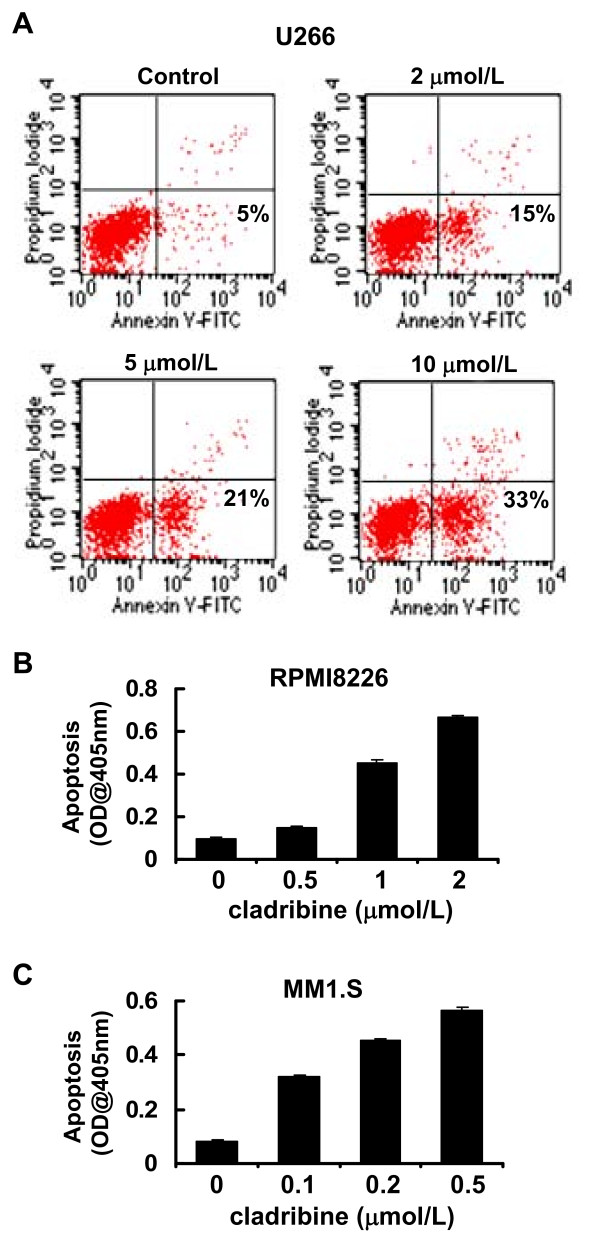
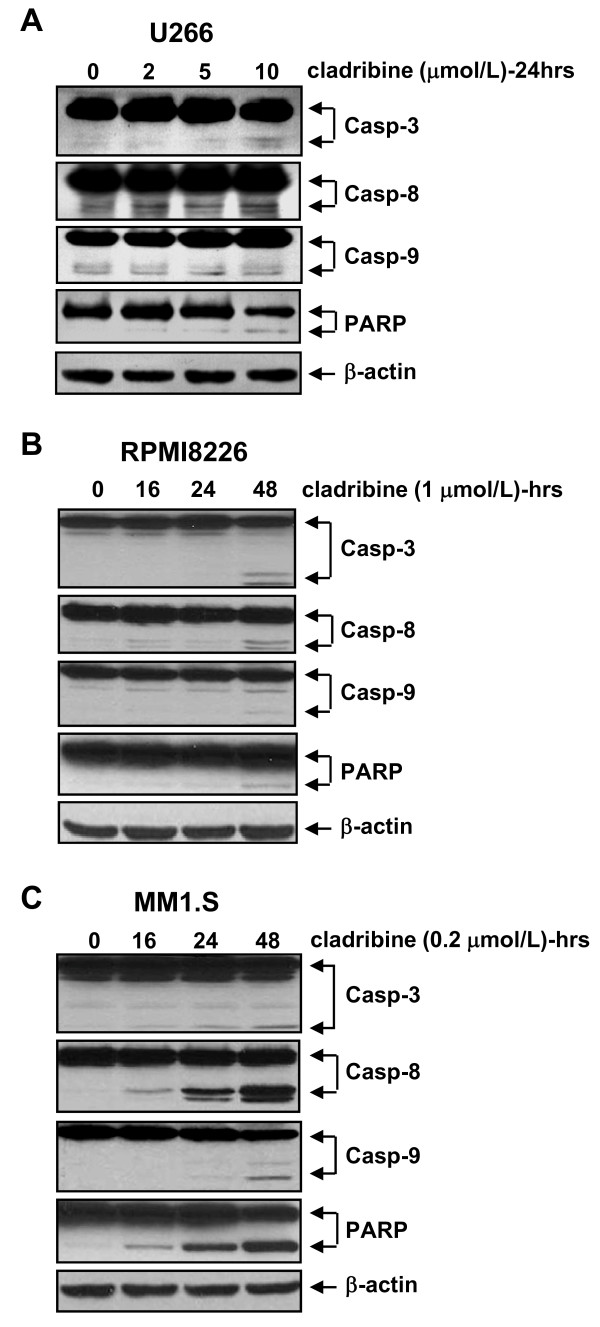
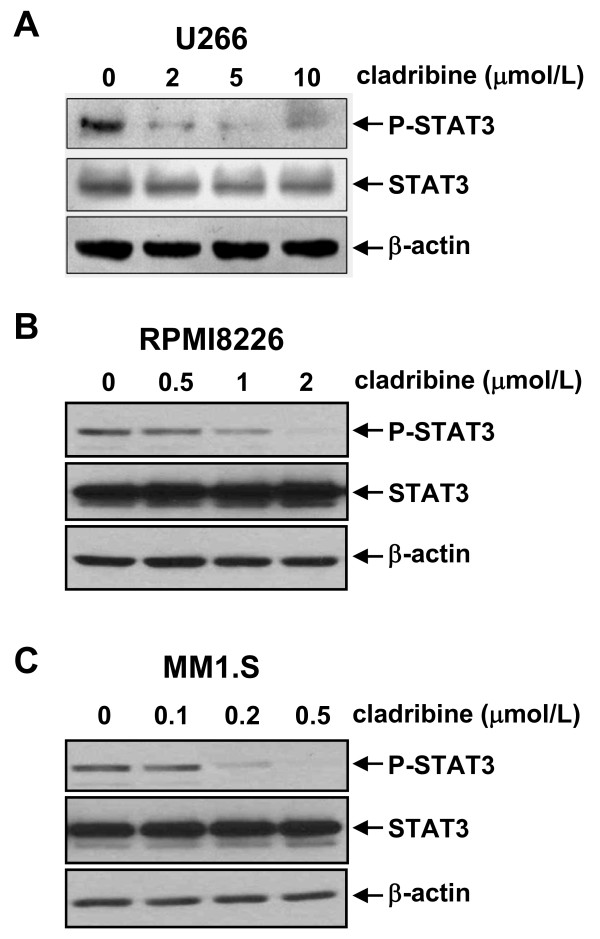
Cladribine inhibited cell proliferation of MM cells in a dose-dependent manner, although the three MM cell lines exhibited a remarkably different responsiveness to cladribine. The IC50 of cladribine for U266, RPMI8226, or MM1.S cells was approximately 2.43, 0.75, or 0.18 μmol/L, respectively. Treatment with cladribine resulted in a significant G1 arrest in U266 and RPMI8226 cells, but only a minor increase in the G1 phase for MM1.S cells. Apoptosis assays with Annexin V-FITC/PI double staining indicated that cladribine induced apoptosis of U266 cells in a dose-dependent manner. Similar results were obtained with an apoptotic-ELISA showing that cladribine dramatically promoted MM1.S and RPMA8226 cells undergoing apoptosis. On the molecular level, cladribine induced PARP cleavage and activation of caspase-8 and caspase-3. Meanwhile, treatment with cladribine led to a remarkable reduction of the phosphorylated STAT3 (P-STAT3), but had little effect on STAT3 protein levels. The combinations of cladribine and a specific STAT3 inhibitor as compared to either agent alone significantly induced apoptosis in all three MM cell lines.
Cladribine exhibited inhibitory effects on MM cells in vitro. MM1.S is the only cell line showing significant response to the clinically achievable concentrations of cladribine-induced apoptosis and inactivation of STAT3. Our data suggest that MM patients with the features of MM1.S cells may particularly benefit from cladribine monotherapy, whereas cladribine in combination with STAT3 inhibitor exerts a broader therapeutic potential against MM.
克拉屈滨或 2-氯脱氧腺苷(2-CDA)是一种众所周知的嘌呤核苷类似物,对淋巴增生性疾病(如毛细胞白血病(HCL))具有特殊的活性。但其在多发性骨髓瘤(MM)中的益处尚不清楚。在此,我们报告克拉屈滨对 MM 细胞系(U266、RPMI8226、MM1.S)的抑制作用,以及其与信号转导和转录激活因子 3(STAT3)的特异性抑制剂联合应用的治疗潜力。
采用 MTS 增殖试验测定克拉屈滨对细胞活力的影响。通过流式细胞术分析检测细胞周期进展。用 Annexin V 染色和定量测量细胞质组蛋白相关 DNA 片段的特异性 ELISA 评估细胞凋亡情况。采用 Western blot 分析测定蛋白表达水平和激活情况。
克拉屈滨以剂量依赖性方式抑制 MM 细胞的增殖,尽管三种 MM 细胞系对克拉屈滨的反应明显不同。克拉屈滨对 U266、RPMI8226 或 MM1.S 细胞的 IC50 约为 2.43、0.75 或 0.18 μmol/L。克拉屈滨处理导致 U266 和 RPMI8226 细胞明显的 G1 期阻滞,但 MM1.S 细胞的 G1 期仅略有增加。用 Annexin V-FITC/PI 双重染色的凋亡试验表明,克拉屈滨以剂量依赖性方式诱导 U266 细胞凋亡。用凋亡 ELISA 得到了类似的结果,表明克拉屈滨显著促进 MM1.S 和 RPMA8226 细胞凋亡。在分子水平上,克拉屈滨诱导 PARP 裂解和 caspase-8 和 caspase-3 的激活。同时,克拉屈滨处理导致磷酸化 STAT3(P-STAT3)显著减少,但对 STAT3 蛋白水平影响不大。与单独使用任一药物相比,克拉屈滨与特定的 STAT3 抑制剂联合使用可显著诱导三种 MM 细胞系的凋亡。
克拉屈滨在体外对 MM 细胞具有抑制作用。MM1.S 是唯一对克拉屈滨诱导的凋亡和 STAT3 失活具有显著反应的细胞系,达到临床可实现的浓度。我们的数据表明,具有 MM1.S 细胞特征的 MM 患者可能特别受益于克拉屈滨单药治疗,而克拉屈滨与 STAT3 抑制剂联合应用具有更广泛的 MM 治疗潜力。