College of Veterinary Medicine, Yangzhou University, Yangzhou, Jiangsu, PR China.
Jiangsu Co-innovation Center for the Prevention and Control of Important Animal Infectious Diseases and Zoonoses, Yangzhou, PR China.
PLoS One. 2018 Jul 3;13(7):e0199260. doi: 10.1371/journal.pone.0199260. eCollection 2018.
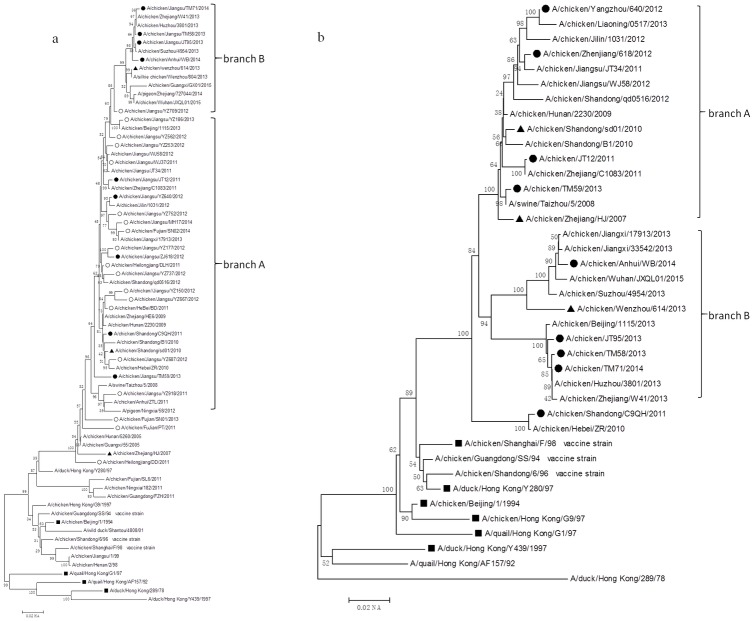
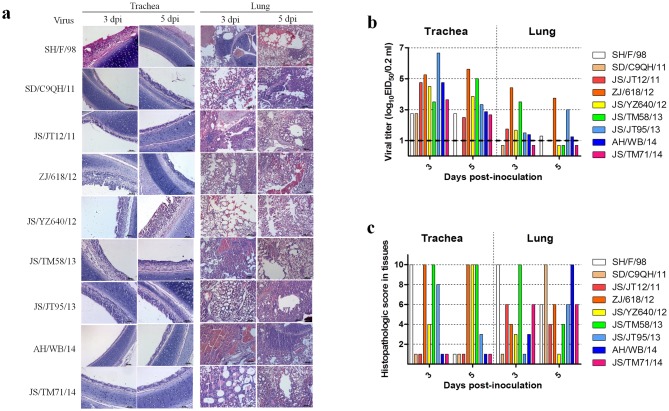
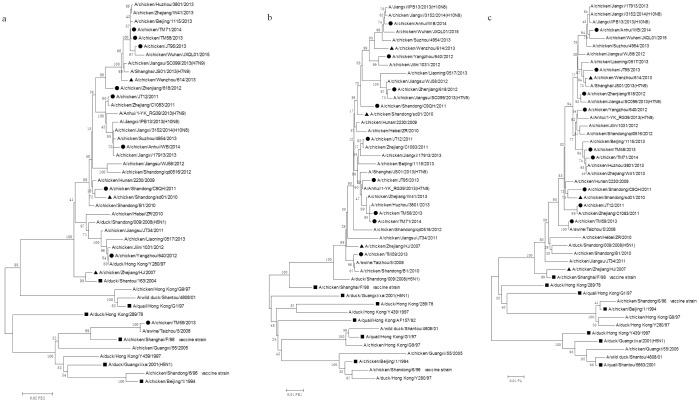
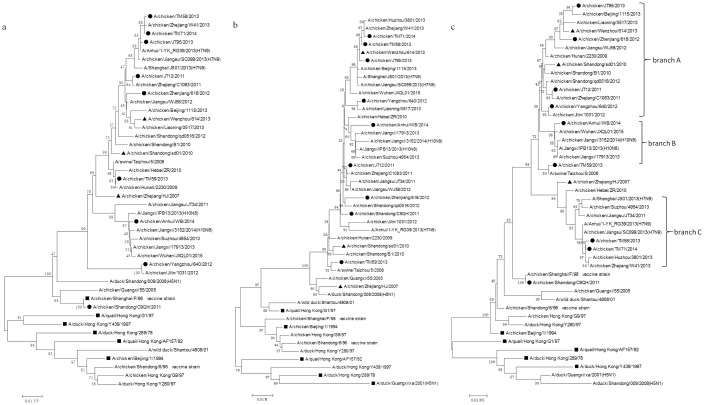
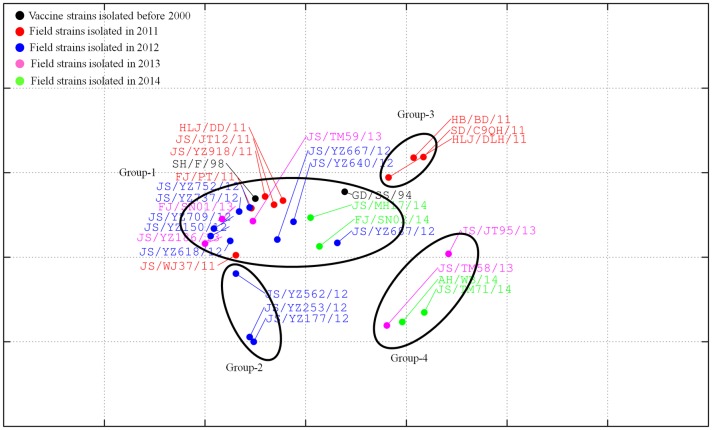
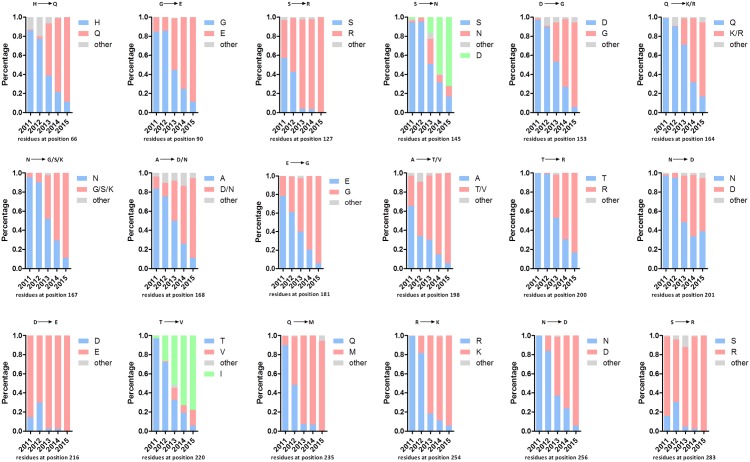
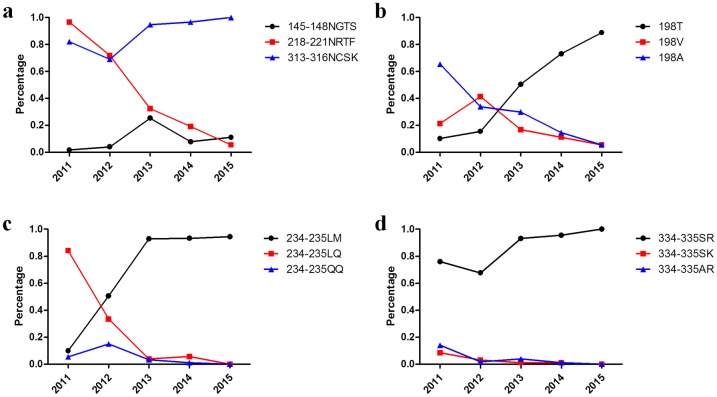
The genotypes of the H9N2 avian influenza viruses have changed since 2013 when almost all H9N2 viruses circulating in chickens in China were genotype 57 (G57) with the fittest lineage of each gene. To characterize the H9N2 variant viruses from 2011 to 2014, 28 H9N2 influenza viruses were isolated from live poultry markets in China from 2011-2014 and were analyzed by genetic and biological characterization. Our findings showed that 16 residues that changed antigenicity, two potential N-linked glycosylation sites, and one amino acid in the receptor binding site of the HA protein changed significantly from 2011-2014. Moreover, the HA and NA genes in the phylogenetic tree were mainly clustered into two independent branches, A and B, based on the year of isolation. H9N2 virus internal genes were related to those from the human-infected avian influenza viruses H5N1, H7N9, and H10N8. In particular, the NS gene in the phylogenetic tree revealed genetic divergence of the virus gene into three branches labeled A, B, and C, which were related to the H9N2, H10N8, and H7N9 viruses, respectively. Additionally, the isolates also showed varying levels of infection and airborne transmission. These results indicated that the H9N2 virus had undergone an adaptive evolution and variation from 2011-2014.
自 2013 年以来,中国鸡群中流行的 H9N2 禽流感病毒的基因型发生了变化,当时几乎所有的 H9N2 病毒都是基因型 57(G57),具有每个基因的最适谱系。为了描述 2011 年至 2014 年的 H9N2 变异病毒,我们从 2011 年至 2014 年从中国活禽市场分离了 28 株 H9N2 流感病毒,并进行了遗传和生物学特征分析。我们的研究结果表明,HA 蛋白的 16 个改变抗原性的残基、两个潜在的 N-糖基化位点和一个受体结合位点的氨基酸在 2011-2014 年发生了显著变化。此外,根据分离年份,HA 和 NA 基因在系统进化树上主要聚类为两个独立的分支 A 和 B。H9N2 病毒的内部基因与人类感染的禽流感病毒 H5N1、H7N9 和 H10N8 有关。特别是,系统进化树中的 NS 基因显示病毒基因发生遗传分化,分为 A、B 和 C 三个分支,分别与 H9N2、H10N8 和 H7N9 病毒有关。此外,这些分离株还表现出不同程度的感染和空气传播能力。这些结果表明,H9N2 病毒在 2011-2014 年发生了适应性进化和变异。