UCL Institute for Women's Health, Maternal & Fetal Medicine, Perinatal Brain Repair Group, London, United Kingdom.
PLoS One. 2018 Jul 3;13(7):e0199890. doi: 10.1371/journal.pone.0199890. eCollection 2018.
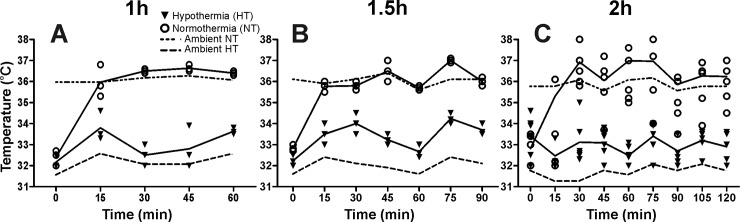
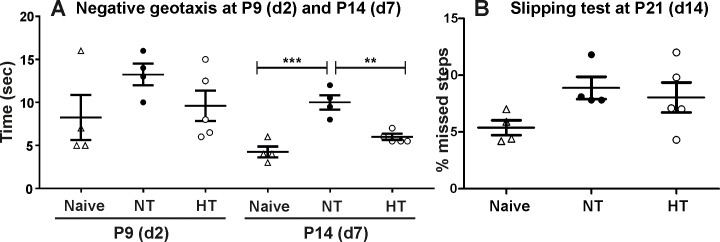
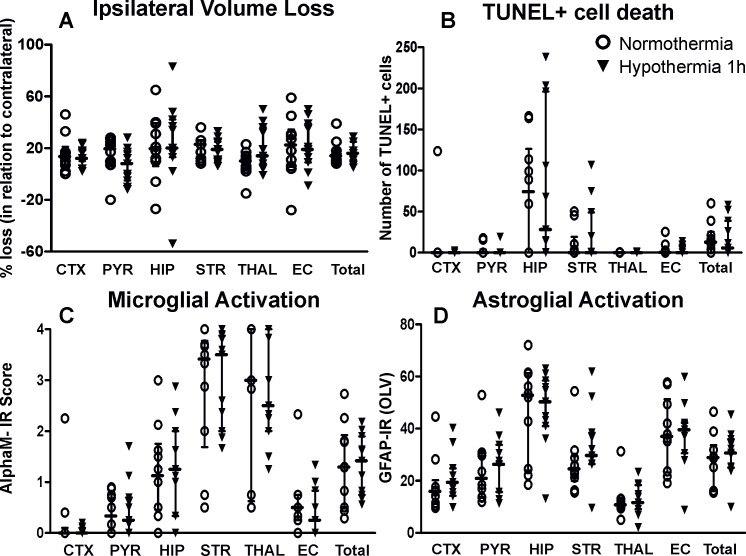
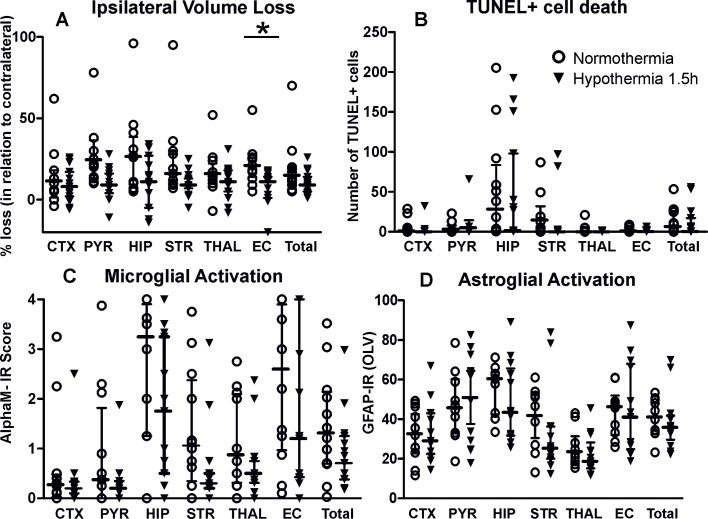
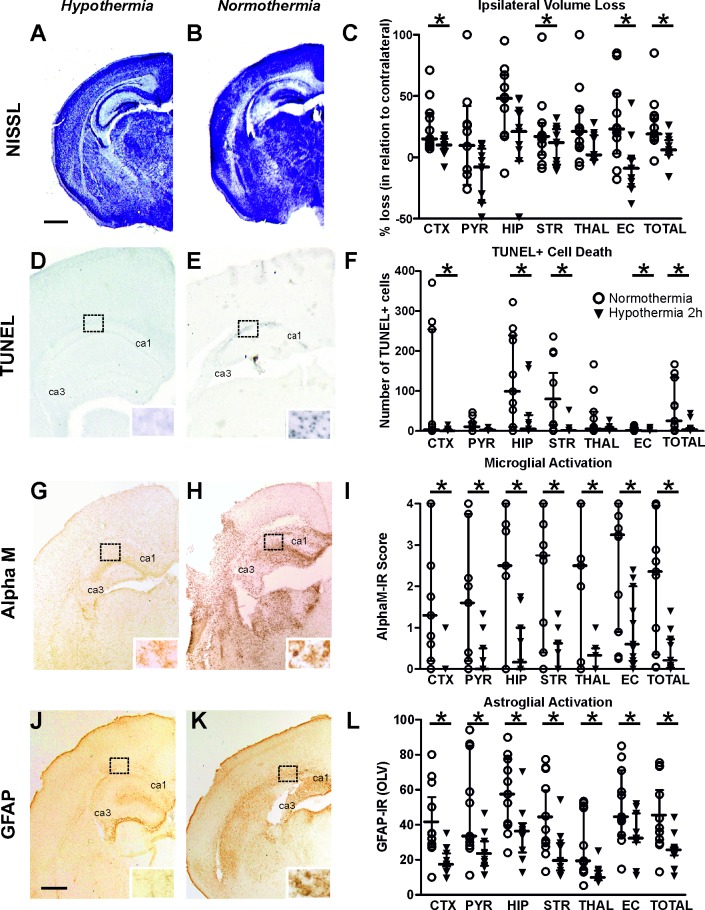
Neonatal hypoxic-ischaemic encephalopathy (HIE) is major cause of neonatal mortality and morbidity. Therapeutic hypothermia is standard clinical care for moderate hypoxic-ischaemic (HI) brain injury, however it reduces the risk of death and disability only by 11% and 40% of the treated infants still develop disabilities. Thus it is necessary to develop supplementary therapies to complement therapeutic hypothermia in the treatment of neonatal HIE. The modified Rice-Vannucci model of HI in the neonatal mouse is well developed and widely applied with different periods of hypothermia used as neuroprotective strategy in combination with other agents. However, different studies use different periods, time of initiation and duration of hypothermia following HI, with subsequent varying degrees of neuroprotection. So far most rodent data is obtained using exposure to 5-6h of therapeutic hypothermia. Our aim was to compare the effect of exposure to three different short periods of hypothermia (1h, 1.5h and 2h) following HI insult in the postnatal day 7 C57/Bl6 mouse, and to determine the shortest period providing neuroprotection. Our data suggests that 1h and 1.5h of hypothermia delayed by 20min following a 60min exposure to 8%O2 do not prove neuroprotective. However, 2h of hypothermia significantly reduced tissue loss, TUNEL+ cell death and microglia and astroglia activation. We also observed improved functional outcome 7 days after HI. We suggest that the minimal period of cooling necessary to provide moderate short term neuroprotection and appropriate for the development and testing of combined treatment is 2h.
新生儿缺氧缺血性脑病(HIE)是新生儿死亡和发病的主要原因。治疗性低温是治疗中度缺氧缺血(HI)脑损伤的标准临床护理方法,但它只能将死亡风险和残疾风险降低 11%和 40%,接受治疗的婴儿仍有发育障碍的风险。因此,有必要开发补充治疗方法,以补充治疗性低温在新生儿 HIE 治疗中的作用。改良的 Rice-Vannucci 新生小鼠 HI 模型已经得到了很好的发展和广泛应用,不同的低温期被用作神经保护策略,与其他药物联合使用。然而,不同的研究使用不同的低温期、低温开始时间和持续时间,随后产生不同程度的神经保护作用。到目前为止,大多数啮齿动物数据是通过使用 5-6 小时的治疗性低温获得的。我们的目的是比较 HI 后暴露于三种不同的短期低温(1 小时、1.5 小时和 2 小时)对出生后第 7 天 C57/Bl6 小鼠的影响,并确定提供神经保护作用的最短时间。我们的数据表明,在 8%O2 暴露 60 分钟后延迟 20 分钟进行 1 小时和 1.5 小时的低温治疗并不能提供神经保护作用。然而,2 小时的低温治疗显著减少了组织损失、TUNEL+细胞死亡以及小胶质细胞和星形胶质细胞的激活。我们还观察到 HI 后 7 天的功能结果得到了改善。我们认为,提供适度短期神经保护作用所需的最小冷却时间为 2 小时,适合联合治疗的开发和测试。