Department of Plant and Microbial Biology, University of California, Berkeley, CA, 94720, USA.
Lincoln Science Centre, AgResearch Ltd, Christchurch, 8140, New Zealand.
Microbiome. 2018 Jul 3;6(1):122. doi: 10.1186/s40168-018-0499-z.
The transformation of plant photosynthate into soil organic carbon and its recycling to CO by soil microorganisms is one of the central components of the terrestrial carbon cycle. There are currently large knowledge gaps related to which soil-associated microorganisms take up plant carbon in the rhizosphere and the fate of that carbon.
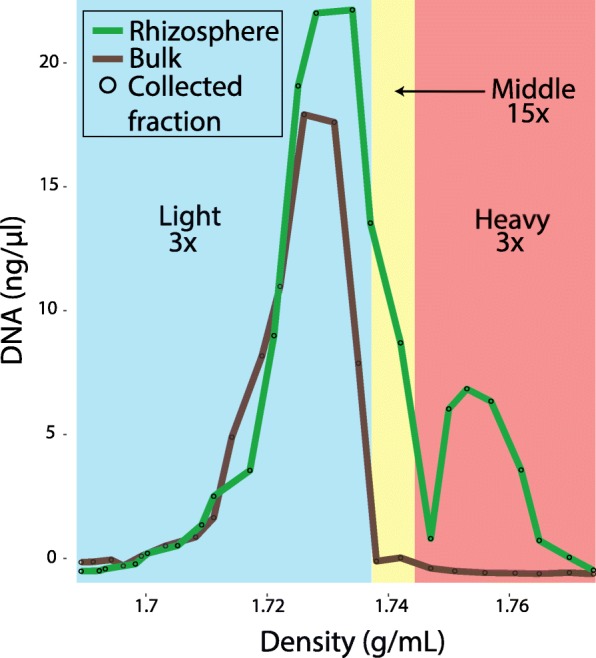
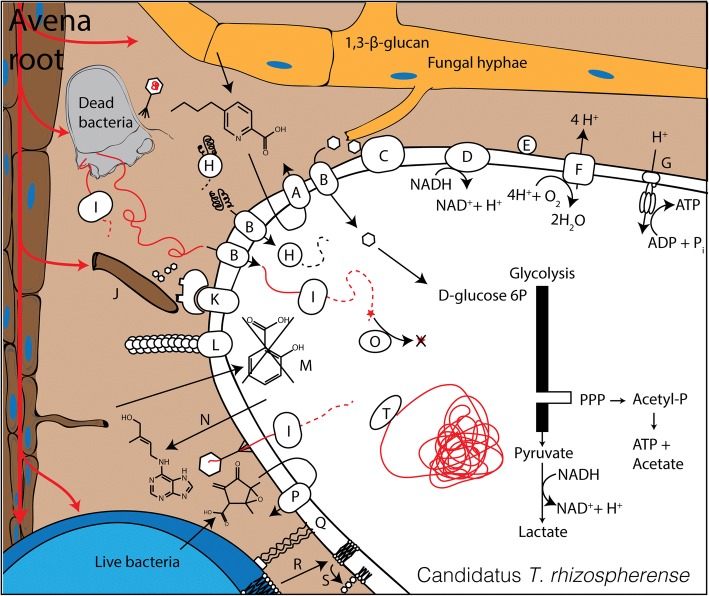
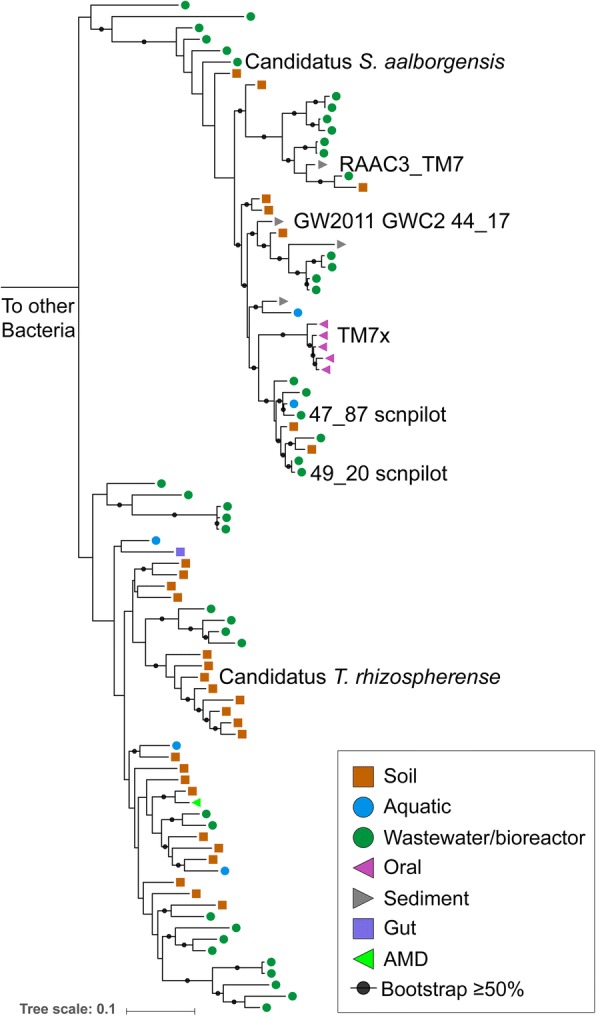
We conducted an experiment in which common wild oats (Avena fatua) were grown in a CO atmosphere and the rhizosphere and non-rhizosphere soil was sampled for genomic analyses. Density gradient centrifugation of DNA extracted from soil samples enabled distinction of microbes that did and did not incorporate the C into their DNA. A 1.45-Mbp genome of a Saccharibacteria (TM7) was identified and, despite the microbial complexity of rhizosphere soil, curated to completion. The genome lacks many biosynthetic pathways, including genes required to synthesize DNA de novo. Rather, it requires externally derived nucleotides for DNA and RNA synthesis. Given this, we conclude that rhizosphere-associated Saccharibacteria recycle DNA from bacteria that live off plant exudates and/or phage that acquired C because they preyed upon these bacteria and/or directly from the labeled plant DNA. Isotopic labeling indicates that the population was replicating during the 6-week period of plant growth. Interestingly, the genome is ~ 30% larger than other complete Saccharibacteria genomes from non-soil environments, largely due to more genes for complex carbon utilization and amino acid metabolism. Given the ability to degrade cellulose, hemicellulose, pectin, starch, and 1,3-β-glucan, we predict that this Saccharibacteria generates energy by fermentation of soil necromass and plant root exudates to acetate and lactate. The genome also encodes a linear electron transport chain featuring a terminal oxidase, suggesting that this Saccharibacteria may respire aerobically. The genome encodes a hydrolase that could breakdown salicylic acid, a plant defense signaling molecule, and genes to interconvert a variety of isoprenoids, including the plant hormone zeatin.
Rhizosphere Saccharibacteria likely depend on other bacteria for basic cellular building blocks. We propose that isotopically labeled CO is incorporated into plant-derived carbon and then into the DNA of rhizosphere organisms capable of nucleotide synthesis, and the nucleotides are recycled into Saccharibacterial genomes.
植物光合作用产物转化为土壤有机碳,并通过土壤微生物循环回 CO,这是陆地碳循环的核心组成部分之一。目前,关于哪些土壤相关微生物在根际吸收植物碳以及该碳的归宿,存在很大的知识空白。
我们进行了一项实验,在 CO 气氛中种植普通野燕麦( Avena fatua ),并对根际和非根际土壤进行基因组分析取样。对从土壤样本中提取的 DNA 进行密度梯度离心,能够区分将 C 纳入其 DNA 的微生物和未将 C 纳入其 DNA 的微生物。鉴定出一个 1.45-Mbp 的 Saccharibacteria(TM7)基因组,尽管根际土壤中的微生物复杂,但仍完成了该基因组的测序。该基因组缺乏许多生物合成途径,包括从头合成 DNA 所需的基因。相反,它需要外部来源的核苷酸用于 DNA 和 RNA 合成。鉴于此,我们得出结论,根际相关的 Saccharibacteria 从以植物分泌物为食的细菌或从以这些细菌为食的噬菌体中回收 DNA,或者直接从标记的植物 DNA 中回收 DNA。同位素标记表明,在植物生长的 6 周期间,该种群正在复制。有趣的是,该基因组比其他非土壤环境中的完整 Saccharibacteria 基因组大约 30%,这主要是由于更多用于复杂碳利用和氨基酸代谢的基因。鉴于其能够降解纤维素、半纤维素、果胶、淀粉和 1,3-β-葡聚糖的能力,我们预测这种 Saccharibacteria 通过发酵土壤腐殖质和植物根分泌物生成乙酸盐和乳酸盐来产生能量。该基因组还编码了一条线性电子传递链,其中包括末端氧化酶,表明这种 Saccharibacteria 可能进行需氧呼吸。该基因组编码一种水解酶,可分解水杨酸,一种植物防御信号分子,以及可将多种异戊二烯转化的基因,包括植物激素玉米素。
根际 Saccharibacteria 可能依赖于其他细菌来获取基本的细胞构建块。我们提出,标记的 CO 被掺入植物衍生的碳中,然后掺入能够合成核苷酸的根际生物的 DNA 中,核苷酸被回收进入 Saccharibacteria 基因组。