School of Biological Sciences, University of Northern Colorado, Greeley, CO 80639, USA.
Departamento de Zoología, Universidad de Granada, 18071 Granada, Spain.
Toxins (Basel). 2018 Jul 3;10(7):271. doi: 10.3390/toxins10070271.
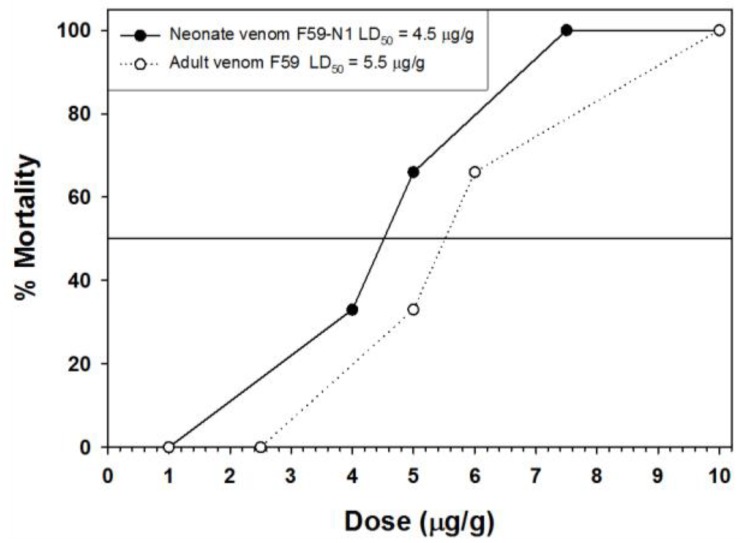
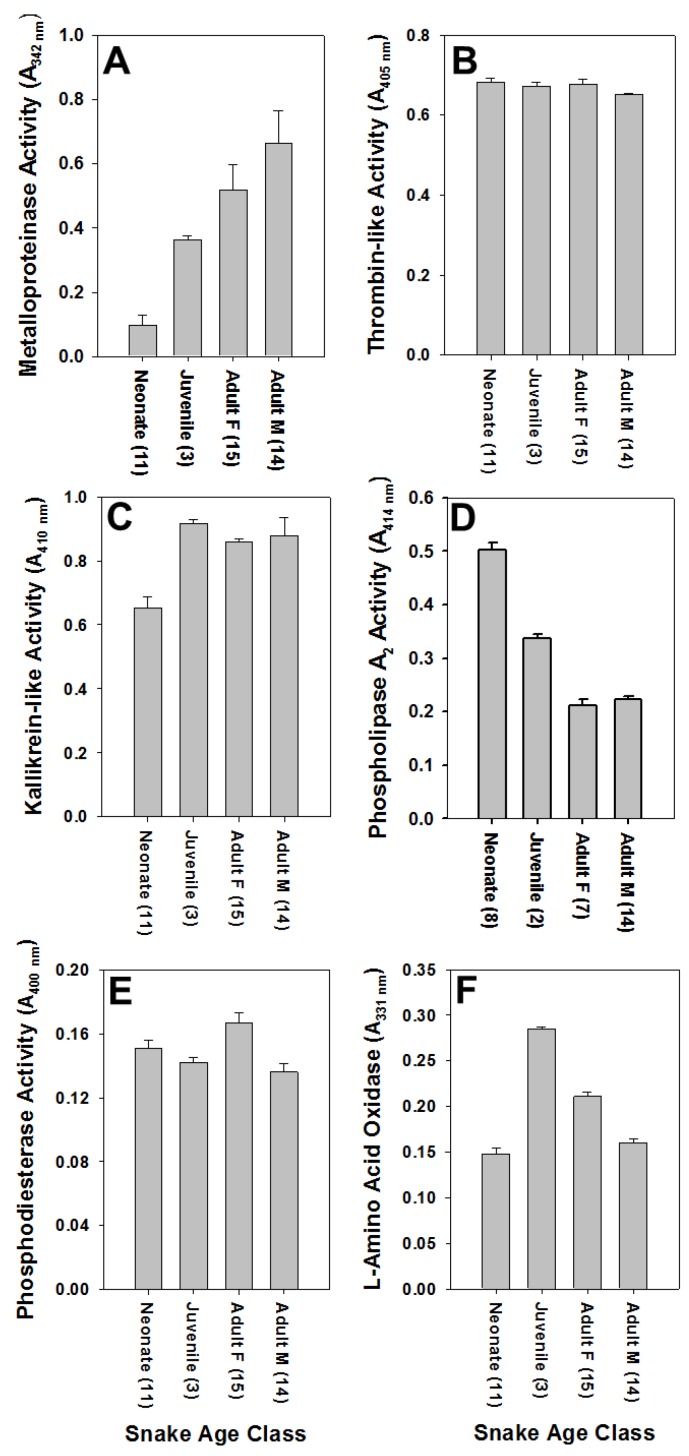
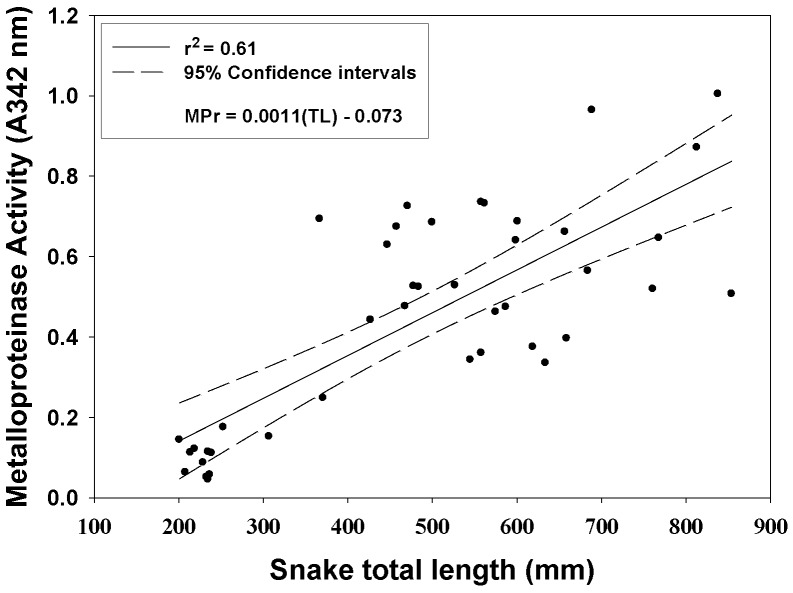
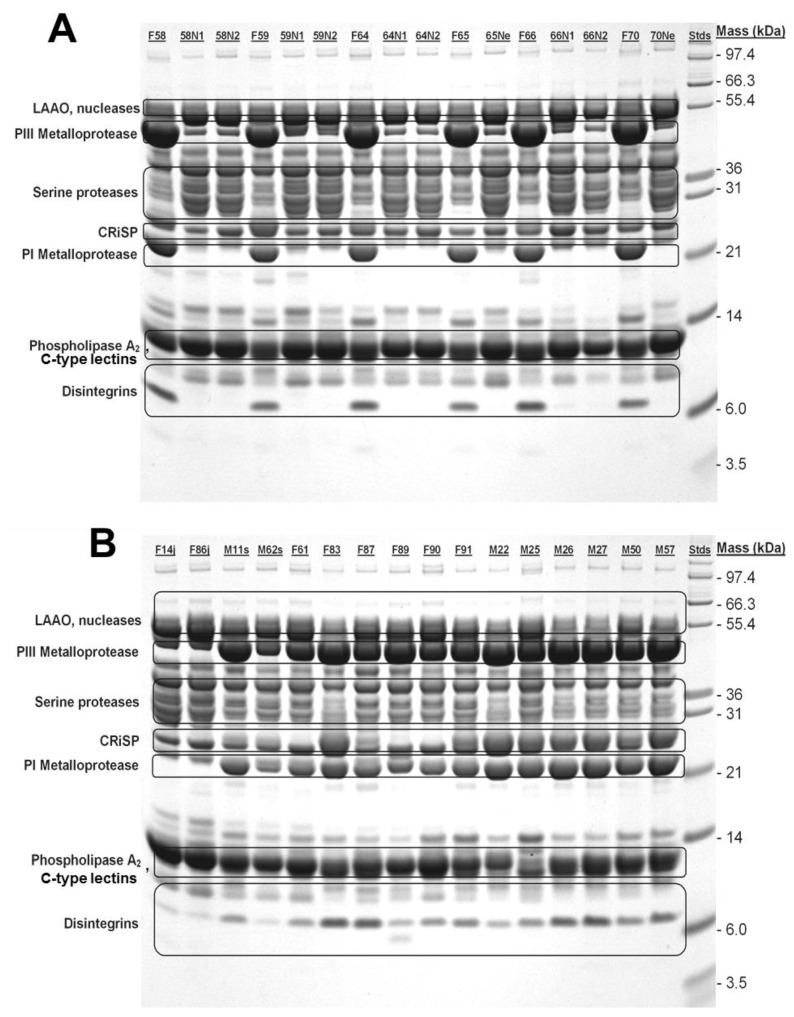
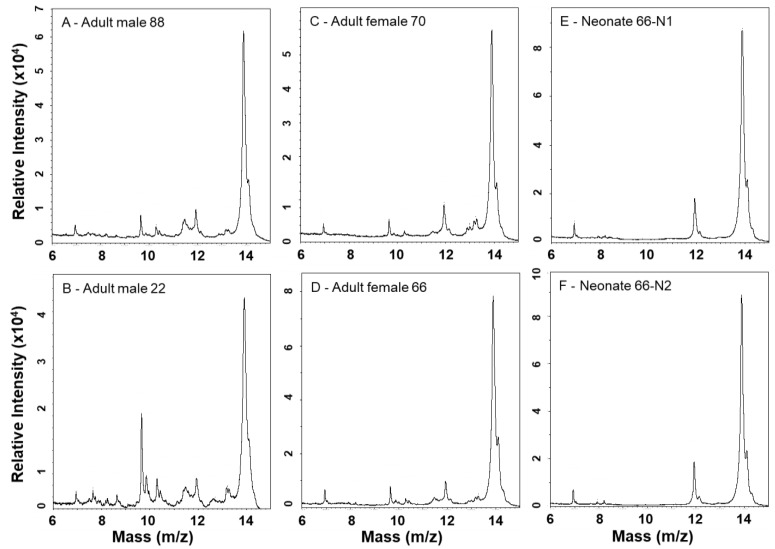
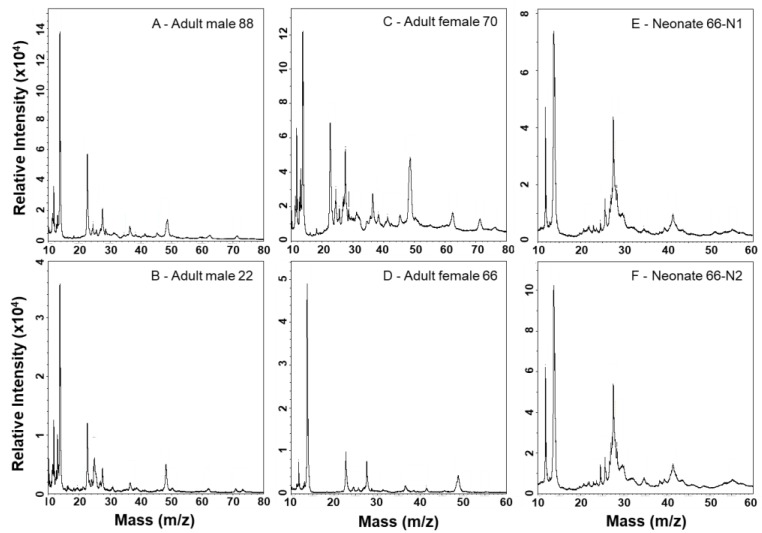
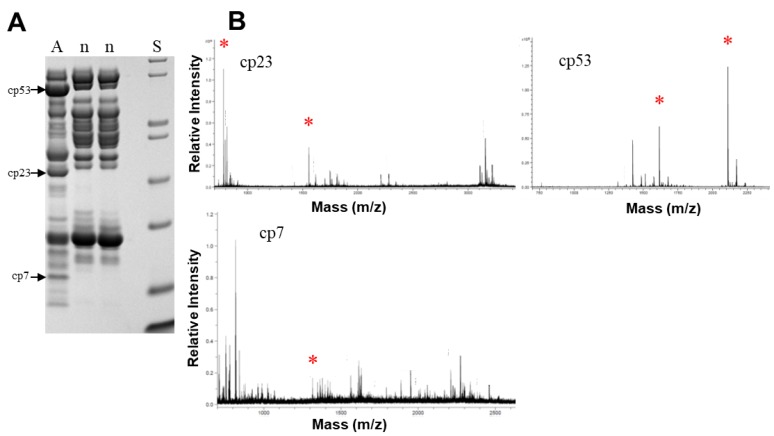
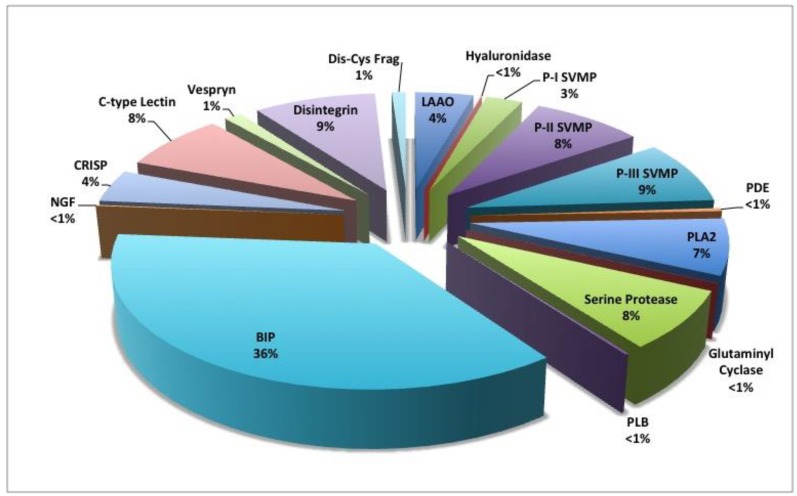
As trophic adaptations, rattlesnake venoms can vary in composition depending on several intrinsic and extrinsic factors. Ontogenetic changes in venom composition have been documented for numerous species, but little is known of the potential age-related changes in many rattlesnake species found in México. In the current study, venom samples collected from adult and neonate from Estado de México were subjected to enzymatic and electrophoretic analyses, toxicity assays (LD), and MALDI-TOF mass spectrometry, and a pooled sample of adult venom was analyzed by shotgun proteomics. Electrophoretic profiles of adult males and females were quite similar, and only minor sex-based variation was noted. However, distinct differences were observed between venoms from adult females and their neonate offspring. Several prominent bands, including P-I and P-III snake venom metalloproteinases (SVMPs) and disintegrins (confirmed by MS/MS) were present in adult venoms and absent/greatly reduced in neonate venoms. Age-dependent differences in SVMP, kallikrein-like, phospholipase A₂ (PLA₂), and L-amino acid oxidase (LAAO) activity levels were confirmed by enzymatic activity assays, and like many other rattlesnake species, venoms from adult snakes have higher SVMP activity than neonate venoms. Conversely, PLA₂ activity was approximately 2.5 × greater in venoms from neonates, likely contributing to the increased toxicity (neonate venom LD = 4.5 μg/g) towards non-Swiss albino mice when compared to adult venoms (LD = 5.5 μg/g). Thrombin-like (TLE) and phosphodiesterase activities did not vary significantly with age. A significant effect of sex (between adult male and adult female venoms) was also observed for SVMP, TLE, and LAAO activities. Analysis of pooled adult venom by LC-MS/MS identified 14 toxin protein families, dominated by bradykinin-inhibitory peptides, SVMPs (P-I, P-II and P-III), disintegrins, PLA₂s, C-type-lectins, CRiSPs, serine proteinases, and LAAOs (96% of total venom proteins). Neonate and adult in this population consume almost exclusively mammals, suggesting that age-based differences in composition are related to physical differences in prey (e.g., surface-to-volume ratio differences) rather than taxonomic differences between prey. Venoms from adult fit a Type I pattern (high SVMP activity, lower toxicity), which is characteristic of many larger-bodied rattlesnakes of North America.
作为营养适应,响尾蛇毒液的成分可能因多种内在和外在因素而有所不同。许多物种的毒液成分已经发生了发育变化,但对于墨西哥发现的许多响尾蛇物种,潜在的与年龄相关的变化知之甚少。在当前的研究中,从墨西哥州收集的成年和新生响尾蛇的毒液样本进行了酶和电泳分析、毒性测定(LD)和 MALDI-TOF 质谱分析,并且对成年毒液的混合样本进行了 shotgun 蛋白质组学分析。成年雄性和雌性的电泳图谱非常相似,仅注意到微小的性别差异。然而,成年雌蛇及其新生后代的毒液之间存在明显差异。几种突出的带,包括 P-I 和 P-III 蛇毒金属蛋白酶(SVMPs)和整联蛋白(通过 MS/MS 证实)存在于成年毒液中,而在新生毒液中不存在或大大减少。通过酶活性测定证实了 SVMP、激肽样、磷脂酶 A₂(PLA₂)和 L-氨基酸氧化酶(LAAO)活性水平的年龄依赖性差异,与许多其他响尾蛇物种一样,成年蛇的毒液的 SVMP 活性高于新生毒液。相反,新生毒液中的 PLA₂活性约高 2.5 倍,与成年毒液相比,对非瑞士白化小鼠的毒性(新生毒液 LD=4.5μg/g)增加。凝血酶样(TLE)和磷酸二酯酶活性与年龄无显著差异。SVMP、TLE 和 LAAO 活性也观察到性别(成年雄性和成年雌性毒液之间)的显著影响。通过 LC-MS/MS 对混合成年毒液的分析鉴定出 14 种毒素蛋白家族,主要由缓激肽抑制肽、SVMPs(P-I、P-II 和 P-III)、整联蛋白、PLA₂s、C 型凝集素、CRiSPs、丝氨酸蛋白酶和 LAAO(占总毒液蛋白的 96%)组成。该种群中的新生和成年响尾蛇几乎只食用哺乳动物,这表明组成上的年龄差异与猎物的物理差异(例如,表面积与体积比差异)有关,而与猎物的分类学差异无关。成年响尾蛇的毒液符合 I 型模式(SVMP 活性高,毒性低),这是北美的许多大型响尾蛇的特征。