College of Environmental Science and Engineering, Ocean University of China, Qingdao 266100, China.
Key Laboratory of Marine Environment and Ecology, Ocean University of China, Ministry of Education, Qingdao 266100, China.
Toxins (Basel). 2018 Jul 3;10(7):273. doi: 10.3390/toxins10070273.
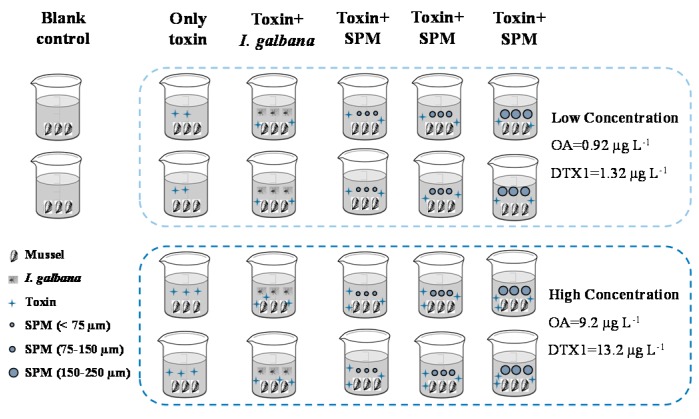
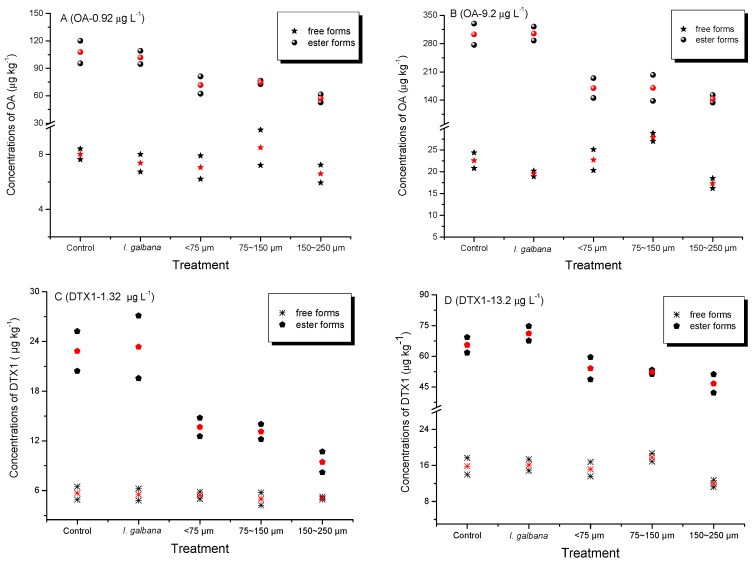
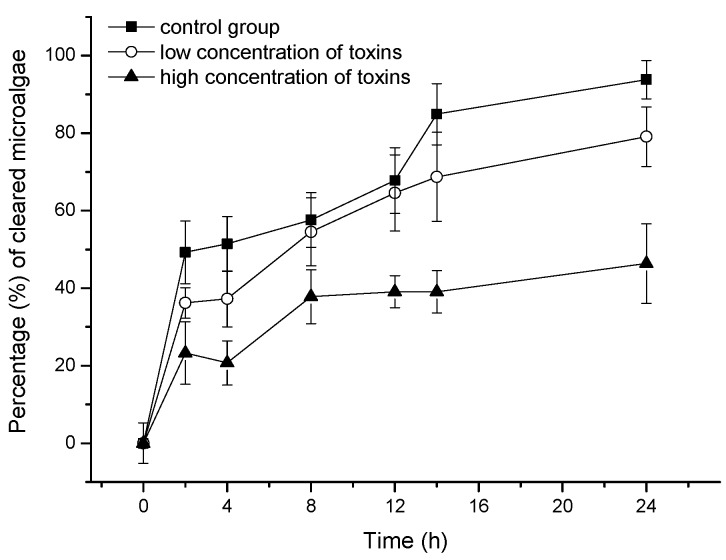
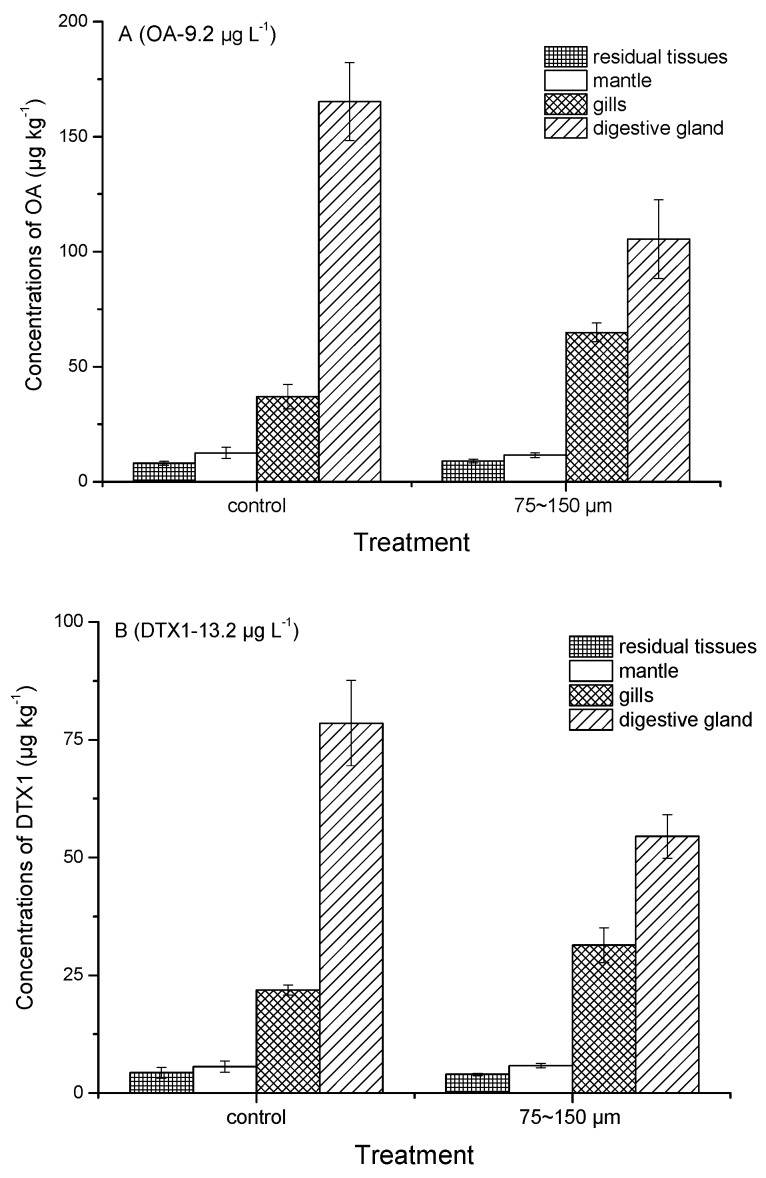
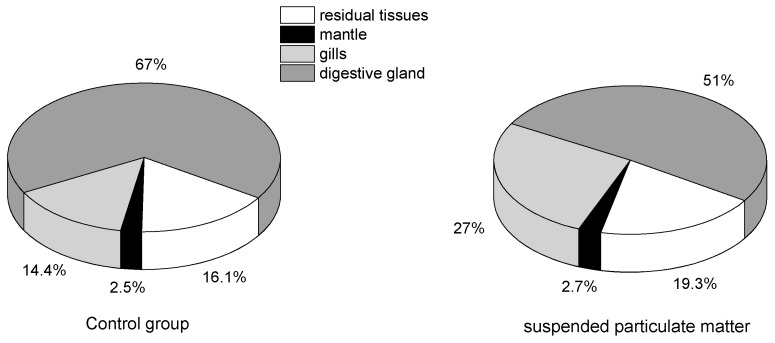
In recent years, detection of trace amounts of dissolved lipophilic phycotoxins in coastal waters has been possible using solid phase adsorption toxin tracking (SPATT) samplers. To explore the contribution of dissolved diarrhetic shellfish toxins (DST) to the accumulation of toxins by cultivated bivalves, mussels () were exposed to different concentrations of purified okadaic acid (OA) and dinophysistoxin-1 (DTX1) in filtered (0.45 µm) seawater for 96 h. Accumulation and esterification of DST by mussels under different experimental conditions, including with and without the addition of the food microalga , and with the addition of different size-fractions of suspended particulate matter (SPM) (<75 µm, 75⁻150 µm, 150⁻250 µm) were compared. Results showed that mussels accumulated similar amounts of OA and DTX1 from seawater with or without food microalgae present, and slightly lower amounts when SPM particles were added. Mussels preferentially accumulated OA over DTX1 in all treatments. The efficiency of the mussel’s accumulation of OA and DTX1 from seawater spiked with low concentrations of toxins was higher than that in seawater with high toxin levels. A large proportion of OA (86⁻94%) and DTX1 (65⁻82%) was esterified to DTX3 by mussels in all treatments. The proportion of cells cleared by mussels was markedly inhibited by dissolved OA and DTX1 (OA 9.2 µg L, DTX1 13.2 µg L) in seawater. Distribution of total OA and DTX1 accumulated in the mussel tissues ranked in all treatments as follows: digestive gland > gills > mantle > residual tissues. However, the percentage of total DST in the digestive gland of mussels in filtered seawater (67%) was higher than with the addition of SPM particles (75⁻150 µm) (51%), whereas the gills showed the opposite trend in filtered seawater with (27%) and without (14.4%) SPM particles. Results presented here will improve our understanding of the mechanisms of DST accumulation by bivalves in marine aquaculture environments.
近年来,使用固相吸附毒素追踪(SPATT)采样器已经可以检测到沿海水域中痕量脂溶性藻毒素的存在。为了探究溶解型腹泻性贝类毒素(DST)对养殖贝类毒素积累的贡献,实验中将贻贝暴露于不同浓度的纯化冈田酸(OA)和去甲溶血素-1(DTX1)于过滤(0.45μm)海水中 96 h。在不同的实验条件下,包括添加和不添加食物微藻以及添加不同大小的悬浮颗粒物(SPM)(<75μm、75-150μm、150-250μm),比较了贻贝对 DST 的积累和酯化作用。结果表明,贻贝从有或没有食物微藻存在的海水中积累的 OA 和 DTX1 量相似,而当添加 SPM 颗粒时,积累的量略低。在所有处理中,贻贝优先积累 OA 而不是 DTX1。贻贝从低浓度毒素海水中积累 OA 和 DTX1 的效率高于从高毒素水平海水中积累的效率。贻贝在所有处理中都将大量的 OA(86%-94%)和 DTX1(65%-82%)酯化形成 DTX3。在海水中,溶解的 OA 和 DTX1(OA 9.2μg/L,DTX1 13.2μg/L)显著抑制了贻贝对细胞的清除。在所有处理中,贻贝组织中总 OA 和 DTX1 的积累分布如下:消化腺>鳃>套膜>残余组织。然而,在过滤海水中,贻贝消化腺中总 DST 的百分比(67%)高于添加 SPM 颗粒(75-150μm)(51%),而在过滤海水中,鳃中的比例则相反(有 SPM 颗粒时为 27%,无 SPM 颗粒时为 14.4%)。本文的研究结果将提高我们对贝类在海洋养殖环境中积累 DST 的机制的认识。