LR17AGR01 (LR GREEN-TEAM)/INAT, University Carthage, Avenue de la République, P.O. Box 77, Carthage, Tunis 1054, Tunisia.
ISET_Nabeul, Campus Universitaire Mrezgua, Nabeul 8000, Tunisie.
Sensors (Basel). 2018 Jul 3;18(7):2138. doi: 10.3390/s18072138.
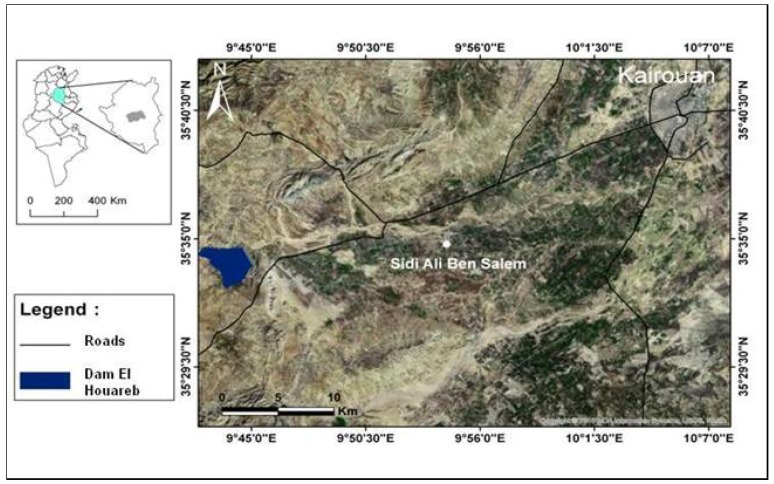
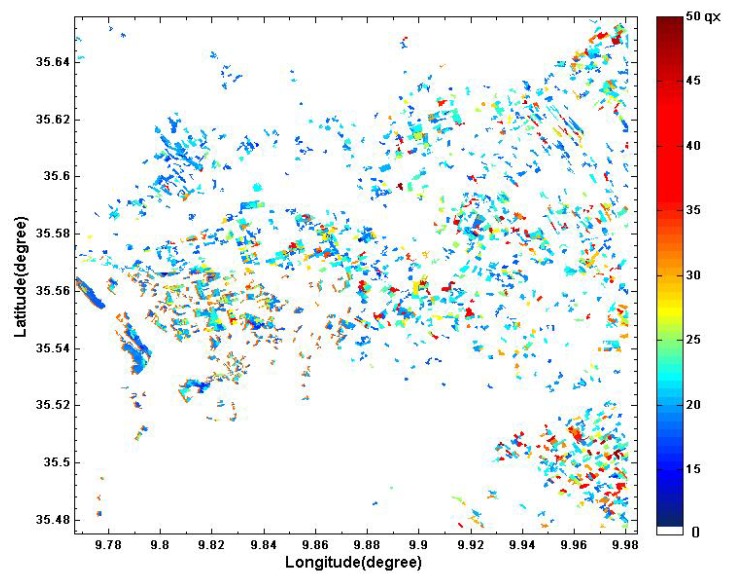
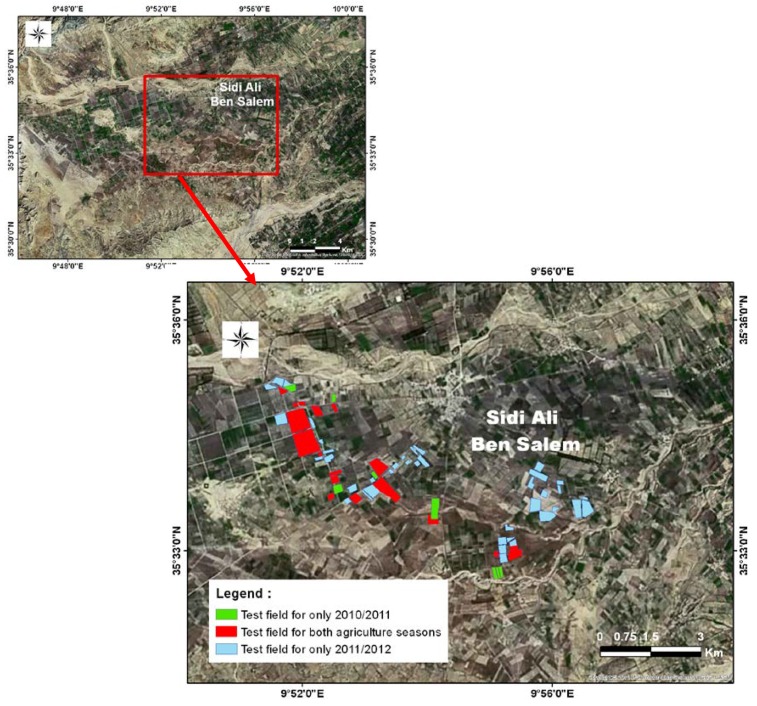
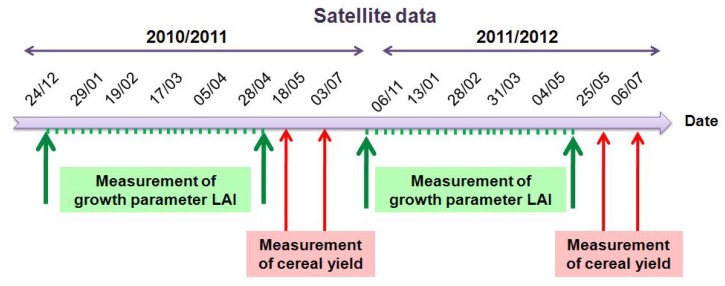
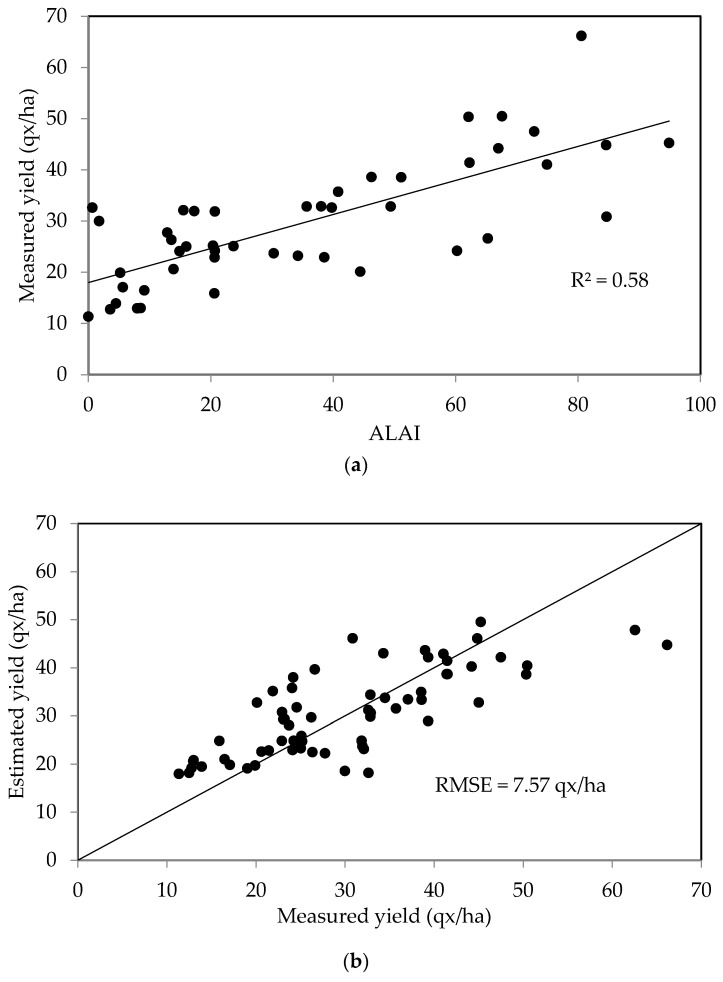
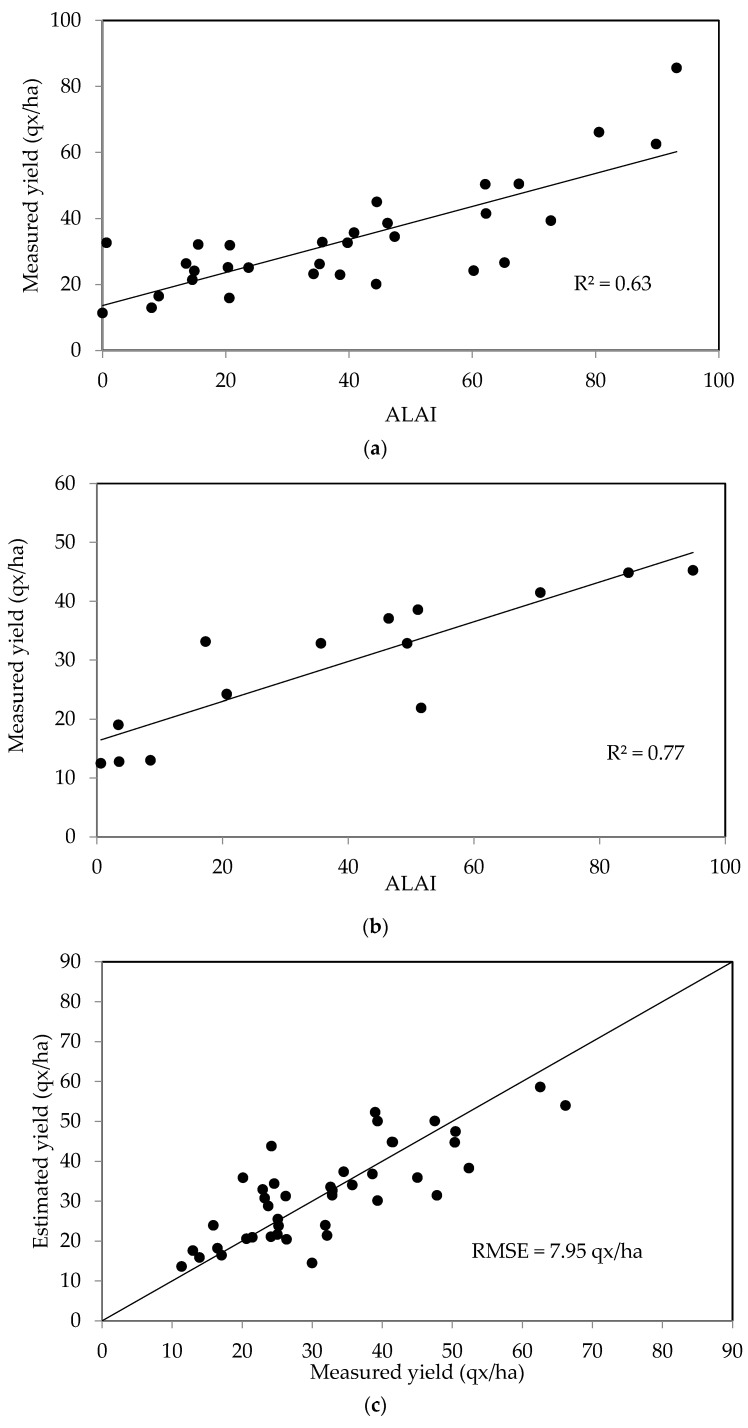
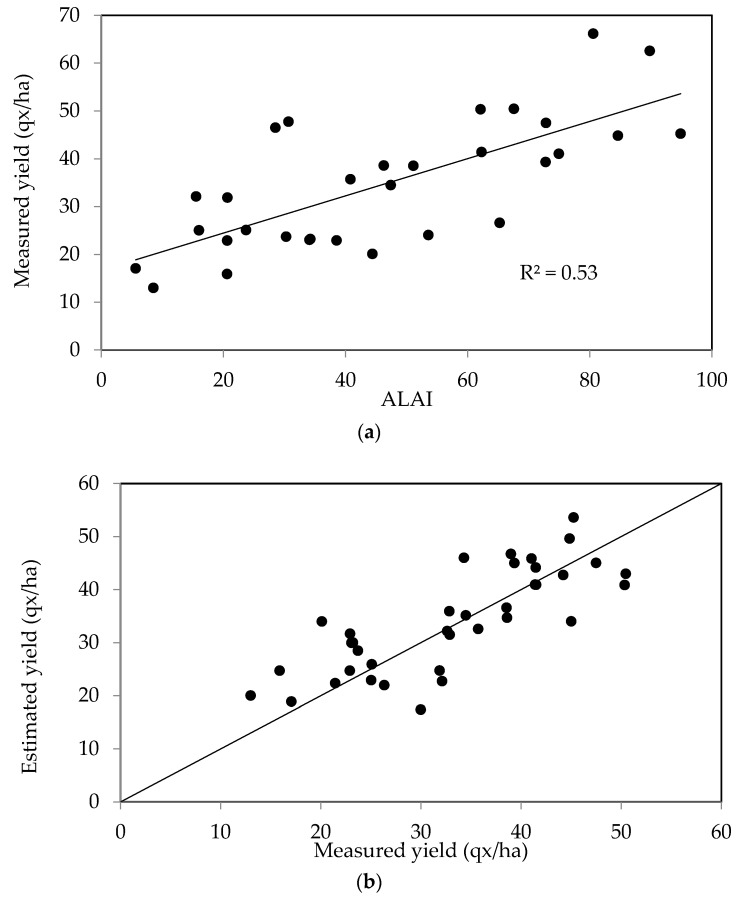
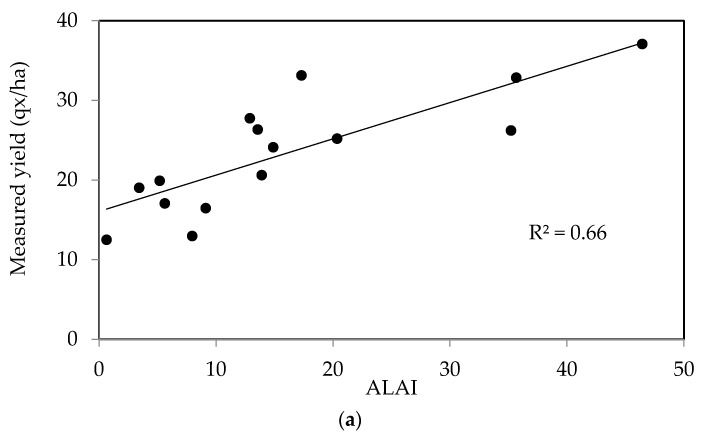
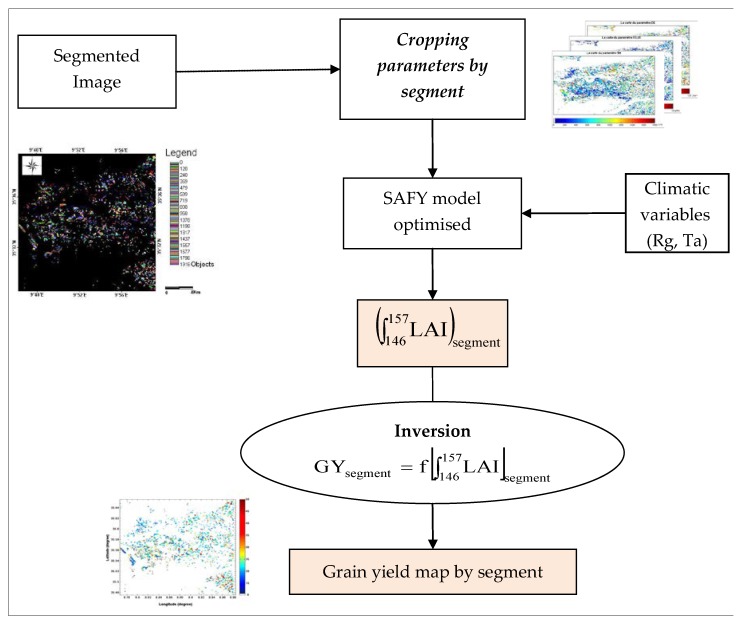
In semi-arid areas characterized by frequent drought events, there is often a strong need for an operational grain yield forecasting system, to help decision-makers with the planning of annual imports. However, monitoring the crop canopy and production capacity of plants, especially for cereals, can be challenging. In this paper, a new approach to yield estimation by combining data from the Simple Algorithm for Yield estimation (SAFY) agro-meteorological model with optical SPOT/ High Visible Resolution (HRV) satellite data is proposed. Grain yields are then statistically estimated as a function of Leaf Area Index (LAI) during the maximum growth period between 25 March and 5 April. The LAI is retrieved from the SAFY model, and calibrated using SPOT/HRV data. This study is based on the analysis of a rich database, which was acquired over a period of two years (2010⁻2011, 2012⁻2013) at the Merguellil site in central Tunisia (North Africa) from more than 60 test fields and 20 optical satellite SPOT/HRV images. The validation and calibration of this methodology is presented, on the basis of two subsets of observations derived from the experimental database. Finally, an inversion technique is applied to estimate the overall yield of the entire studied site.
在以频繁干旱事件为特征的半干旱地区,通常强烈需要一个运行的谷物产量预测系统,以帮助决策者规划年度进口。然而,监测作物冠层和植物的生产能力,特别是对谷物而言,可能具有挑战性。在本文中,提出了一种将 Simple Algorithm for Yield estimation(SAFY)农业气象模型的数据与光学 SPOT/High Visible Resolution(HRV)卫星数据相结合来进行产量估计的新方法。然后根据 3 月 25 日至 4 月 5 日最大生长期内的叶面积指数(LAI)统计估算谷物产量。LAI 从 SAFY 模型中获取,并使用 SPOT/HRV 数据进行校准。本研究基于对一个丰富数据库的分析,该数据库是在突尼斯中部 Merguellil 站点(北非)在两年(2010-2011、2012-2013 年)期间从 60 多个测试场和 20 个光学卫星 SPOT/HRV 图像中获取的。基于从实验数据库中得出的两个观测子集,提出了对该方法的验证和校准。最后,应用反演技术来估计整个研究点的总产量。