Paquin-Proulx Dominic, Costa Priscilla R, Terrassani Silveira Cassia G, Marmorato Mariana P, Cerqueira Natalia B, Sutton Matthew S, O'Connor Shelby L, Carvalho Karina I, Nixon Douglas F, Kallas Esper G
Department of Microbiology, Immunology and Tropical Medicine, The George Washington University, Washington, DC, United States.
School of Medicine, University of São Paulo, São Paulo, Brazil.
Front Immunol. 2018 Jun 19;9:1394. doi: 10.3389/fimmu.2018.01394. eCollection 2018.
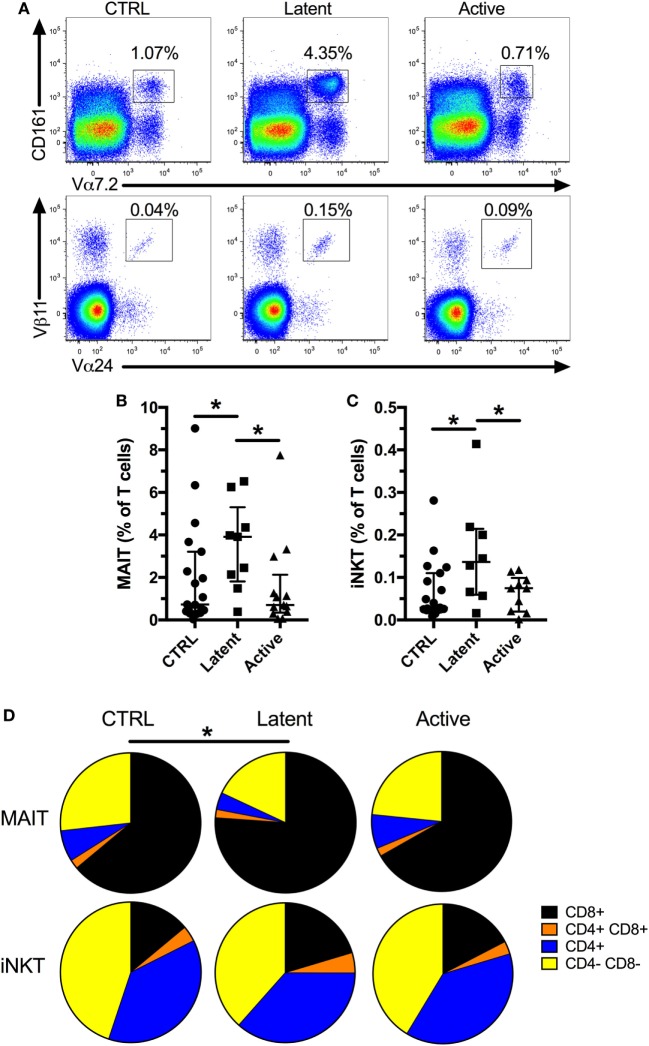
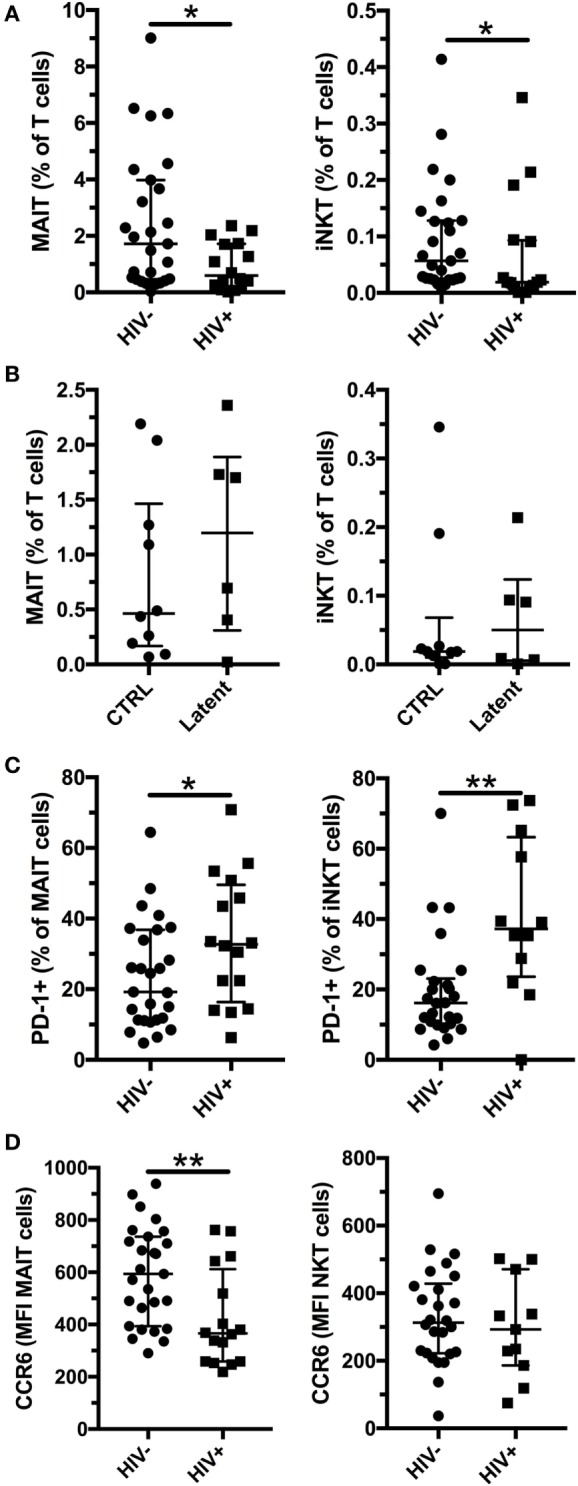
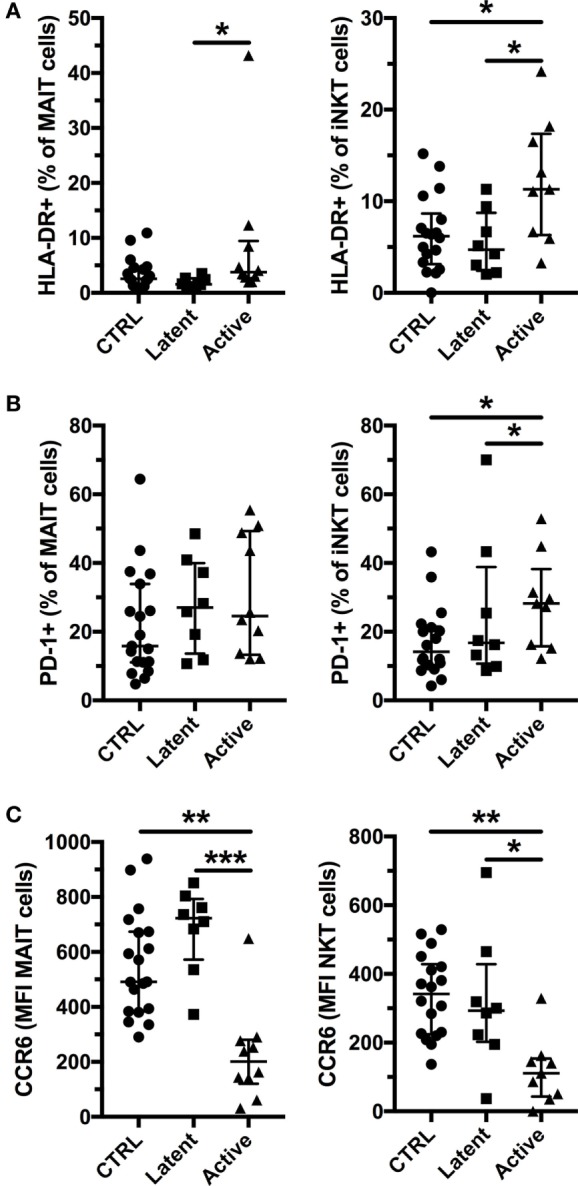
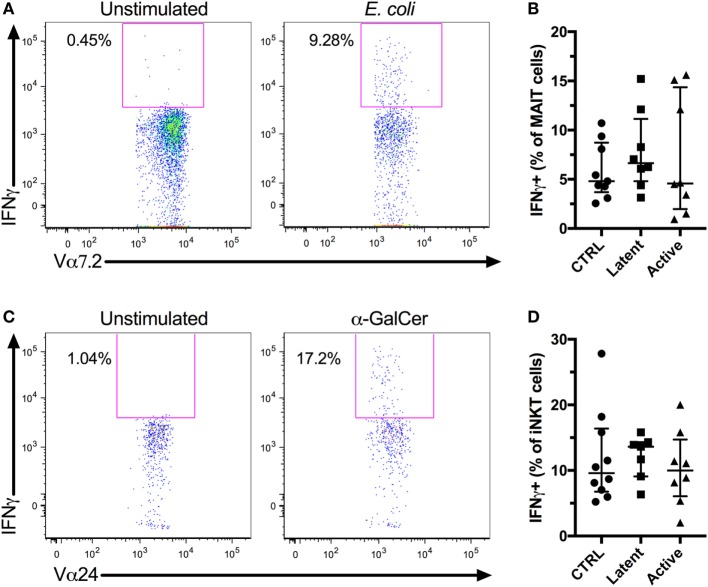
Increasing drug resistance and the lack of an effective vaccine are the main factors contributing to (Mtb) being a major cause of death globally. Despite intensive research efforts, it is not well understood why some individuals control Mtb infection and some others develop active disease. HIV-1 infection is associated with an increased incidence of active tuberculosis, even in virally suppressed individuals. Mucosal-associated invariant T (MAIT) and invariant natural killer T (iNKT) cells are innate T cells that can recognize Mtb-infected cells. Contradicting results regarding the frequency of MAIT cells in latent Mtb infection have been reported. In this confirmatory study, we investigated the frequency, phenotype, and IFNγ production of MAIT and iNKT cells in subjects with latent or active Mtb infection. We found that the frequency of both cell types was increased in subjects with latent Mtb infection compared with uninfected individuals or subjects with active infection. We found no change in the expression of HLA-DR, PD-1, and CCR6, as well as the production of IFNγ by MAIT and iNKT cells, among subjects with latent Mtb infection or uninfected controls. The proportion of CD4- CD8+ MAIT cells in individuals with latent Mtb infection was, however, increased. HIV-1 infection was associated with a loss of MAIT and iNKT cells, and the residual cells had elevated expression of the exhaustion marker PD-1. Altogether, the results suggest a role for MAIT and iNKT cells in immunity against Mtb and show a deleterious impact of HIV-1 infection on those cells.
耐药性增加以及缺乏有效疫苗是导致结核分枝杆菌(Mtb)成为全球主要死因的主要因素。尽管进行了深入研究,但对于为何有些人能够控制Mtb感染而另一些人会发展为活动性疾病,目前仍知之甚少。即使在病毒得到抑制的个体中,HIV-1感染也与活动性结核病发病率增加有关。黏膜相关恒定T(MAIT)细胞和恒定自然杀伤T(iNKT)细胞是能够识别Mtb感染细胞的固有T细胞。关于潜伏性Mtb感染中MAIT细胞频率的研究结果相互矛盾。在这项验证性研究中,我们调查了潜伏性或活动性Mtb感染受试者中MAIT细胞和iNKT细胞的频率、表型及IFNγ产生情况。我们发现,与未感染个体或活动性感染受试者相比,潜伏性Mtb感染受试者中这两种细胞类型的频率均有所增加。我们发现,在潜伏性Mtb感染受试者或未感染对照组中,MAIT细胞和iNKT细胞的HLA-DR、PD-1和CCR6表达以及IFNγ产生均无变化。然而,潜伏性Mtb感染个体中CD4-CD8+MAIT细胞的比例有所增加。HIV-1感染与MAIT细胞和iNKT细胞数量减少有关,剩余细胞的耗竭标志物PD-1表达升高。总之,这些结果表明MAIT细胞和iNKT细胞在抗Mtb免疫中发挥作用,并显示出HIV-1感染对这些细胞的有害影响。