Department of Medical Microbiology, Maastricht University Medical Centre (MUMC+); CAPHRI, Care and Public Health Research Institute, Maastricht University, P.O. Box 616, 6200, MD, Maastricht, The Netherlands.
Department of Sexual Health, Infectious Diseases and Environmental Health, Public Health Service South Limburg, Postbus 33, 6400AA, Heerlen, The Netherlands.
BMC Infect Dis. 2018 Jul 4;18(1):300. doi: 10.1186/s12879-018-3197-3.
Most infections are spread through social networks (detrimental effect). However, social networks may also lower infection acquisition (beneficial effect). This study aimed to examine associations between social network parameters and prevalence of self-reported upper and lower respiratory, gastrointestinal and urinary tract infections in a population aged 40-75.
In this population-based cross-sectional cohort study (N = 3004, mean age 60.0 ± 8.2 years, 49% women), infections within the past two months were assessed by self-administered questionnaires. Social network parameters were assessed using a name generator questionnaire. To examine the associated beneficial and detrimental network parameters, univariable and multivariable logistic regression was used.
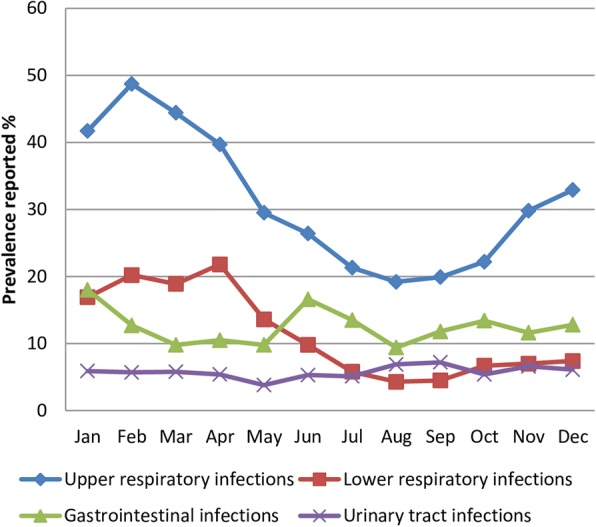
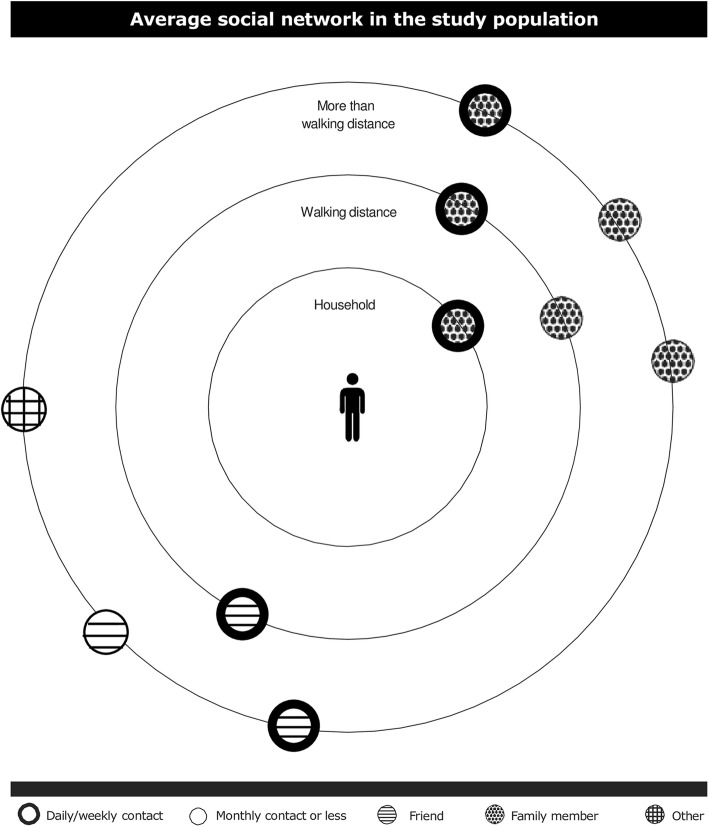
Participants reported an average of 10 people (alters) with whom they had 231 contacts per half year. Prevalences were 31.1% for upper respiratory, 11.5% for lower respiratory, 12.5% for gastrointestinal, and 5.7% for urinary tract infections. Larger network size, and a higher percentage of alters that were friends or acquaintances were associated with higher odds of upper respiratory, lower respiratory and/or gastrointestinal infections (detrimental). A higher total number of contacts, higher percentages of alters of the same age, and higher percentages of family members/acquaintances were associated with lower odds of upper respiratory, lower respiratory and/or gastrointestinal infections (beneficial).
We identified both detrimental and beneficial associations of social network parameters with the prevalence of infections. Our findings can be used to complement mathematical models on infection spread, as well as to optimize current infectious disease control.
大多数感染是通过社交网络传播的(有害影响)。然而,社交网络也可能降低感染的发生(有益影响)。本研究旨在调查社交网络参数与 40-75 岁人群中报告的上呼吸道、下呼吸道、胃肠道和尿路感染患病率之间的关系。
在这项基于人群的横断面队列研究(N=3004 人,平均年龄 60.0±8.2 岁,49%为女性)中,通过自我管理问卷评估过去两个月内的感染情况。使用名称生成问卷评估社交网络参数。为了研究相关的有益和有害网络参数,使用单变量和多变量逻辑回归进行分析。
参与者报告了平均 10 个(熟人)与他们每半年有 231 次接触的人。上呼吸道感染的患病率为 31.1%,下呼吸道感染为 11.5%,胃肠道感染为 12.5%,尿路感染为 5.7%。更大的网络规模和更高比例的熟人是朋友或熟人与上呼吸道、下呼吸道和/或胃肠道感染的更高几率相关(有害)。更多的总接触次数、相同年龄的熟人比例更高以及家庭成员/熟人比例更高与上呼吸道、下呼吸道和/或胃肠道感染的更低几率相关(有益)。
我们发现社交网络参数与感染患病率之间存在有害和有益的关联。我们的发现可以用于补充感染传播的数学模型,以及优化当前的传染病控制。