Bao Zhiwei, Ji Chunmei, Hu Jing, Luo Can, Fang Wentong
Department of Pharmacy, Jiangsu Jianhu People's Hospital, Yancheng, 224700, China.
Department of Pharmacy, First Affiliated Hospital of Nanjing Medical University, No 300 Guangzhou Road, Nanjing City, Jiangsu Province, 210029, People's Republic of China.
BMC Health Serv Res. 2018 Jul 4;18(1):519. doi: 10.1186/s12913-018-3306-4.
Limited studies have evaluated the effectiveness of pharmacist interventions on outpatient prescription. The goal of this study was to evaluate the clinical and economic impacts of pharmacist interventions on randomly sampled outpatient prescriptions.
Outpatient prescriptions of our hospital were sampled automatically and reviewed by pharmacists since 2011. Pharmacists intervened in inappropriate prescriptions (IPs) real-timely, and summarized and analyzed the information monthly. Cost-benefit analysis was performed to estimate the economic benefit of the pharmacist intervention.
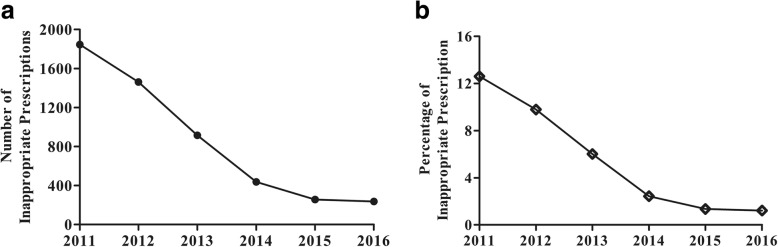
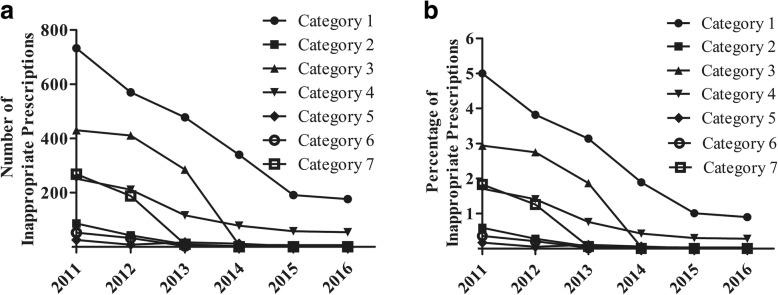
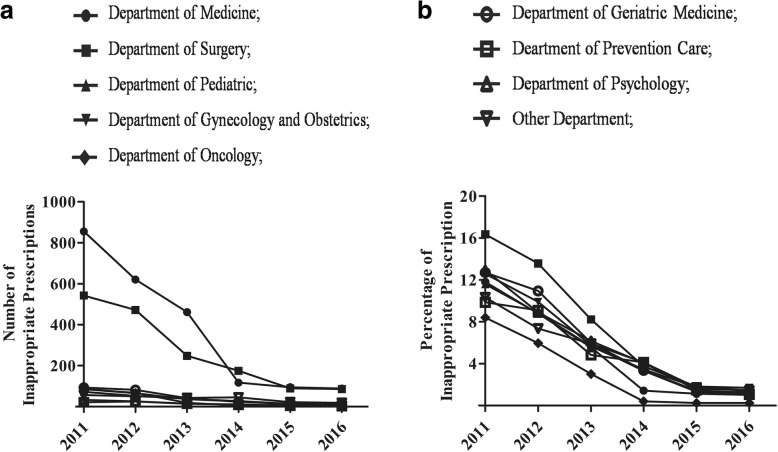
From 2011 to 2016, pharmacists reviewed 101,271 prescriptions and intervened in 5155 prescriptions. With the interventions of pharmacists, the number of IPs decreased from 1845 to 238, while the inappropriate percentage decreased from 12.60 to 1.22%. The inappropriate rates of different departments and the types decreased annually. IPs were mainly from the Department of Medicine and Department of Surgery and category 1 (Non-indicated medications) in all years. The benefit-to-cost ratios of pharmacist interventions were always more than 1. In the same years, the benefit-to-cost ratios in public payments were higher than those with insurance and self-payment.
This form of pharmacist intervention constitutes a method that showed positive clinical and economic benefits and is worth expanding in large hospitals. Pharmacists should pay more attention on prescriptions in department of surgery or prescriptions with public payments.
评估药师干预对门诊处方有效性的研究有限。本研究的目的是评估药师干预对随机抽取的门诊处方的临床和经济影响。
自2011年起,对我院门诊处方进行自动抽样并由药师审核。药师实时干预不适当处方(IPs),并每月汇总分析相关信息。进行成本效益分析以评估药师干预的经济效益。
2011年至2016年,药师共审核101,271张处方,干预5155张处方。在药师的干预下,IPs数量从1845张降至238张,不适当率从12.60%降至1.22%。不同科室和类型的不适当率逐年下降。各年份IPs主要来自内科和外科,且均以第1类(非适应证用药)为主。药师干预的效益成本比始终大于1。同年份中,公费支付的效益成本比高于医保支付和自费支付。
这种药师干预形式构成了一种具有积极临床和经济效益的方法,值得在大型医院推广。药师应更多关注外科处方或公费支付处方。