St Thomas' Hospital, Westminster Bridge Rd, Lambeth, SE1 7EH, London, England.
Nuffield Department of Primary Care Health Sciences, Radcliffe Primary Care Building, Radcliffe Observatory Quarter, Woodstock Rd, Oxford, OX2 6GG, England.
BMC Med Educ. 2018 Jul 4;18(1):160. doi: 10.1186/s12909-018-1197-z.
Against the background of the recruitment crisis in general practice, we aimed to determine what United Kingdom (UK) medical students value in their future careers, how they perceive careers in general practice (GP) and what influences them.
Cross-sectional survey of 280 final and penultimate year medical students at the University of Oxford, with questions relating to career choices, factors of importance when choosing a career and attitudes towards general practice as a career. Quantitative methods included cluster analysis, chi squared tests of independence and logistic regression analysis. Qualitative data were analysed thematically using the Framework method.
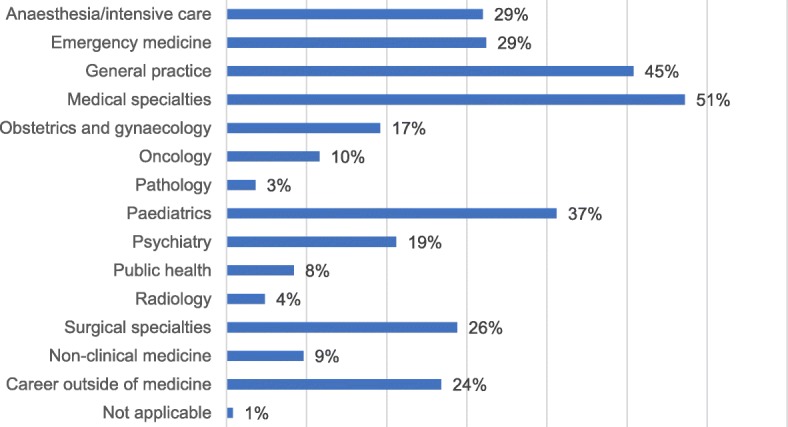
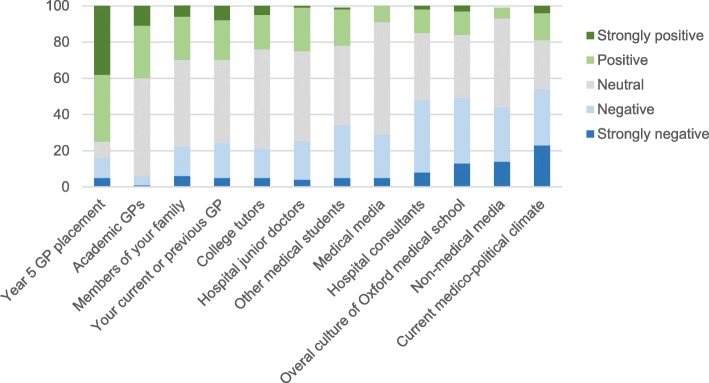
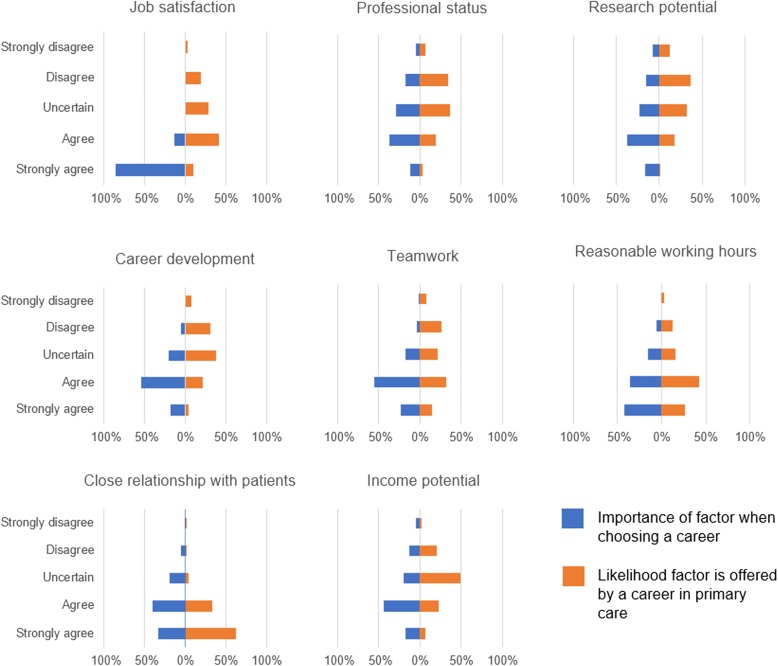
Response rate was 89% (280/315). 40% of participants said that general practice was an attractive or very attractive career option. Respondents valued job satisfaction, work-life balance and close relationships with patients. However, fewer than 20% of respondents agreed that community-based working was important to them and many (often citing particular GPs they had observed) felt that general practice as currently structured may not be satisfying or fulfilling because of high workload, financial pressures and externally imposed directives. 63% perceived GPs to have lower status than hospital specialties and 49% thought the overall culture of their medical school had negatively influenced their views towards general practice. Some respondents considered that general practice would not be intellectually challenging or compatible with a research career; some appeared to have had limited exposure to academic primary care.
With the caveat that this was a sample from a single medical school, medical students may be put off careers in general practice by three main things: low perceived value of community-based working and low status of general practice (linked to a prevailing medical school culture); observing the pressures under which GPs currently work; and lack of exposure to academic role models and primary care-based research opportunities. To improve recruitment of the next generation of GPs, medical schools must provide high quality placements in general practice, expose students to academic role models and highlight to policymakers the links between the current pressures in UK general practice and the recruitment crisis.
在全科医学招聘危机的背景下,我们旨在确定英国(UK)医学生在未来职业中看重什么,他们如何看待全科医学(GP)职业,以及哪些因素影响他们的职业选择。
对牛津大学的 280 名最后一年和倒数第二年的医学生进行横断面调查,问题涉及职业选择、选择职业时的重要因素以及对全科医学作为职业的态度。定量方法包括聚类分析、卡方检验和逻辑回归分析。定性数据使用框架方法进行主题分析。
回复率为 89%(280/315)。40%的参与者表示,全科医学是一个有吸引力或非常有吸引力的职业选择。受访者重视工作满意度、工作与生活的平衡以及与患者的密切关系。然而,不到 20%的受访者认为以社区为基础的工作对他们很重要,许多人(经常提到他们观察到的特定全科医生)认为,由于工作量大、经济压力和外部强加的指令,目前的全科医学结构可能无法令人满意或充实。63%的人认为全科医生的地位低于医院专科医生,49%的人认为他们医学院的整体文化对他们对全科医学的看法产生了负面影响。一些受访者认为全科医学不会具有智力挑战性或与研究职业兼容;一些人似乎对学术初级保健接触有限。
需要注意的是,这只是来自一所医学院的样本,医学生可能会因为以下三个主要原因而对全科医学职业望而却步:社区工作的价值和全科医学的地位较低(与普遍的医学院文化有关);观察到全科医生目前工作的压力;以及缺乏对学术榜样和以初级保健为基础的研究机会的接触。为了招募下一代全科医生,医学院必须在全科医学中提供高质量的实习机会,让学生接触到学术榜样,并向政策制定者强调英国全科医学当前压力与招聘危机之间的联系。