Department of Immunology & Infection, Faculty of Infectious & Tropical Disease, London School of Hygiene & Tropical Medicine, London, United Kingdom.
Malaria Research and Training Centre (MRTC), Department of Epidemiology of Parasitic Diseases, Faculty of Pharmacy, University of Sciences, Techniques and Technologies of Bamako, Bamako, Mali.
Sci Rep. 2018 Jul 4;8(1):10097. doi: 10.1038/s41598-018-28179-2.
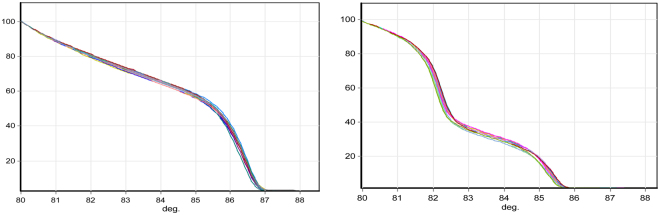
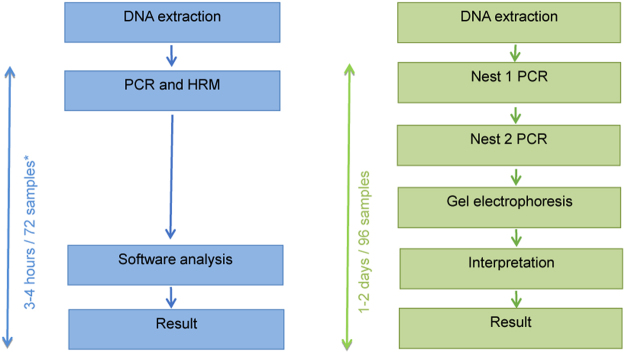
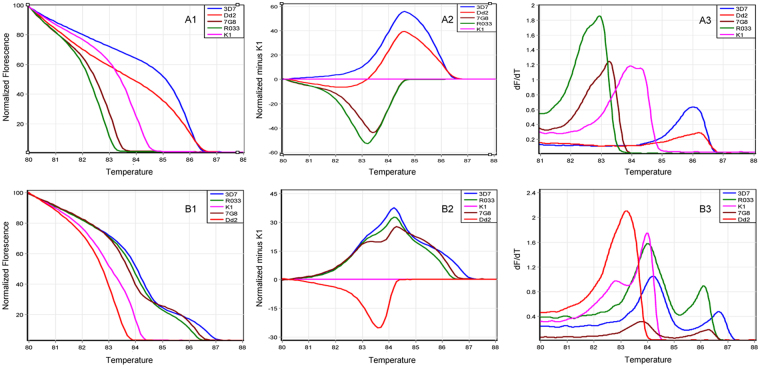
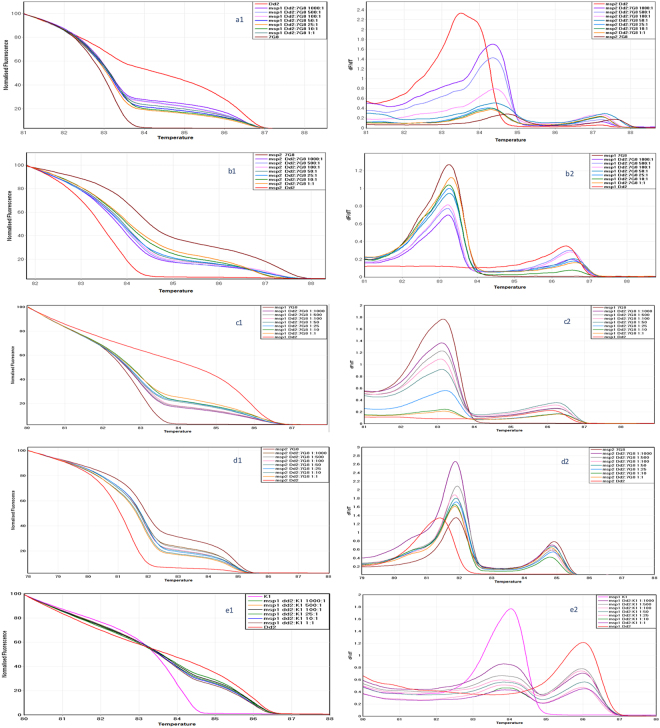
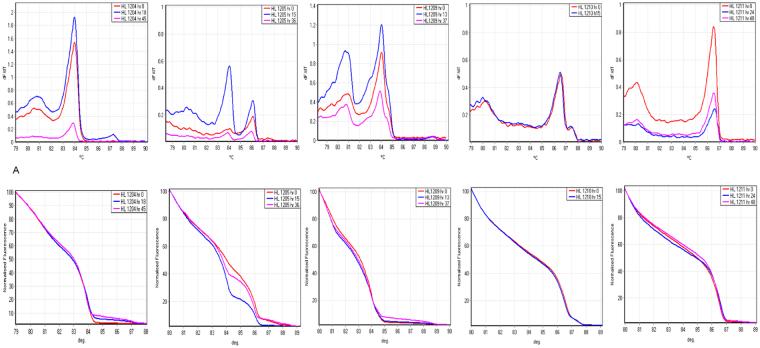
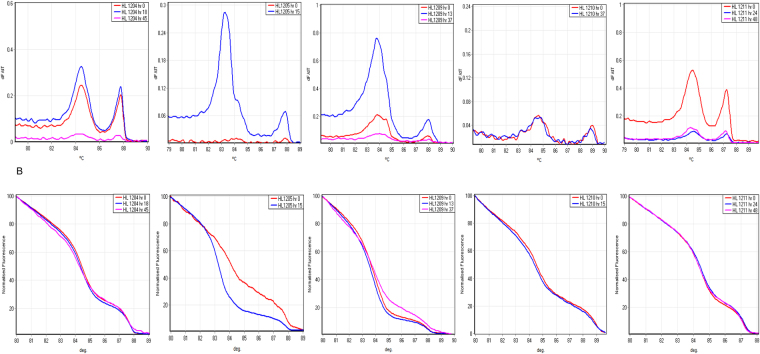
Recurrent parasitaemia during follow up of clinical trials of antimalarial drug efficacy results from either recrudescence of parasites surviving treatment or from parasites newly emerging from the hepatic stage of infection. Nested PCR is used to distinguish these two possibilities and the technique is difficult to standardise. There is risk of both false positive and false negative results, leading to misclassification errors. The high-resolution melt (HRM) assay was developed with pairs of conserved primers targeting blocks of merozoite surface protein 1 and 2 (msp1 and msp2) genes, and polymorphisms were compared using sequence-confirmed Plasmodium falciparum DNA samples from laboratory isolates. In this study, the HRM dissociation profiles of msp1 and msp2 amplicons were determined and validated against parasite isolates from malaria patients. The msp1 and msp2 profiles of both laboratory and clinical isolates were reproducibly differentiated by HRM. These rapid assays are performed in a closed-tube system, and so avoid cross-contamination while increasing throughput, which are two major advantages. The HRM assays offer significant gains in simplicity, speed and interpretation of results, and reduced analysis cost, for studies that require discrimination of parasite clones. Assay performance in large-scale studies utilizing DNA samples derived from filter-paper bloodspots should now be evaluated.
在抗疟药物疗效临床试验的随访中,反复出现寄生虫血症是由于治疗后存活的寄生虫复发或新出现的来自感染肝期的寄生虫所致。巢式 PCR 用于区分这两种可能性,该技术难以标准化。存在假阳性和假阴性结果的风险,导致分类错误。高分辨率熔解(HRM)分析是使用针对裂殖子表面蛋白 1 和 2(msp1 和 msp2)基因的保守引物对开发的,并用经过序列确认的来自实验室分离株的恶性疟原虫 DNA 样本比较多态性。在这项研究中,确定了 msp1 和 msp2 扩增子的 HRM 解离曲线,并针对来自疟疾患者的寄生虫分离株进行了验证。HRM 可重复性地区分实验室和临床分离株的 msp1 和 msp2 图谱。这些快速检测在封闭管系统中进行,因此在增加通量的同时避免了交叉污染,这是两个主要优势。对于需要区分寄生虫克隆的研究,HRM 检测在结果的简单性、速度和解释方面具有显著优势,并降低了分析成本。现在应该评估利用滤纸片血斑衍生的 DNA 样本进行大规模研究的检测性能。