Chen Xiao, Zhi Xin, Yin Zhifeng, Li Xiaoqun, Qin Longjuan, Qiu Zili, Su Jiacan
Department of Orthopedics Trauma, Shanghai Changhai Hospital, Second Military Medical University, Shanghai, China.
China-South Korea Bioengineering Center, Shanghai, China.
Front Pharmacol. 2018 Jun 20;9:647. doi: 10.3389/fphar.2018.00647. eCollection 2018.
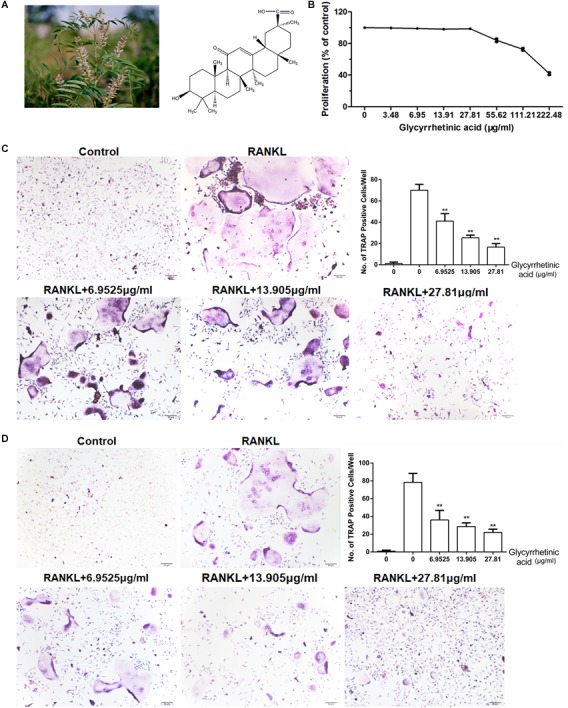
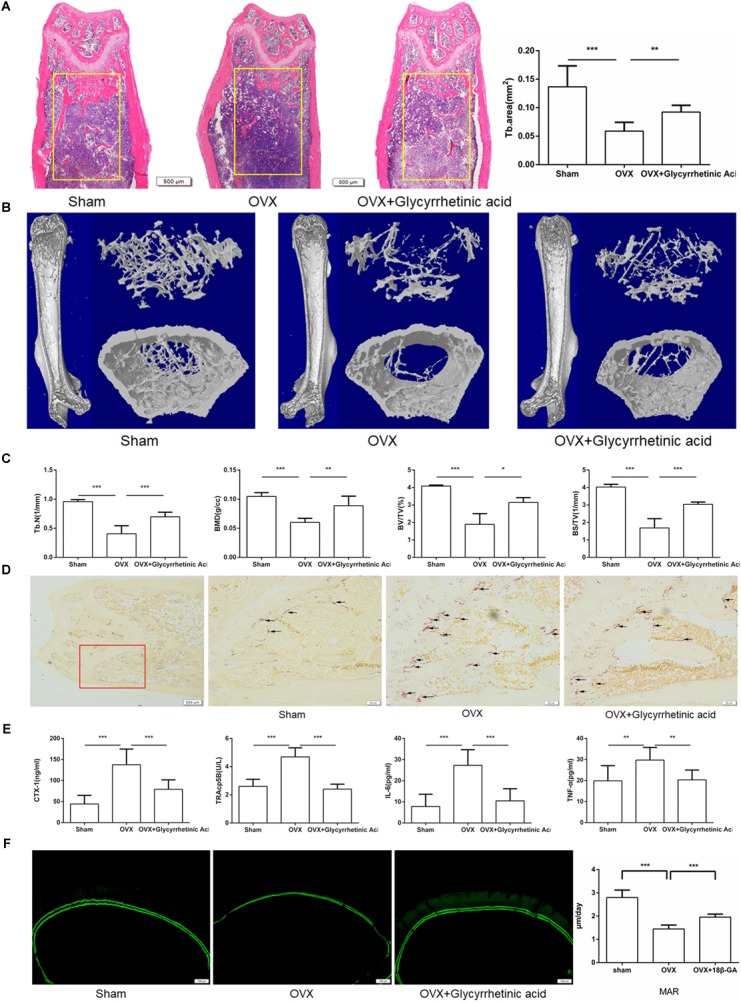
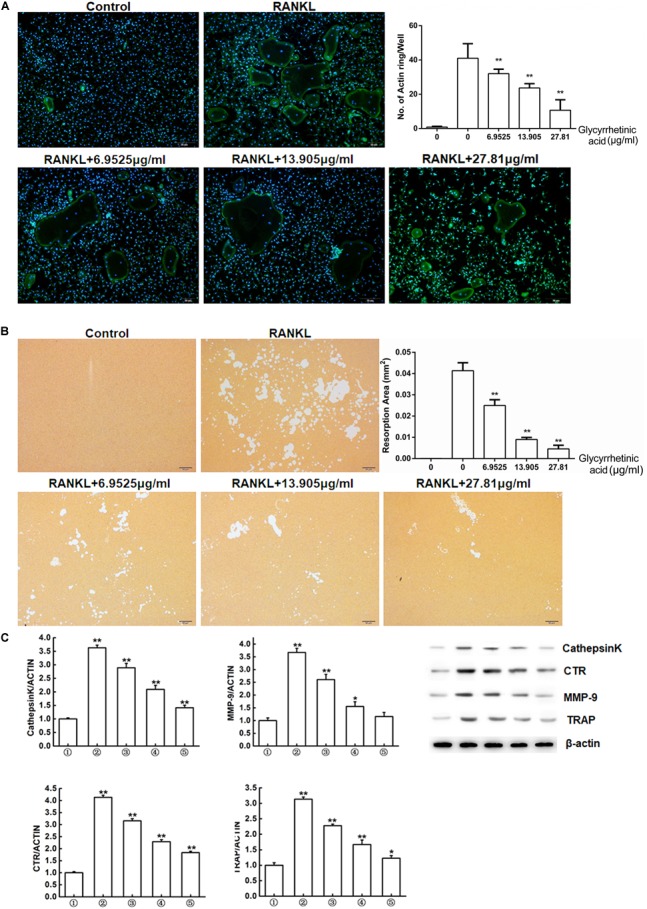
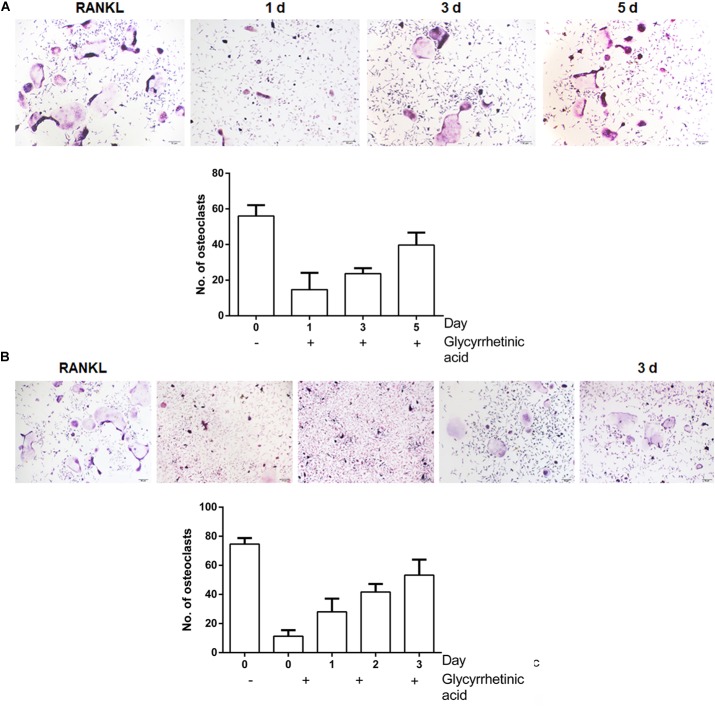
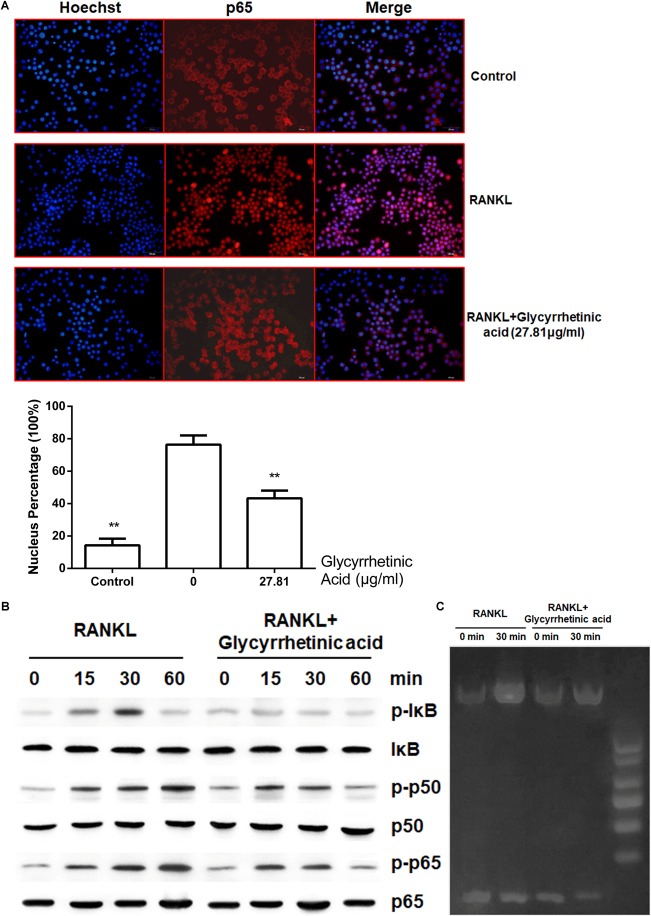
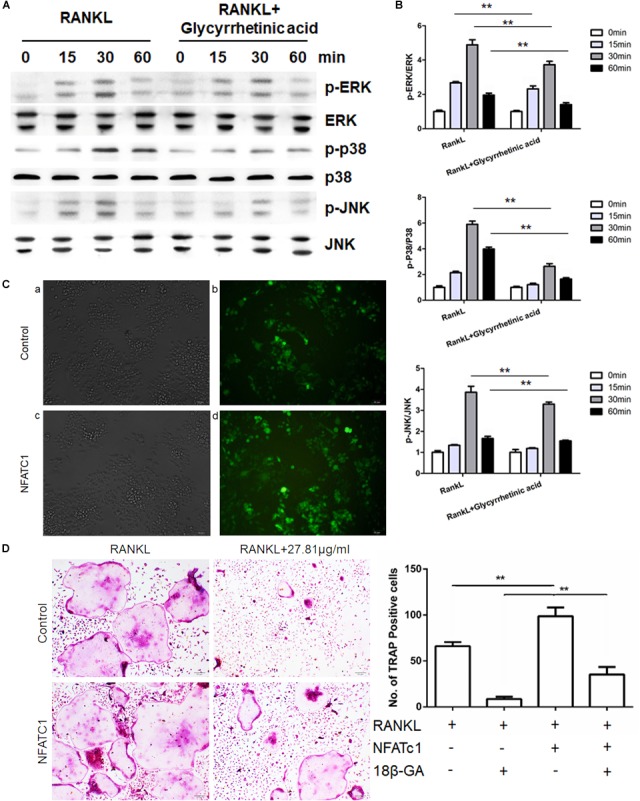
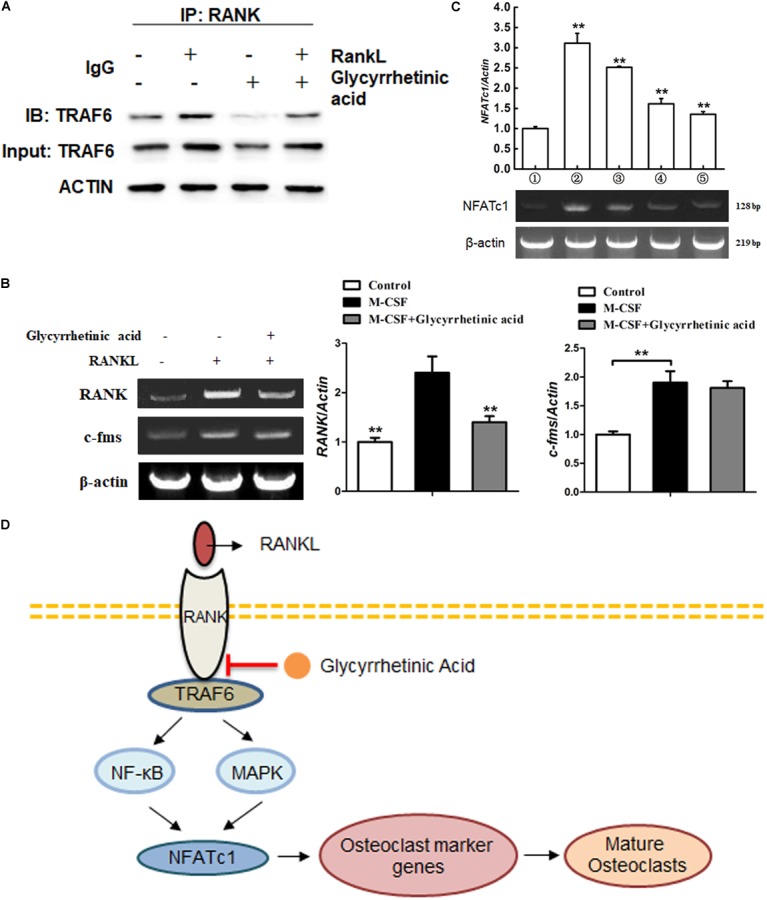
Bone metabolism is determined by a delicate balance between bone resorption by osteoclasts and bone formation by osteoblasts. The imbalance due to over-activated osteoclasts plays an important role in various diseases. Activation of NF-κB and MAPK signaling pathways by receptor activator of nuclear factor -κB ligand (RANKL) is vital for osteoclastogenesis. Here, we for the first time explored the effects of 18β-glycyrrhetinic acid (18β-GA), a pentacyclic triterpenoid found in the L roots, on RANKL-induced osteoclastogenesis, osteoclast functions and signaling pathways and . In bone marrow monocytes (BMMs) and RAW264.7 cells, 18β-GA inhibited osteoclastogenesis, decreased expression of TRAP, cathepsin K, CTR and MMP-9, blocked actin ring formation and compromised osteoclasts functions in a dose-dependent manner at an early stage with minimal effects on osteogenic and adipogenic differentiation of bone marrow mesenchymal stem cells (BMSCs). For underlying molecular mechanisms, 18β-GA inhibited RANKL-induced phosphorylation of p65, p50, and IκB, blocked p65 nuclear translocation and decreased the DNA-binding activity of NF-κB. Besides, 18β-GA inhibited the activation of the MAPK pathways. Co-immunoprecipitation showed that 18β-GA treatment blocked RANK-TRAF6 association at an upstream site. , 18β-GA treatment inhibited ovariectomy-induced osteoclastogenesis and reduced bone loss in mice. Overall, our results demonstrated that 18β-GA inhibited RANKL-induced osteoclastogenesis by inhibiting RANK expression in preosteoclasts and blocking the binding of RANK and TRAF6 which lead to the inhibition of NF-κB and MAPK signaling pathways. 18β-GA is a promising novel candidate in the treatment of osteoclast-related diseases such as postmenopausal osteoporosis.
骨代谢由破骨细胞的骨吸收与成骨细胞的骨形成之间的微妙平衡所决定。破骨细胞过度活化导致的失衡在多种疾病中起重要作用。核因子-κB 受体激活剂配体(RANKL)激活 NF-κB 和 MAPK 信号通路对破骨细胞生成至关重要。在此,我们首次探究了从甘草根中发现的五环三萜类化合物 18β-甘草次酸(18β-GA)对 RANKL 诱导的破骨细胞生成、破骨细胞功能及信号通路的影响。在骨髓单核细胞(BMMs)和 RAW264.7 细胞中,18β-GA 抑制破骨细胞生成,降低抗酒石酸酸性磷酸酶(TRAP)、组织蛋白酶 K、降钙素受体(CTR)和基质金属蛋白酶-9(MMP-9)的表达,在早期以剂量依赖方式阻止肌动蛋白环形成并损害破骨细胞功能,对骨髓间充质干细胞(BMSCs)的成骨和成脂分化影响极小。对于潜在分子机制,18β-GA 抑制 RANKL 诱导的 p65、p50 和 IκB 的磷酸化,阻止 p65 核转位并降低 NF-κB 的 DNA 结合活性。此外,18β-GA 抑制 MAPK 信号通路的激活。免疫共沉淀显示 18β-GA 处理在上游位点阻断 RANK 与肿瘤坏死因子受体相关因子 6(TRAF6)的结合。此外,18β-GA 处理抑制去卵巢诱导的小鼠破骨细胞生成并减少骨丢失。总体而言,我们的结果表明 18β-GA 通过抑制前破骨细胞中 RANK 的表达以及阻断 RANK 与 TRAF6 的结合来抑制 RANKL 诱导的破骨细胞生成,这进而导致 NF-κB 和 MAPK 信号通路的抑制。18β-GA 是治疗绝经后骨质疏松症等破骨细胞相关疾病的有前景的新型候选药物。