Xin Zhi, Jin Cui, Chao Liu, Zheng Zhang, Liehu Cao, Panpan Pan, Weizong Weng, Xiao Zhai, Qingjie Zhao, Honggang Hu, Longjuan Qin, Xiao Chen, Jiacan Su
Graduate Management Unit, Shanghai Changhai Hospital, Second Military Medical University, Shanghai, China.
School of Pharmacy, Second Military Medical University, Shanghai, China.
Front Pharmacol. 2018 Jan 30;9:22. doi: 10.3389/fphar.2018.00022. eCollection 2018.
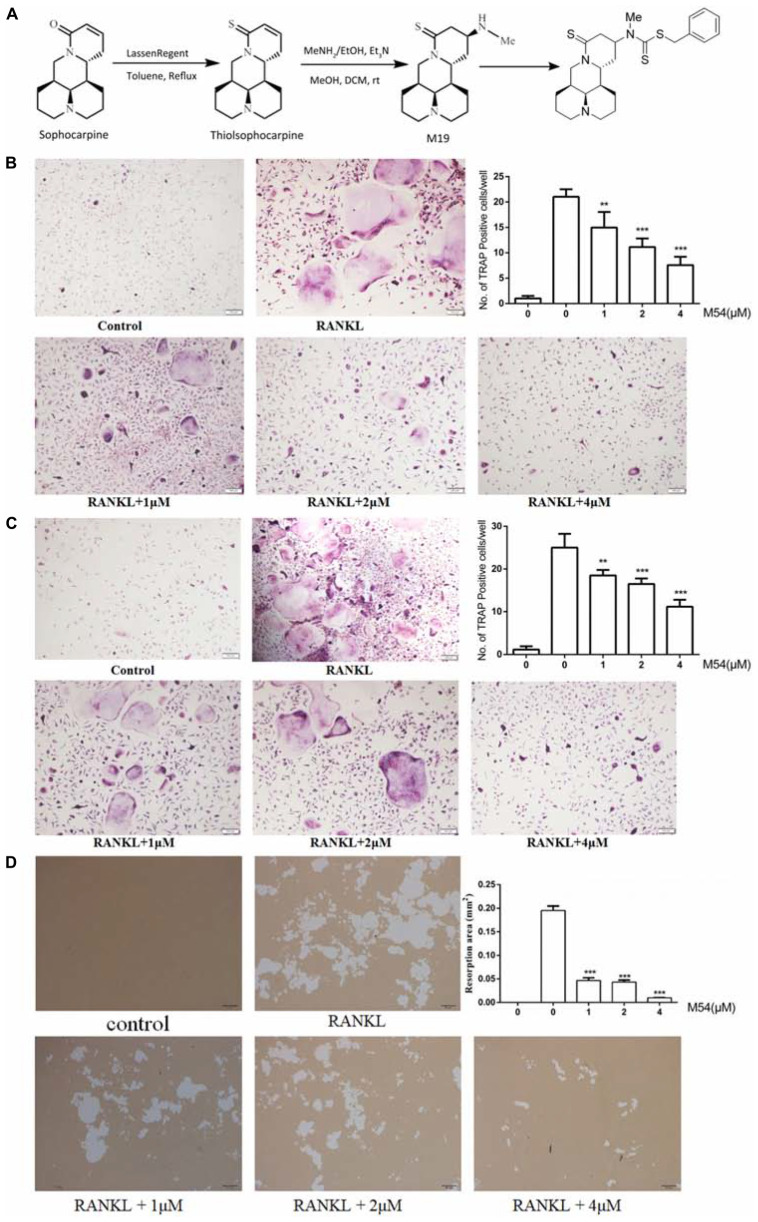
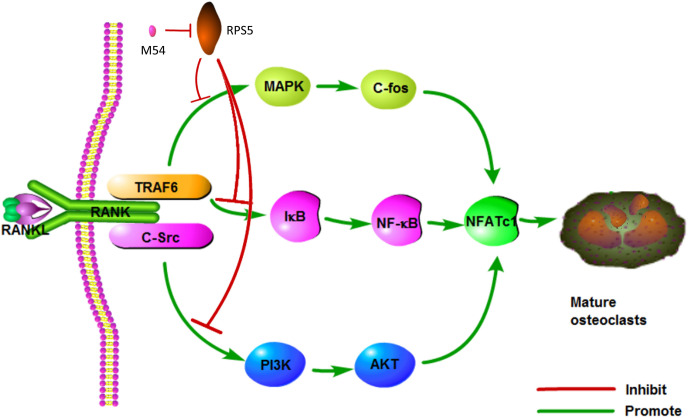
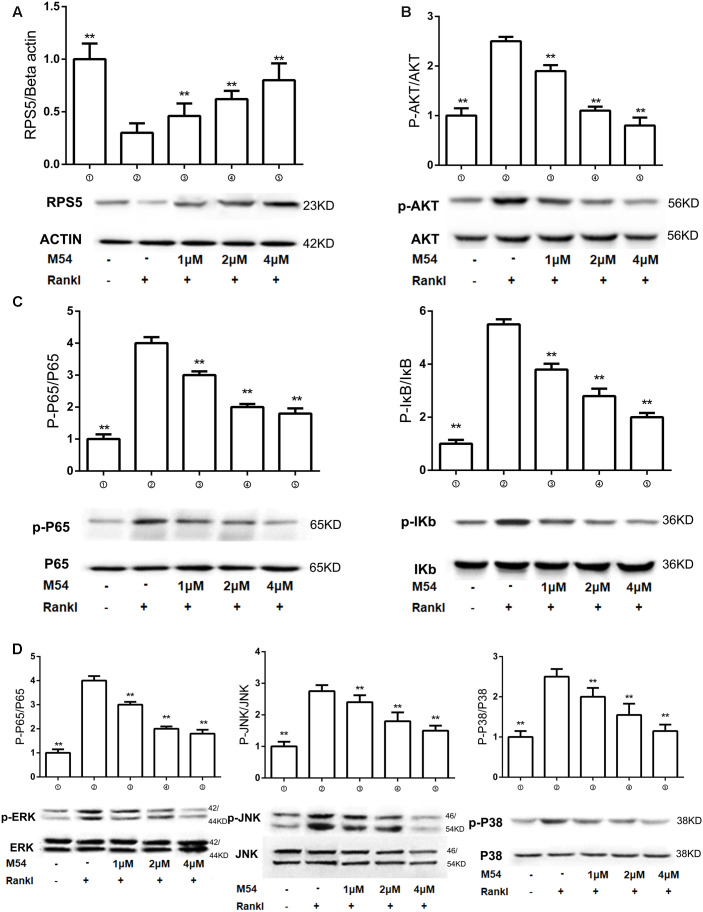
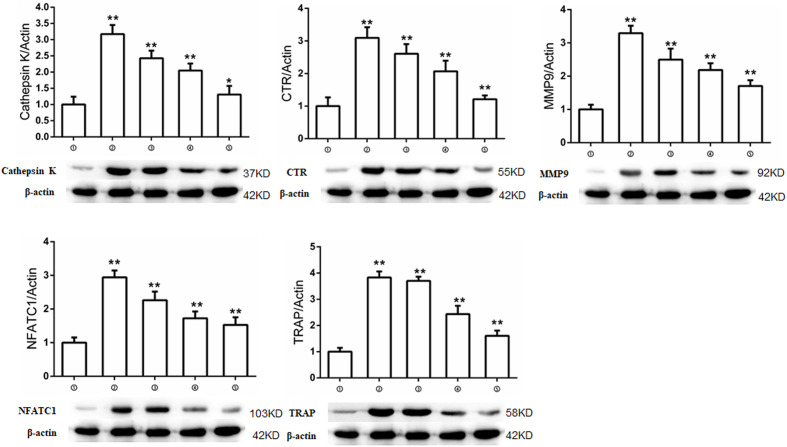
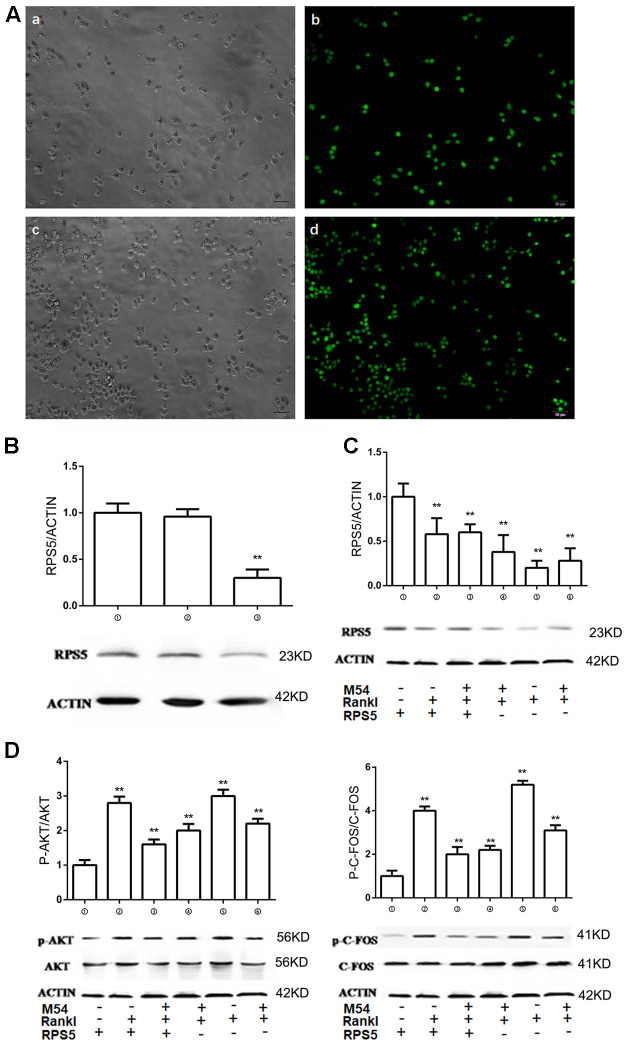
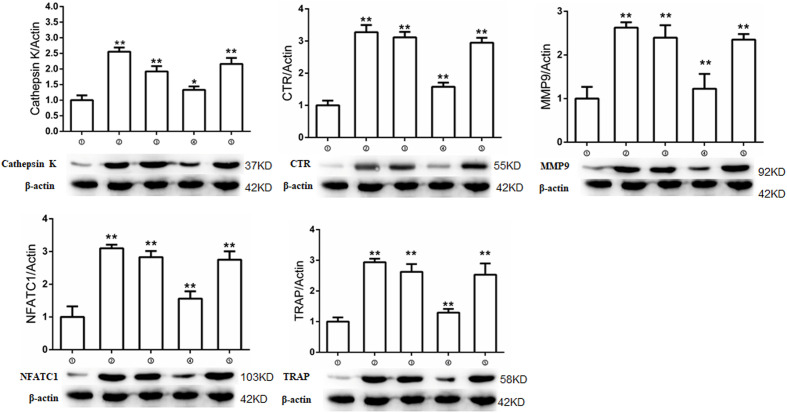
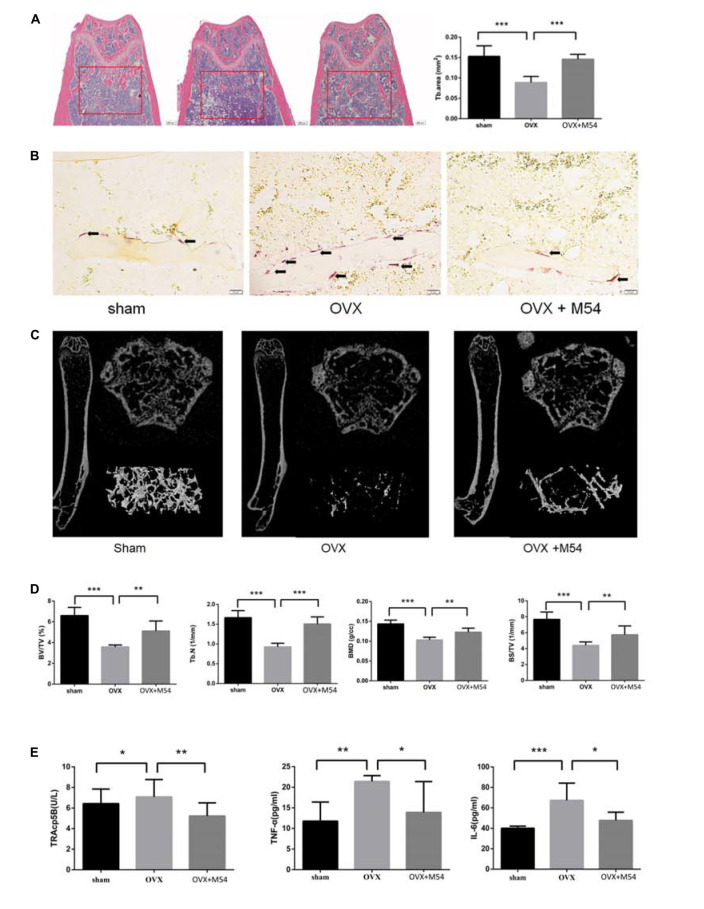
Post-menopausal osteoporosis (PMOP) is a metabolic bone disorder characterized by low bone mass and micro-architectural deterioration of bone tissue. The over-activated osteoclastogenesis, which plays an important role in osteoporosis, has become an important therapeutic target. M54 was a bioactive derivative of the Chinese traditional herb matrine. We found that M54 could suppress RANKL-induced osteoclastogenesis in bone marrow mononuclear cells and RAW264.7 cells through suppressing NF-κB, PI3K/AKT, and MAPKs pathways activity , and prevent ovariectomy-induced bone loss . Our previous study has proved that ribosomal protein S5 (RPS5) was a direct target of M19, based on which M54 was synthesized. Thus we deduced that M54 also targeted RPS5. During osteoclastogenesis, the RPS5 level in RAW264.7 cells was significantly down-regulated while M54 could maintain its level. After RPS5 was silenced, the inhibitory effects of M54 on osteoclastogenesis were partially compromised, indicating that M54 took effects through targeting RPS5. In summary, M54 was a potential clinical medicine for post-menopause osteoporosis treatment, and RPS5 is a possible key protein in PMOP.
绝经后骨质疏松症(PMOP)是一种代谢性骨病,其特征为骨量低和骨组织微结构退化。在骨质疏松症中起重要作用的破骨细胞生成过度活跃,已成为一个重要的治疗靶点。M54是中药苦参碱的一种生物活性衍生物。我们发现,M54可通过抑制NF-κB、PI3K/AKT和MAPKs信号通路的活性,抑制骨髓单核细胞和RAW264.7细胞中RANKL诱导的破骨细胞生成,并预防去卵巢诱导的骨质流失。我们之前的研究证明,核糖体蛋白S5(RPS5)是M19的直接靶点,M54就是基于此合成的。因此我们推断M54也靶向RPS5。在破骨细胞生成过程中,RAW264.7细胞中的RPS5水平显著下调,而M54可维持其水平。RPS5沉默后,M54对破骨细胞生成的抑制作用部分受损,表明M54通过靶向RPS5发挥作用。综上所述,M54是一种治疗绝经后骨质疏松症的潜在临床药物,RPS5是PMOP中一个可能的关键蛋白。