Xiaoli Lingzi, Figler Hillary M, Goswami Banerjee Kakolie, Hayes Christopher S, Dudley Edward G
Department of Food Science, The Pennsylvania State University, University Park, PA, United States.
Huck Institutes of Life Sciences, The Pennsylvania State University, University Park, PA, United States.
Front Microbiol. 2018 Jun 15;9:1325. doi: 10.3389/fmicb.2018.01325. eCollection 2018.
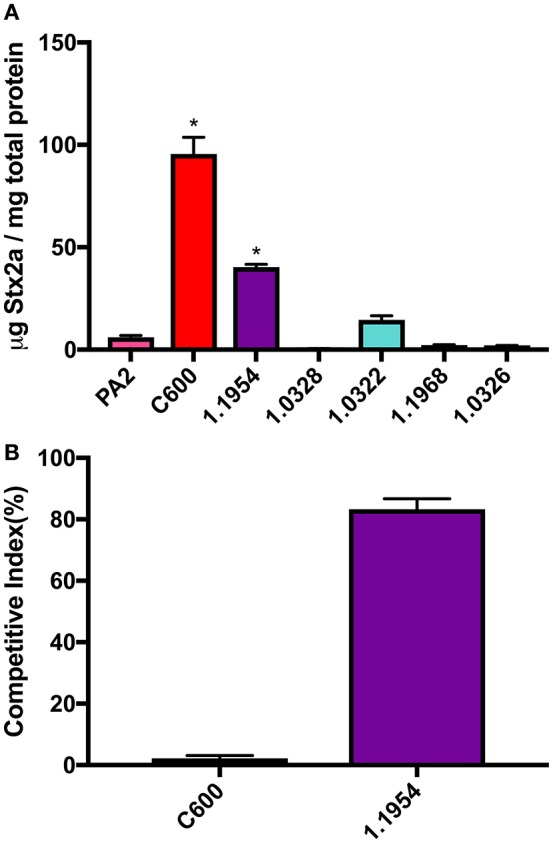
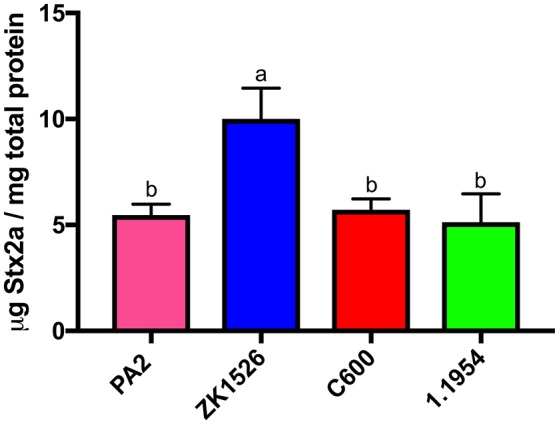
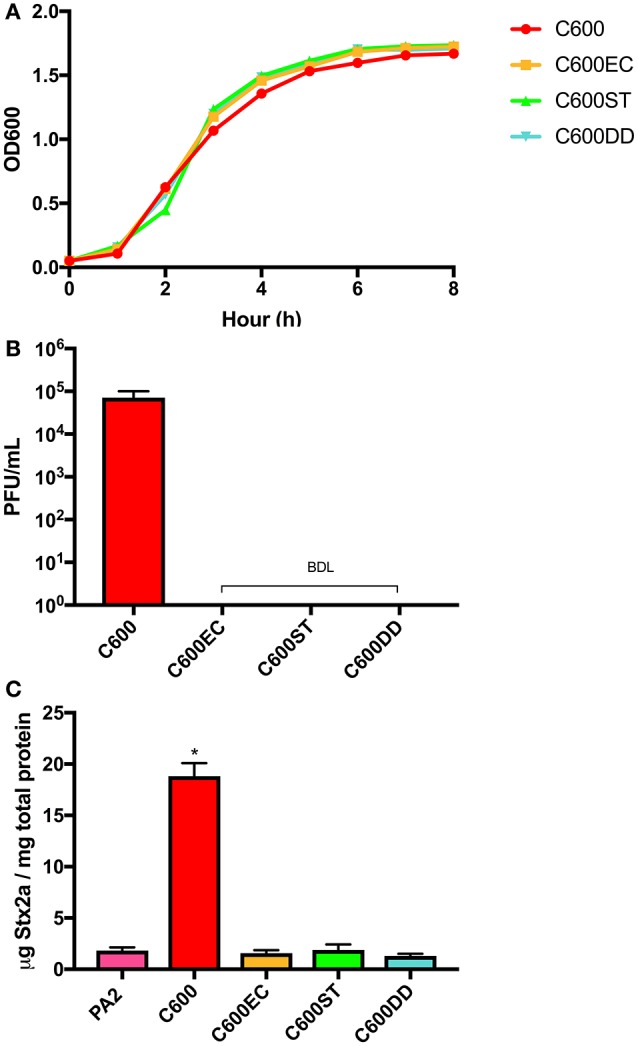
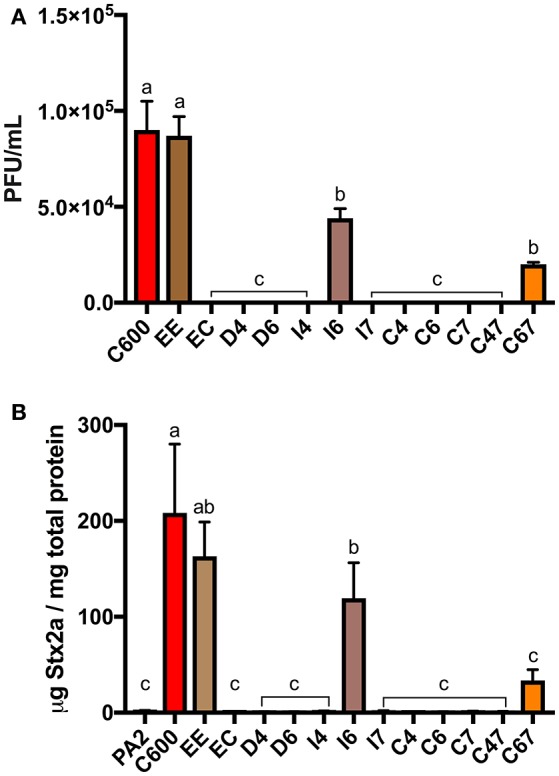
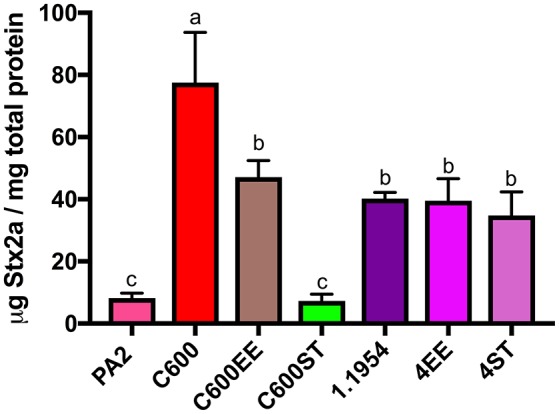
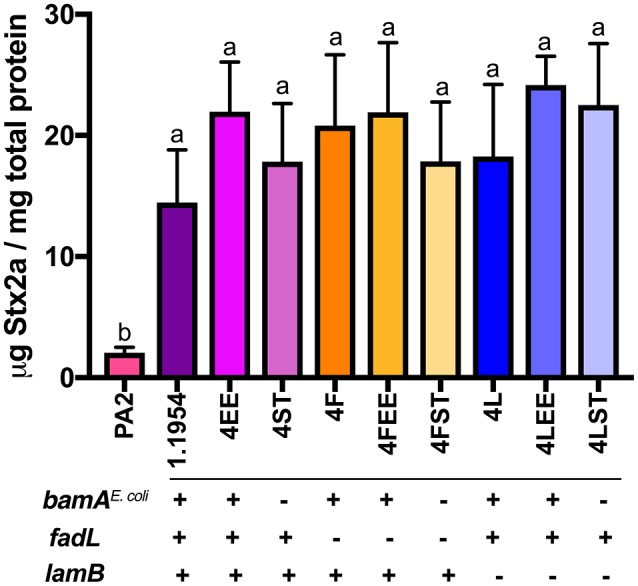
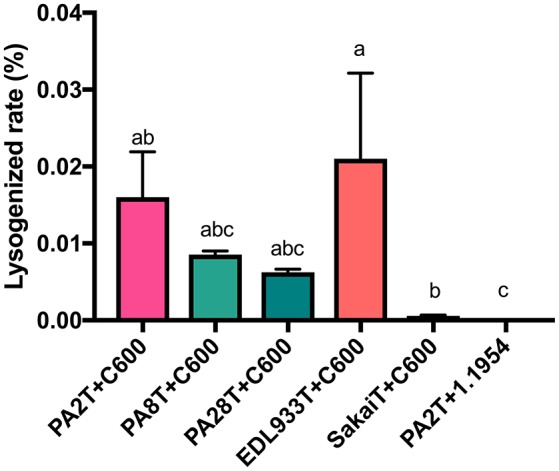
Intestinal colonization by the foodborne pathogen O157:H7 leads to serious disease symptoms, including hemolytic uremic syndrome (HUS) and hemorrhagic colitis (HC). Synthesis of one or more Shiga toxins (Stx) is essential for HUS and HC development. The genes encoding Stx, including Stx2a, are found within a lambdoid prophage integrated in the O157:H7 chromosome. Enhanced Stx2a expression was reported when specific non-pathogenic strains were co-cultured with O157:H7, and it was hypothesized that this phenotype required the non-pathogenic to be sensitive to -converting phage infection. We tested this hypothesis by generating phage resistant non-pathogenic strains where (an essential gene and Stx phage receptor) was replaced with an ortholog from other species. Such heterologous gene replacement abolished the ability of the laboratory strain C600 to enhance toxin production when co-cultured with O157:H7 strain PA2, which belongs to the hypervirulent clade 8. The extracellular loops of BamA (loop 4, 6, 7) were further shown to be important for infection by converting phages. However, similar gene replacement in another commensal , designated 1.1954, revealed a -independent mechanism for toxin amplification. Toxin enhancement by 1.1954 was not the result of phage infection through an alternative receptor (LamB or FadL), lysogen formation by -converting phages, or the production of a secreted molecule. Collectively, these data suggest that non-pathogenic can enhance toxin production through at least two mechanisms.
食源性病原体O157:H7在肠道内定殖会导致严重的疾病症状,包括溶血性尿毒症综合征(HUS)和出血性结肠炎(HC)。一种或多种志贺毒素(Stx)的合成对于HUS和HC的发展至关重要。编码Stx的基因,包括Stx2a,位于整合在O157:H7染色体上的一个λ样原噬菌体中。据报道,当特定的非致病性菌株与O157:H7共培养时,Stx2a的表达会增强,并且推测这种表型要求非致病性菌株对转化噬菌体感染敏感。我们通过构建噬菌体抗性非致病性菌株来验证这一假设,在这些菌株中,(一个必需基因和Stx噬菌体受体)被来自其他物种的直系同源基因所取代。当与属于高毒力进化枝8的O157:H7菌株PA2共培养时,这种异源基因替换消除了实验室菌株C600增强毒素产生的能力。进一步表明,BamA的细胞外环(环4、6、7)对于转化噬菌体的感染很重要。然而,在另一种共生菌1.1954中进行类似的基因替换,揭示了一种不依赖的毒素扩增机制。1.1954增强毒素并非通过替代受体(LamB或FadL)进行噬菌体感染、转化噬菌体形成溶原菌或分泌分子产生的结果。总体而言,这些数据表明非致病性菌株可以通过至少两种机制增强毒素产生。