Recio Carlota, Lucy Daniel, Purvis Gareth S D, Iveson Poppy, Zeboudj Lynda, Iqbal Asif J, Lin Daniel, O'Callaghan Chris, Davison Lucy, Griesbach Esther, Russell Angela J, Wynne Graham M, Dib Lea, Monaco Claudia, Greaves David R
Sir William Dunn School of Pathology, University of Oxford, Oxford, United Kingdom.
Department of Chemistry, University of Oxford, Oxford, United Kingdom.
Front Immunol. 2018 Jun 20;9:1419. doi: 10.3389/fimmu.2018.01419. eCollection 2018.
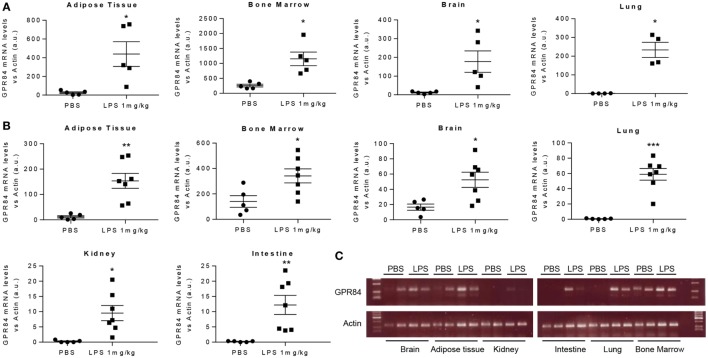
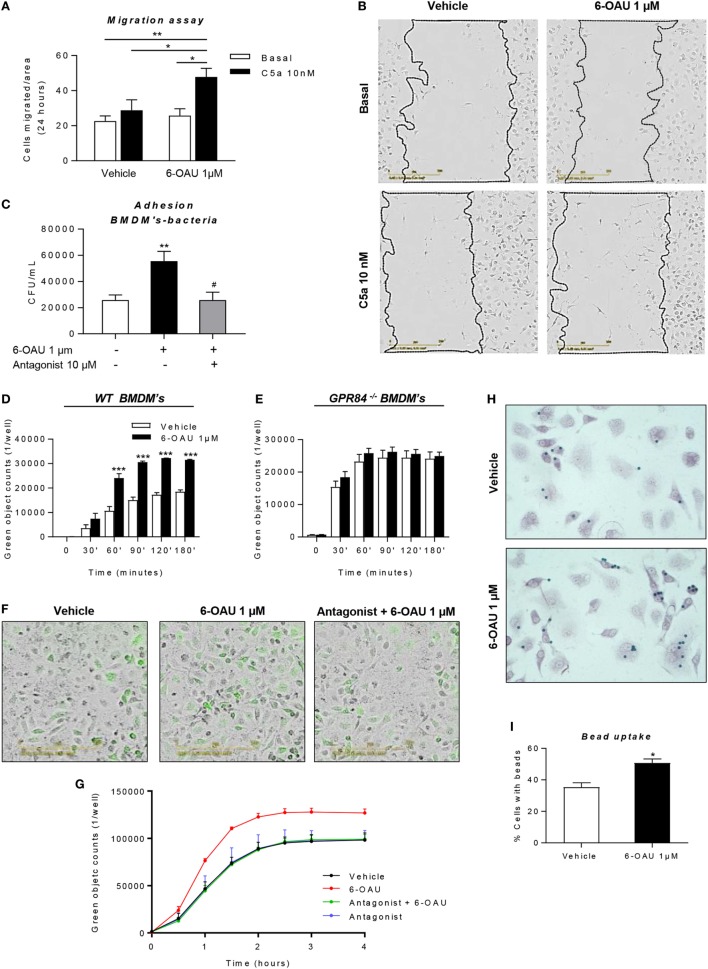
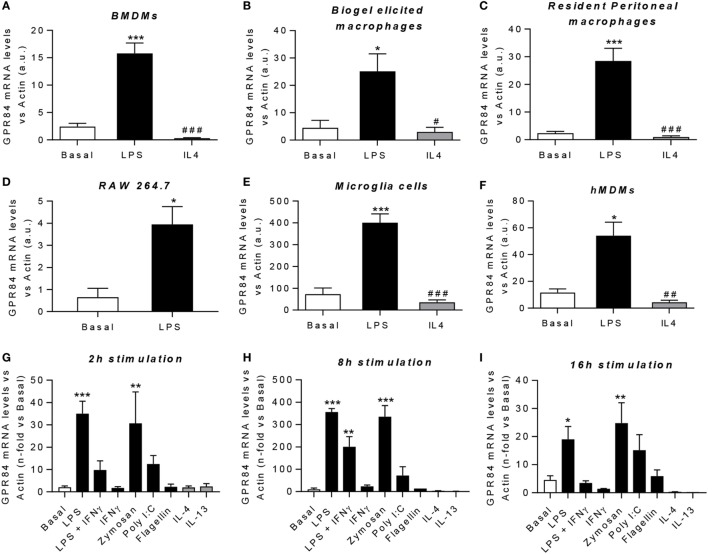
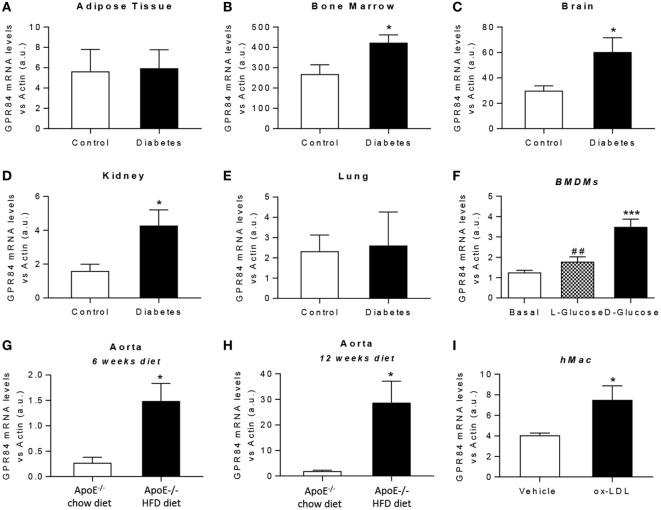
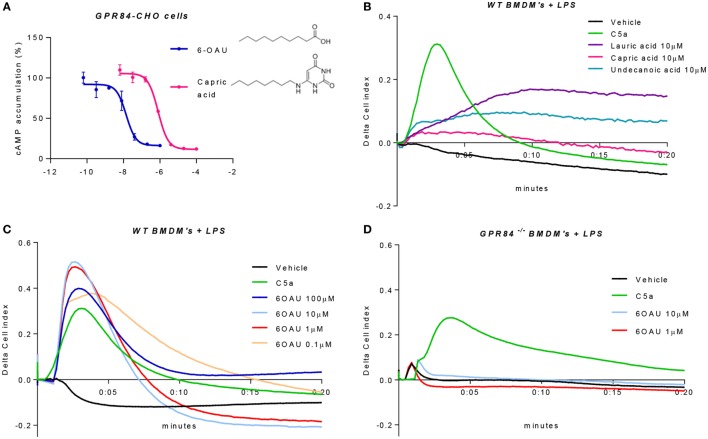
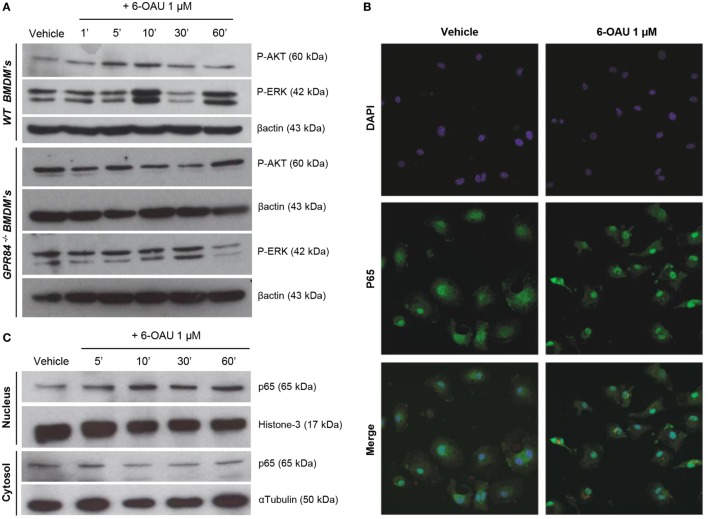
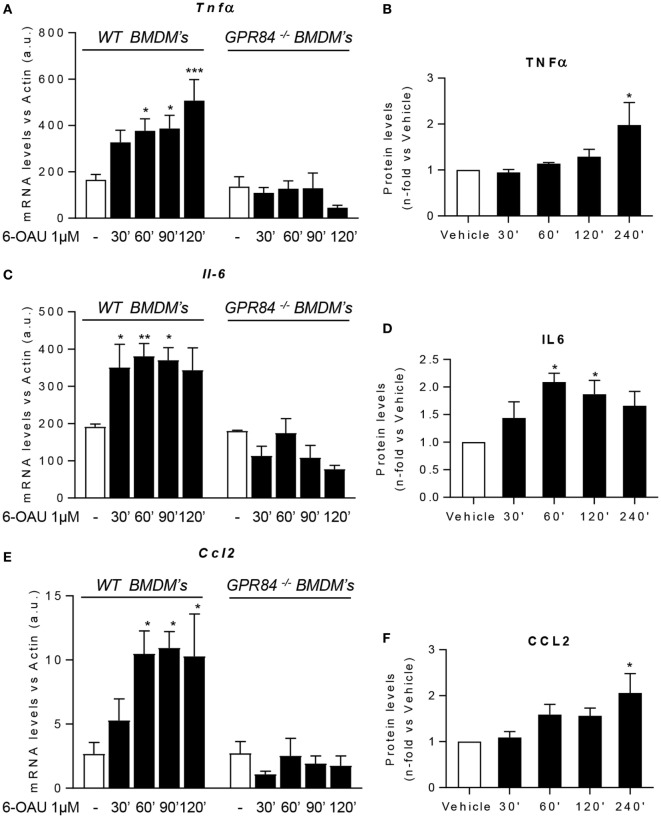
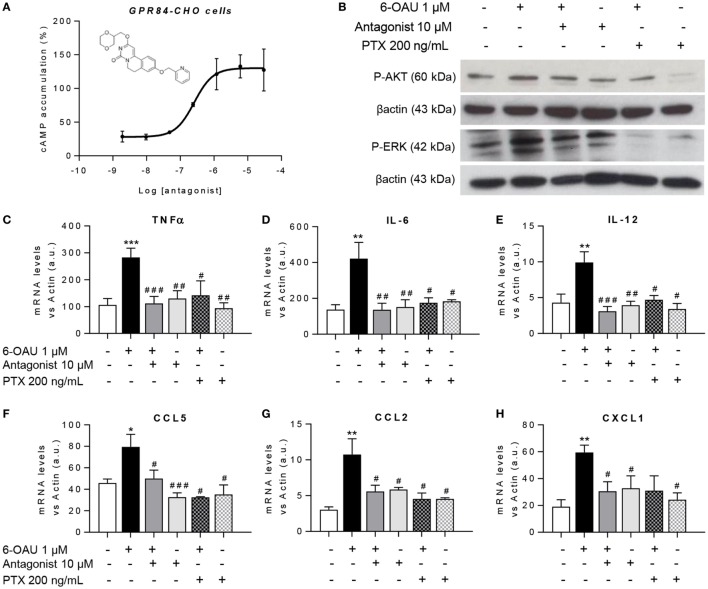
GPR84 is a member of the metabolic G protein-coupled receptor family, and its expression has been described predominantly in immune cells. GPR84 activation is involved in the inflammatory response, but the mechanisms by which it modulates inflammation have been incompletely described. In this study, we investigated GPR84 expression, activation, and function in macrophages to establish the role of the receptor during the inflammatory response. We observed that GPR84 expression in murine tissues is increased by endotoxemia, hyperglycemia, and hypercholesterolemia. studies revealed that GPR84 mRNA expression is increased by LPS and other pro-inflammatory molecules in different murine and human macrophage populations. Likewise, high glucose concentrations and the presence of oxidized LDL increased GPR84 expression in macrophages. Activation of the GPR84 receptor with a selective agonist, 6-(octylamino) pyrimidine-2,4(1H,3H)-dione (6--octylaminouracil, 6-OAU), enhanced the expression of phosphorylated Akt, p-ERK, and p65 nuclear translocation under inflammatory conditions and elevated the expression levels of the inflammatory mediators TNFα, IL-6, IL-12B, CCL2, CCL5, and CXCL1. In addition, GPR84 activation triggered increased bacterial adhesion and phagocytosis in macrophages. The enhanced inflammatory response mediated by 6-OAU was not observed in GPR84 cells nor in macrophages treated with a selective GPR84 antagonist. Collectively, our results reveal that GPR84 functions as an enhancer of inflammatory signaling in macrophages once inflammation is established. Therefore, molecules that antagonize the GPR84 receptor may be potential therapeutic tools in inflammatory and metabolic diseases.
GPR84是代谢型G蛋白偶联受体家族的成员,其表达主要见于免疫细胞。GPR84的激活参与炎症反应,但其调节炎症的机制尚未完全阐明。在本研究中,我们调查了巨噬细胞中GPR84的表达、激活及功能,以确定该受体在炎症反应中的作用。我们观察到,内毒素血症、高血糖和高胆固醇血症可使小鼠组织中GPR84的表达增加。研究显示,在不同的小鼠和人类巨噬细胞群体中,脂多糖和其他促炎分子可使GPR84 mRNA表达增加。同样,高糖浓度和氧化型低密度脂蛋白的存在也会增加巨噬细胞中GPR84的表达。用选择性激动剂6-(辛基氨基)嘧啶-2,4(1H,3H)-二酮(6-辛基氨基尿嘧啶,6-OAU)激活GPR84受体,可增强炎症条件下磷酸化Akt、p-ERK的表达及p65核转位,并提高炎症介质TNFα、IL-6、IL-12B、CCL2、CCL5和CXCL1的表达水平。此外,GPR84激活可引发巨噬细胞中细菌黏附和吞噬作用增强。在GPR84基因敲除细胞或用选择性GPR84拮抗剂处理的巨噬细胞中未观察到6-OAU介导的炎症反应增强。总体而言,我们的结果表明,一旦炎症形成,GPR84在巨噬细胞中作为炎症信号增强剂发挥作用。因此,拮抗GPR84受体的分子可能是炎症和代谢性疾病的潜在治疗工具。