Godwin Bridget, Liacouras Chris, Mehta Vijay, Eisenberg Joshua, Agawu Atu, Brown-Whitehorn Terri, Ruffner Melanie A, Verma Ritu, Cianferoni Antonella, Spergel Jonathan M, Muir Amanda B
Division of Gastroenterology, Hepatology and Nutrition, Children's Hospital of Philadelphia, Philadelphia, PA, United States.
Department of Pediatrics, Children's Hospital of Philadelphia, Philadelphia, PA, United States.
Front Pediatr. 2018 Jun 20;6:173. doi: 10.3389/fped.2018.00173. eCollection 2018.
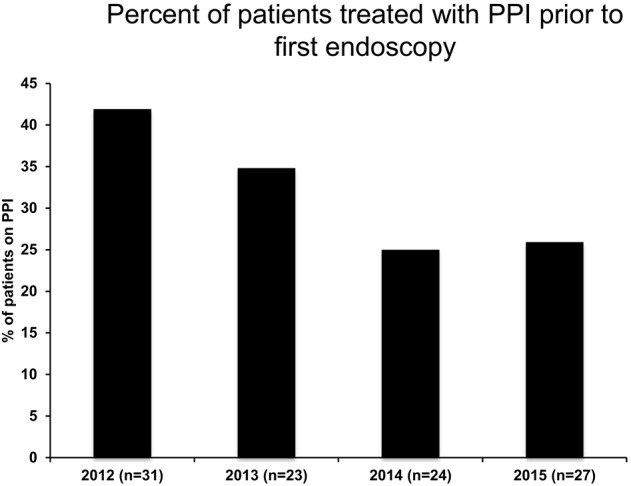
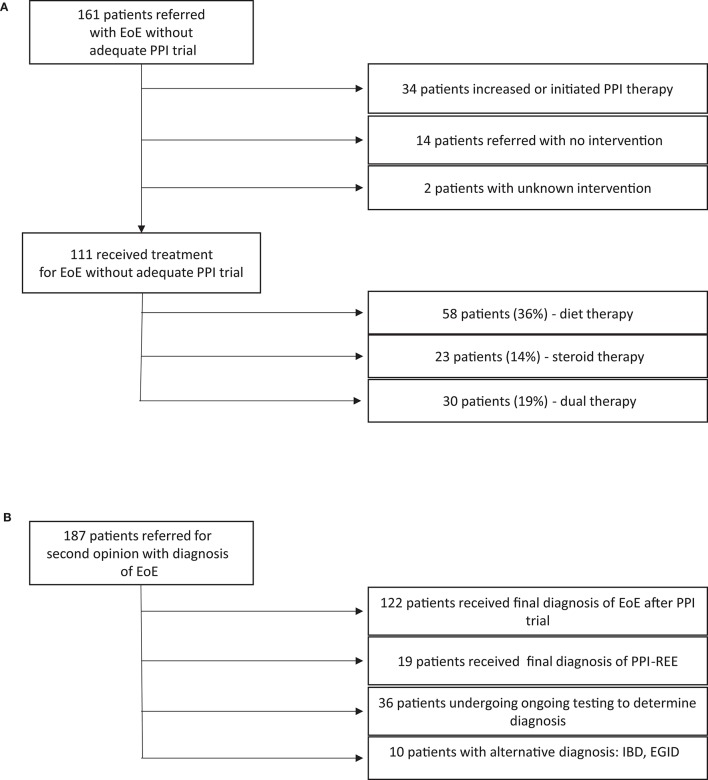
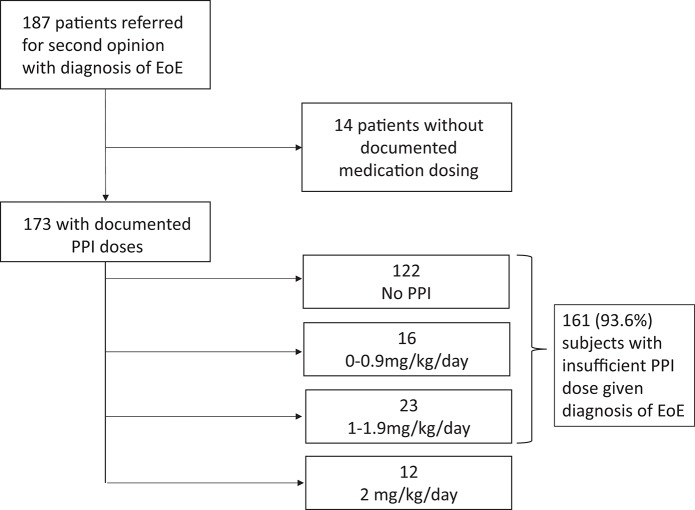
Eosinophilic esophagitis is a chronic, immune-mediated disease characterized by symptoms of esophageal dysfunction and ≥15 eosinophils/high-powered field (eos/hpf). Proton pump inhibitor responsive esophageal eosinophilia (1) is an entity of esophageal eosinophilia that responds to PPI therapy and is thought to be clinically and histologically similar to EoE. Current guidelines suggest therapy with PPI prior to endoscopy and use of PPI as first line for esophageal eosinophilia. In order to gain a better understanding of community practice patterns and to try differentiate between these two entities, we sought to evaluate the clinical presentations, treatment and final diagnoses of patients presenting to our institution for second opinions of esophageal eosinophilia. A search of our electronic medical record yielded a list of patients presenting for a second opinion of esophageal eosinophilia. Charts were reviewed for clinical information. A total of 187 charts were included. Patients ranged from 1-19 years old with 75% being male and 74% being Caucasian. Of the patients who had documentation of their medications at the time of initial endoscopy, 70% were not on any PPI prior to their endoscopy, and 94% were on <2 mg/kg/day. Of the 19 patients who had full response to PPI therapy and were diagnosed with PPI-REE, close to half had previously been treated with diet, steroids, or both. Patients with final diagnosis of EoE had significantly higher eos/hpf on initial endoscopy compared to those with diagnosis of PPI-REE (51.9 ± 30.6 v. 35.8 ± 16.4. = 0.027), as well as higher likelihood of having IgE-mediated food allergy (79 v. 47%, = 0.003). Diagnostic and therapeutic algorithms are needed for esophageal eosinophilia to prevent misdiagnosis and unnecessary procedures and therapies.
嗜酸性食管炎是一种慢性免疫介导性疾病,其特征为食管功能障碍症状和每高倍视野≥15个嗜酸性粒细胞(eos/hpf)。质子泵抑制剂反应性食管嗜酸性粒细胞增多症(1)是一种食管嗜酸性粒细胞增多症实体,对质子泵抑制剂治疗有反应,被认为在临床和组织学上与嗜酸性食管炎相似。当前指南建议在内镜检查前使用质子泵抑制剂进行治疗,并将质子泵抑制剂作为食管嗜酸性粒细胞增多症的一线治疗药物。为了更好地了解社区实践模式,并试图区分这两种实体,我们试图评估因食管嗜酸性粒细胞增多症前来我院寻求二次诊断的患者的临床表现、治疗情况和最终诊断。对我们的电子病历进行检索,得到了一份因食管嗜酸性粒细胞增多症前来寻求二次诊断的患者名单。查阅病历以获取临床信息。共纳入187份病历。患者年龄在1至19岁之间,75%为男性,74%为白种人。在初次内镜检查时有用药记录的患者中,70%在检查前未使用任何质子泵抑制剂,94%的患者使用剂量<2mg/kg/天。在19例对质子泵抑制剂治疗有完全反应并被诊断为质子泵抑制剂反应性食管嗜酸性粒细胞增多症的患者中,近一半曾接受过饮食、类固醇或两者的治疗。最终诊断为嗜酸性食管炎的患者在初次内镜检查时的嗜酸性粒细胞/高倍视野明显高于诊断为质子泵抑制剂反应性食管嗜酸性粒细胞增多症的患者(51.9±30.6对35.8±16.4,P=0.027),以及发生IgE介导的食物过敏的可能性更高(79%对47%,P=0.003)。食管嗜酸性粒细胞增多症需要诊断和治疗算法,以防止误诊以及不必要的检查和治疗。