Department of Organismic and Evolutionary Biology, Harvard University, Cambridge, MA, United States of America.
École des Mines de Paris, Paris, France.
PLoS Genet. 2018 Jul 5;14(7):e1007510. doi: 10.1371/journal.pgen.1007510. eCollection 2018 Jul.
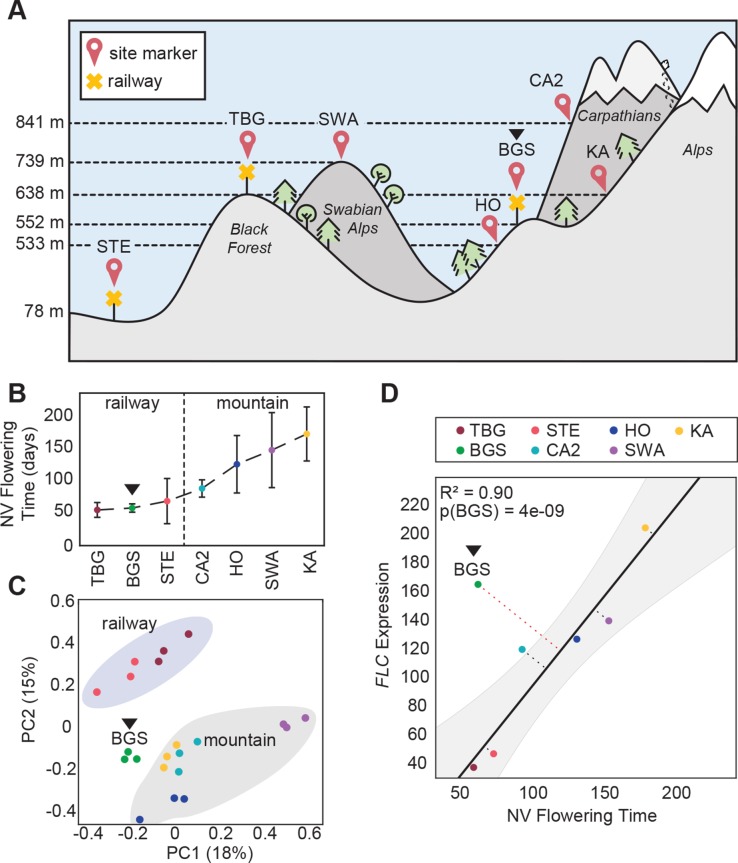
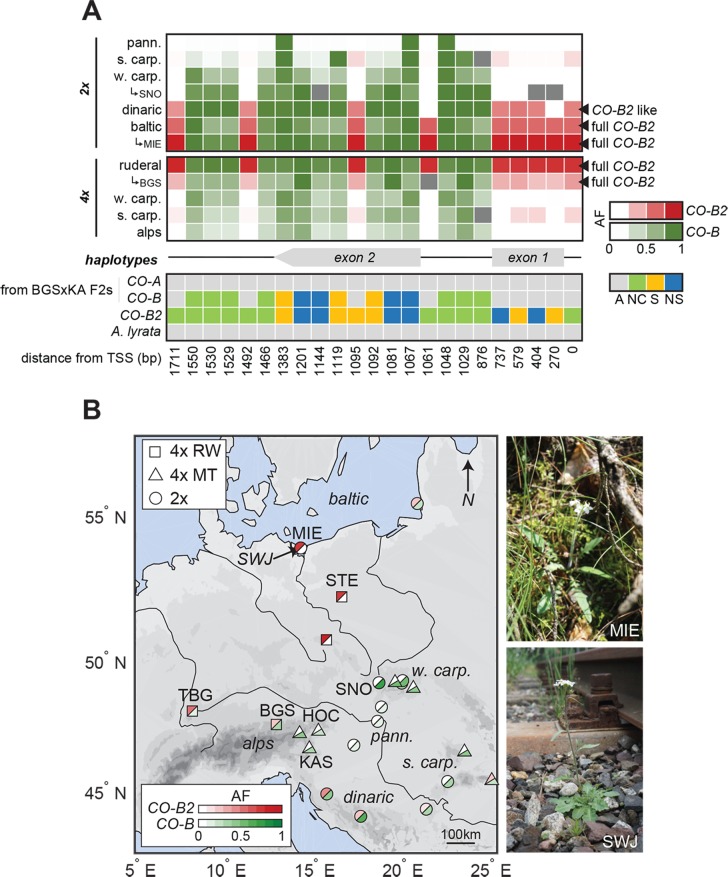
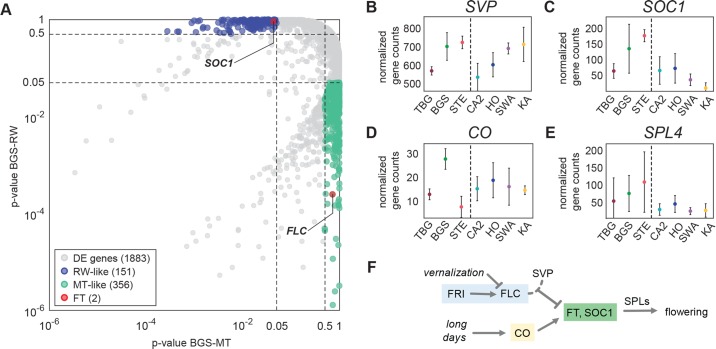
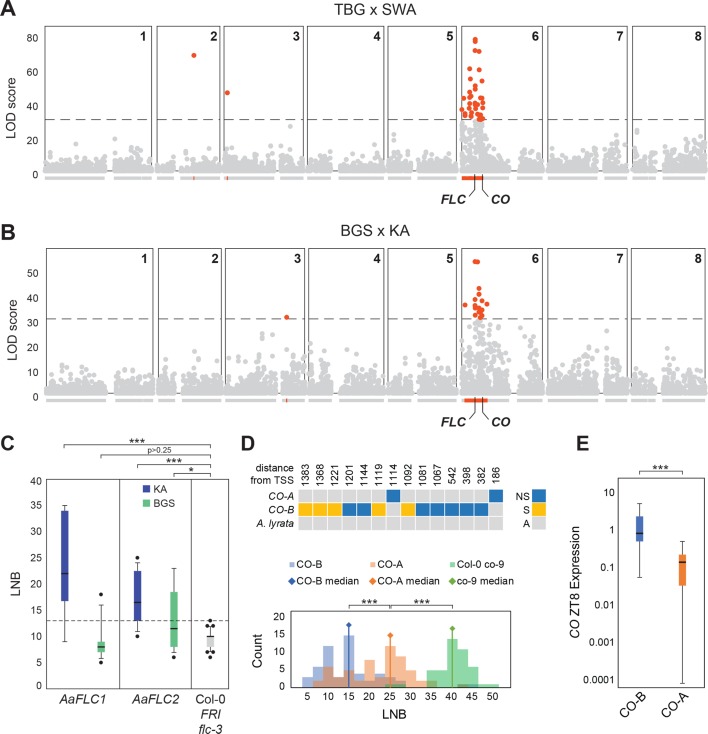
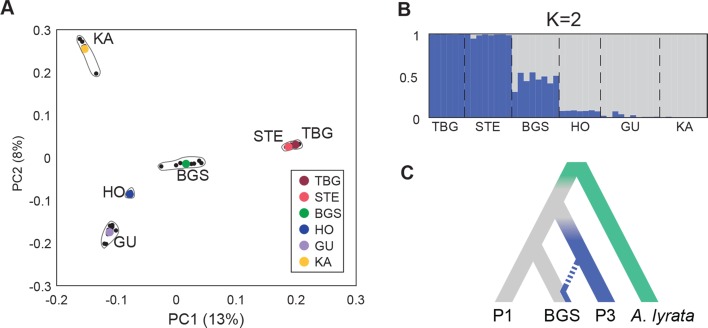
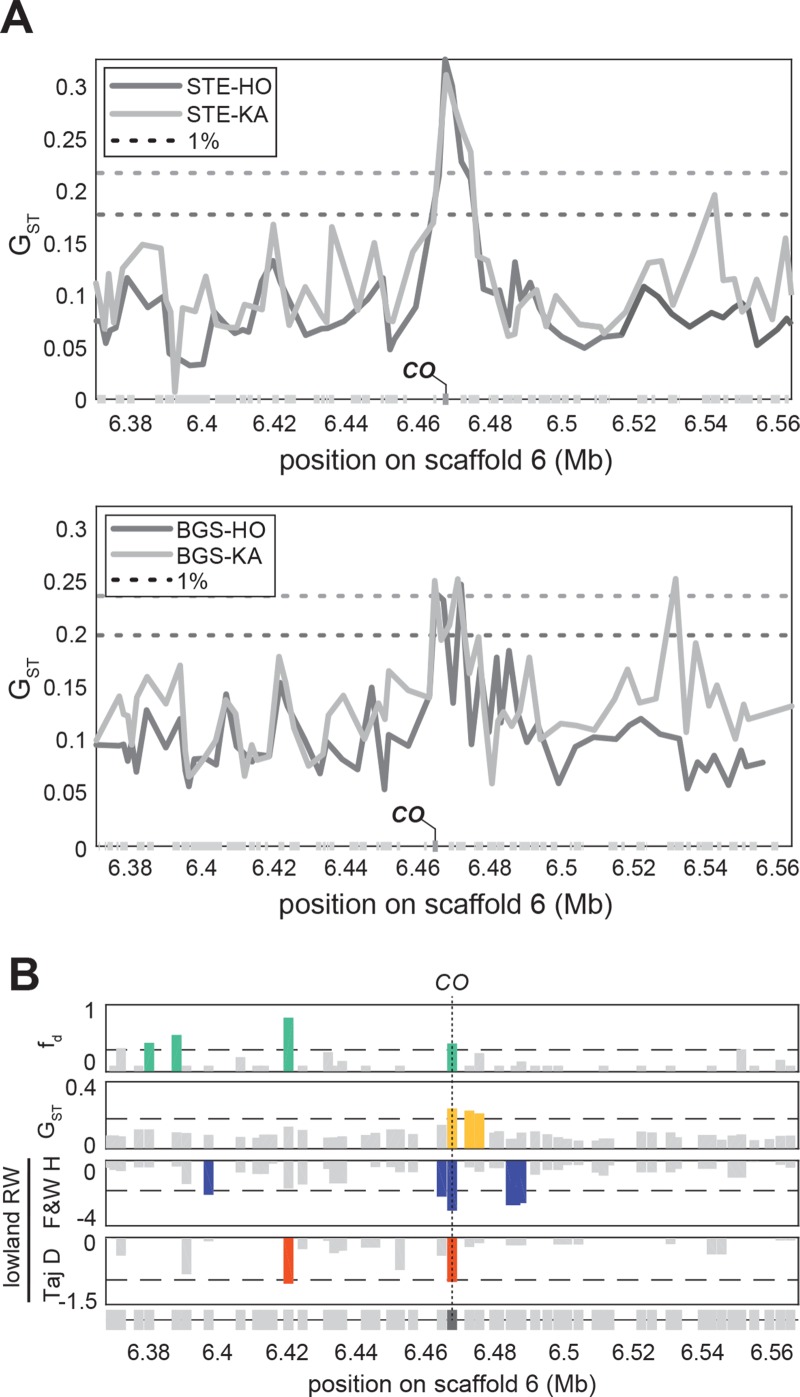
Spatially structured plant populations with diverse adaptations provide powerful models to investigate evolution. Human-generated ruderal habitats are abundant and low-competition, but are challenging for plants not adapted to them. Ruderal habitats also sometimes form networked corridors (e.g. roadsides and railways) that allow rapid long-distance spread of successfully adapted variants. Here we use transcriptomic and genomic analyses, coupled with genetic mapping and transgenic follow-up, to understand the evolution of rapid cycling during adaptation to railway sites in autotetraploid Arabidopsis arenosa. We focus mostly on a hybrid population that is likely a secondary colonist of a railway site. These mountain railway plants are phenotypically similar to their cosmopolitan cousins. We thus hypothesized that colonization primarily involved the flow of adaptive alleles from the cosmopolitan railway variant. But our data shows that it is not that simple: while there is evidence of selection having acted on introgressed alleles, selection also acted on rare standing variation, and new mutations may also contribute. Among the genes we show have allelic divergence with functional relevance to flowering time are known regulators of flowering, including FLC and CONSTANS. Prior implications of these genes in weediness and rapid cycling supports the idea that these are "evolutionary hotspots" for these traits. We also find that one of two alleles of CONSTANS under selection in the secondary colonist was selected from rare standing variation in mountain populations, while the other was introgressed from the cosmopolitan railway populations. The latter allele likely arose in diploid populations over 700km away, highlighting how ruderal populations could act as allele conduits and thus influence local adaptation.
具有多样化适应性的空间结构植物种群为研究进化提供了强大的模型。人为产生的荒地栖息地丰富且竞争压力低,但对于那些不适应这些环境的植物来说,这些栖息地极具挑战性。荒地栖息地有时也会形成网络化的走廊(例如路边和铁路),使成功适应的变异体能够快速进行远距离传播。在这里,我们使用转录组和基因组分析,结合遗传图谱和转基因后续研究,来理解拟南芥四倍体 Arabidopsis arenosa 适应铁路生境时快速循环的进化。我们主要关注的是一个可能是铁路生境的次生殖民者的杂种群体。这些山地铁路植物在表型上与它们的世界性表亲相似。因此,我们假设殖民化主要涉及到适应性等位基因从世界性铁路变异体的流动。但我们的数据表明,情况并非如此简单:虽然有证据表明选择作用于渐渗的等位基因,但选择也作用于罕见的等位基因,新的突变也可能起作用。在我们表明与开花时间的等位基因分化具有功能相关性的基因中,包括 FLC 和 CONSTANS,它们是已知的开花调控因子。这些基因在杂草和快速循环中的先前影响支持了这些是这些特征的“进化热点”的观点。我们还发现,在次生殖民者中受选择的 CONSTANS 的两个等位基因之一是从山地种群中罕见的等位基因中选择出来的,而另一个则是从世界性铁路种群中渐渗而来的。后者的等位基因可能是在距离超过 700 公里的二倍体种群中产生的,这突出了荒地种群如何作为等位基因的渠道,从而影响局部适应性。