Department of Family Medicine, University of Alberta, 6-10 University Terrace, Edmonton, AB, T6G 2T4, Canada.
Mathematics and Statistics, Memorial University of Newfoundland, HH-3046, St. John's, NL, A1C 5S7, Canada.
BMC Geriatr. 2018 Jul 5;18(1):157. doi: 10.1186/s12877-018-0854-8.
Nursing home (NH) residents are frequent users of emergency departments (ED) and while prior research suggests that repeat visits are common, there is little data describing this phenomenon. Our objectives were to describe repeat ED visits over one year, identify risk factors for repeat use, and characterize "frequent" ED visitors.
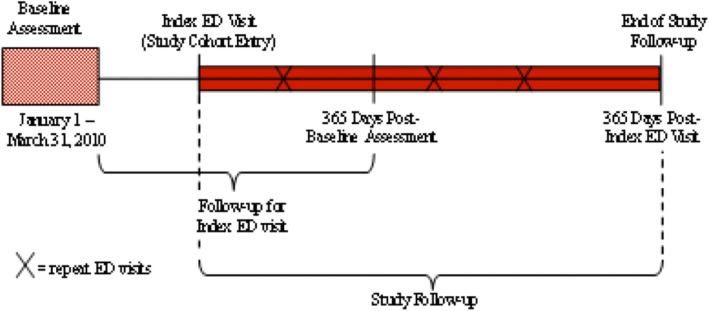
Using provincial administrative data from Ontario, Canada, we identified all NH residents 65 years or older who visited an ED at least once between January 1 and March 31, 2010 and then followed them for one year to capture all additional ED visits. Frequent ED visitors were defined as those who had 3 or more repeat ED visits. We used logistic regression to estimate risk factors for any repeat ED visit and for being a frequent visitor and Andersen-Gill regression to estimate risk factors for the rate of repeat ED visits.
In a cohort of 25,653 residents (mean age 84.5 (SD = 7.5) years, 68.2% female), 48.8% had at least one repeat ED visit. Residents who experienced a repeat ED visit were generally similar to others but they tended to be slightly younger, have a higher proportion male, and a higher proportion with minimal cognitive or physical impairment. Risk factors for a repeat ED visit included: being male (adjusted odds ratio 1.27, (95% confidence interval 1.19-1.36)), diagnoses such as diabetes (AOR 1.28 (1.19-1.37)) and congestive heart failure (1.26 (1.16-1.37)), while severe cognitive impairment (AOR 0.92 (0.84-0.99)) and 5 or more chronic conditions (AOR 0.82 (0.71-0.95)) appeared protective. Eleven percent of residents were identified as frequent ED visitors, and they were more often younger then 75 years, male, and less likely to have Alzheimer's disease or other dementias than non-frequent visitors.
Repeat ED visits were common among NH residents but a relatively small group accounted for the largest number of visits. Although there were few clear defining characteristics, our findings suggest that medically complex residents and younger residents without cognitive impairments are at risk for such outcomes.
养老院(NH)居民是急诊部(ED)的常客,尽管先前的研究表明重复就诊很常见,但几乎没有数据描述这种现象。我们的目标是描述一年内重复 ED 就诊情况,确定重复使用的风险因素,并描述“频繁”ED 访客的特征。
我们使用来自加拿大安大略省的省级行政数据,确定了 2010 年 1 月 1 日至 3 月 31 日期间至少一次到 ED 就诊的所有 65 岁或以上的 NH 居民,然后对他们进行为期一年的随访,以捕捉所有其他 ED 就诊情况。频繁 ED 访客被定义为有 3 次或更多次重复 ED 就诊的人。我们使用逻辑回归来估计任何重复 ED 就诊的风险因素和成为频繁访客的风险因素,并使用 Andersen-Gill 回归来估计重复 ED 就诊的频率。
在一个由 25653 名居民组成的队列中(平均年龄 84.5(SD=7.5)岁,68.2%为女性),48.8%的居民至少有一次重复 ED 就诊。经历重复 ED 就诊的居民通常与其他居民相似,但他们的年龄略小,男性比例较高,认知或身体障碍程度最低的比例较高。重复 ED 就诊的风险因素包括:男性(调整后的优势比 1.27(95%置信区间 1.19-1.36))、糖尿病(AOR 1.28(1.19-1.37))和充血性心力衰竭(1.26(1.16-1.37))等诊断,而严重认知障碍(AOR 0.92(0.84-0.99))和 5 种或更多种慢性疾病(AOR 0.82(0.71-0.95))则具有保护作用。11%的居民被确定为频繁 ED 访客,他们更年轻,年龄在 75 岁以下,男性,与非频繁访客相比,患阿尔茨海默病或其他痴呆症的可能性较小。
NH 居民重复 ED 就诊很常见,但一小部分居民的就诊次数最多。尽管几乎没有明确的定义特征,但我们的研究结果表明,病情复杂的居民和没有认知障碍的年轻居民面临这种情况的风险更大。