Department of Microbiology and Physiological Systems, University of Massachusetts Medical School, Worcester, Massachusetts, USA.
Department of Pharmacy and Pharmacology, University of Bath, Claverton Down, Bath, United Kingdom.
mSphere. 2018 Jul 5;3(4):e00303-18. doi: 10.1128/mSphere.00303-18.
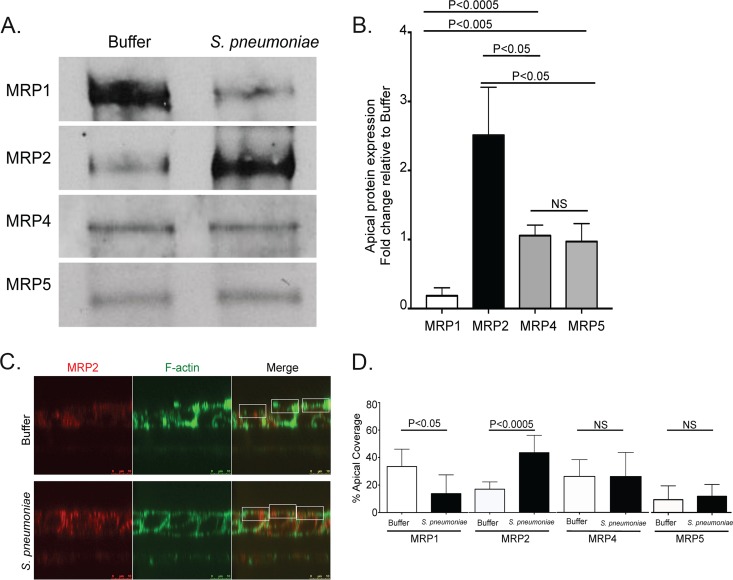
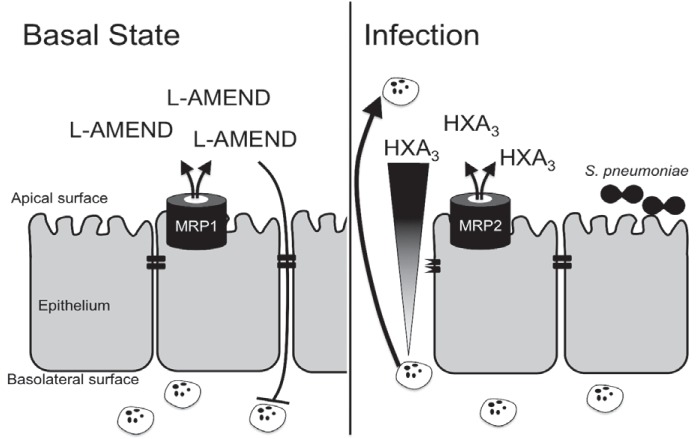
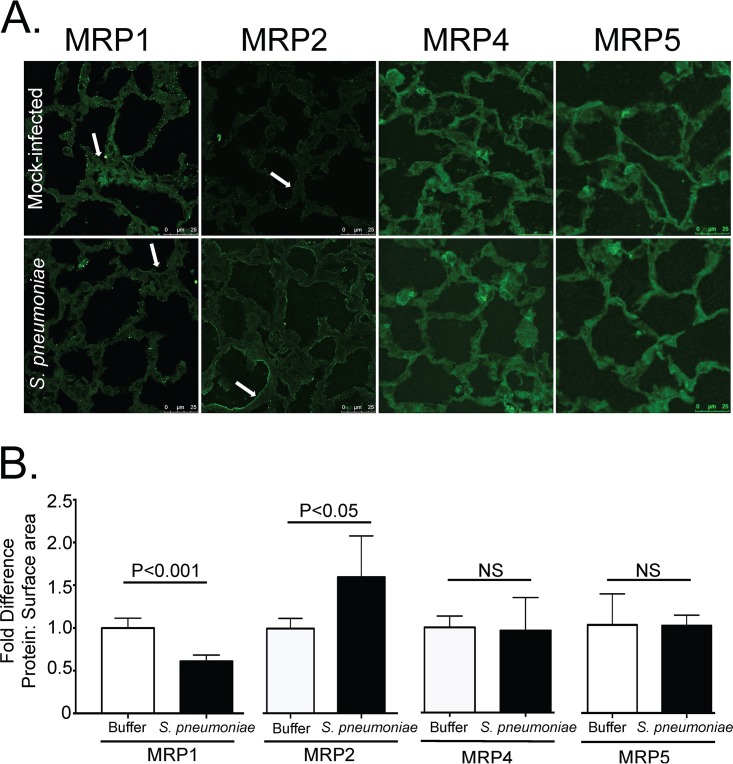
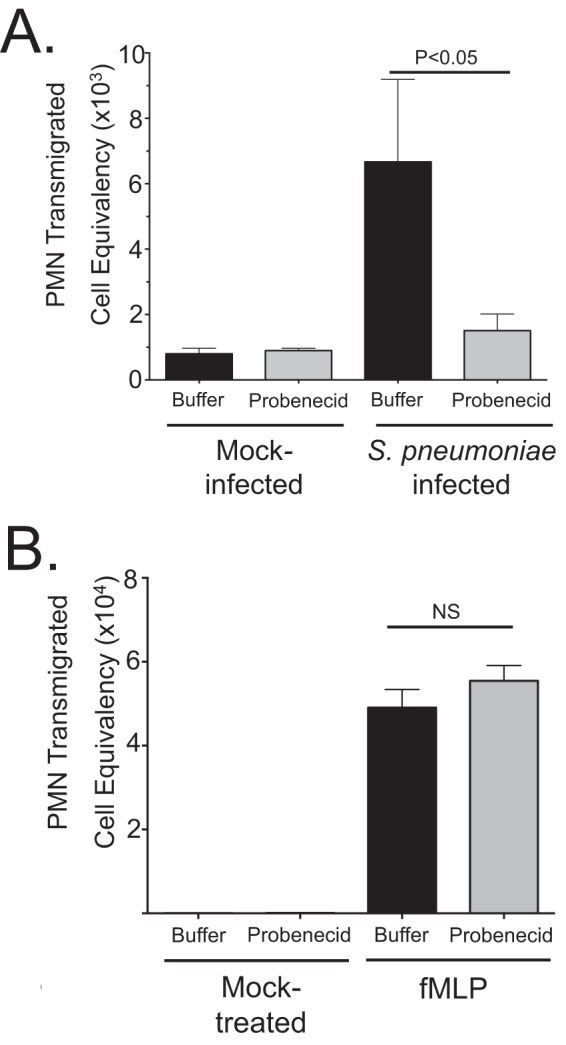
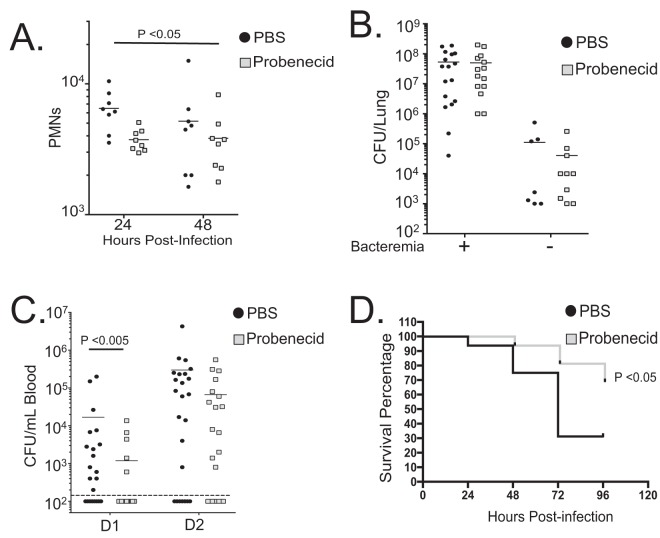
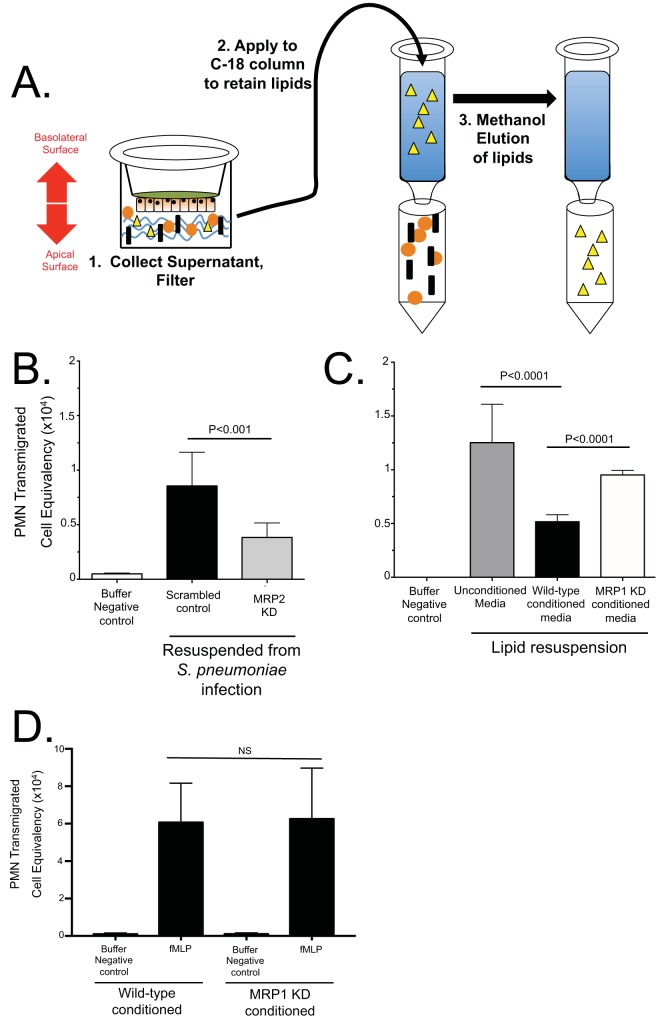
remains a source of morbidity and mortality in both developed and underdeveloped nations of the world. Disease can manifest as pneumonia, bacteremia, and meningitis, depending on the localization of infection. Interestingly, there is a correlation in experimental murine infections between the development of bacteremia and influx of neutrophils into the pulmonary lumen. Reduction of this neutrophil influx has been shown to improve survivability during infection. In this study, we use biotinylation and neutrophil transmigration and murine infection to identify a system in which two epithelium-localized ATP-binding cassette transporters, MRP1 and MRP2, have inverse activities dictating neutrophil transmigration into the lumen of infected mouse lungs. MRP1 effluxes an anti-inflammatory molecule that maintains homeostasis in uninfected contexts, thus reducing neutrophil infiltration. During inflammatory events, however, MRP1 decreases and MRP2 both increases and effluxes the proinflammatory eicosanoid hepoxilin A3. If we then decrease MRP2 activity during experimental murine infection with , we reduce both neutrophil infiltration and bacteremia, showing that MRP2 coordinates this activity in the lung. We conclude that MRP1 assists in depression of polymorphonuclear cell (PMN) migration by effluxing a molecule that inhibits the proinflammatory effects of MRP2 activity. is a Gram-positive bacterium that normally inhabits the human nasopharynx asymptomatically. However, it is also a major cause of pneumonia, bacteremia, and meningitis. The transition from pneumonia to bacteremia is critical, as patients that develop septicemia have ~20% mortality rates. Previous studies have shown that while neutrophils, a major bacterium-induced leukocyte, aid in elimination, they also contribute to pathology and may mediate the lung-to-blood passage of the bacteria. Herein, we show that epithelium-derived MRP1 and MRP2 efflux immunomodulatory agents that assist in controlling passage of neutrophils during infection and that limiting neutrophil infiltration produced less bacteremia and better survival during murine infection. The importance of our work is twofold: ours is the first to identify an MRP1/MRP2 axis of neutrophil control in the lung. The second is to provide possible therapeutic targets to reduce excess inflammation, thus reducing the chances of developing bacteremia during pneumococcal pneumonia.
在发达国家和发展中国家,仍然是发病率和死亡率的一个来源。疾病可以表现为肺炎、菌血症和脑膜炎,这取决于感染的定位。有趣的是,在实验性鼠感染中,菌血症的发展与中性粒细胞流入肺腔之间存在相关性。减少这种中性粒细胞流入已被证明可提高感染期间的存活率。在这项研究中,我们使用生物素化和中性粒细胞迁移以及鼠感染来鉴定一个系统,其中两个上皮细胞定位的 ATP 结合盒转运蛋白 MRP1 和 MRP2 具有相反的活性,决定中性粒细胞向感染鼠肺腔的迁移。MRP1 外排一种在未感染情况下维持体内平衡的抗炎分子,从而减少中性粒细胞浸润。然而,在炎症事件中,MRP1 减少,MRP2 增加并外排促炎类二十烷素 hepoxilin A3。如果我们在 感染的实验性鼠感染中降低 MRP2 的活性,我们会减少中性粒细胞浸润和菌血症,表明 MRP2 在肺部协调这种活性。我们得出结论,MRP1 通过外排抑制 MRP2 活性的促炎作用的分子来协助抑制多形核细胞 (PMN) 迁移。是一种革兰氏阳性菌,通常无症状地栖息在人体鼻咽部。然而,它也是肺炎、菌血症和脑膜炎的主要原因。从肺炎到菌血症的转变是关键的,因为发生败血症的患者死亡率约为 20%。先前的研究表明,虽然中性粒细胞是一种主要的细菌诱导白细胞,有助于 清除,但它们也会导致病理学,并可能介导细菌从肺部到血液的转移。在此,我们表明上皮细胞衍生的 MRP1 和 MRP2 外排免疫调节因子,有助于控制感染期间中性粒细胞的迁移,并且限制中性粒细胞浸润可产生较少的菌血症和更好的存活率在鼠感染。我们工作的重要性有两个方面:我们是第一个在肺部识别出 MRP1/MRP2 中性粒细胞控制轴的人。其次是提供可能的治疗靶点,以减少过度炎症,从而降低发生肺炎球菌性肺炎时发生菌血症的机会。