King's College London, School of Biomedical Engineering and Imaging Sciences, St. Thomas' Hospital, London, United Kingdom.
King's College London, School of Biomedical Engineering and Imaging Sciences, St. Thomas' Hospital, London, United Kingdom
J Nucl Med. 2018 Sep;59(9):1355-1359. doi: 10.2967/jnumed.118.212803. Epub 2018 Jul 5.
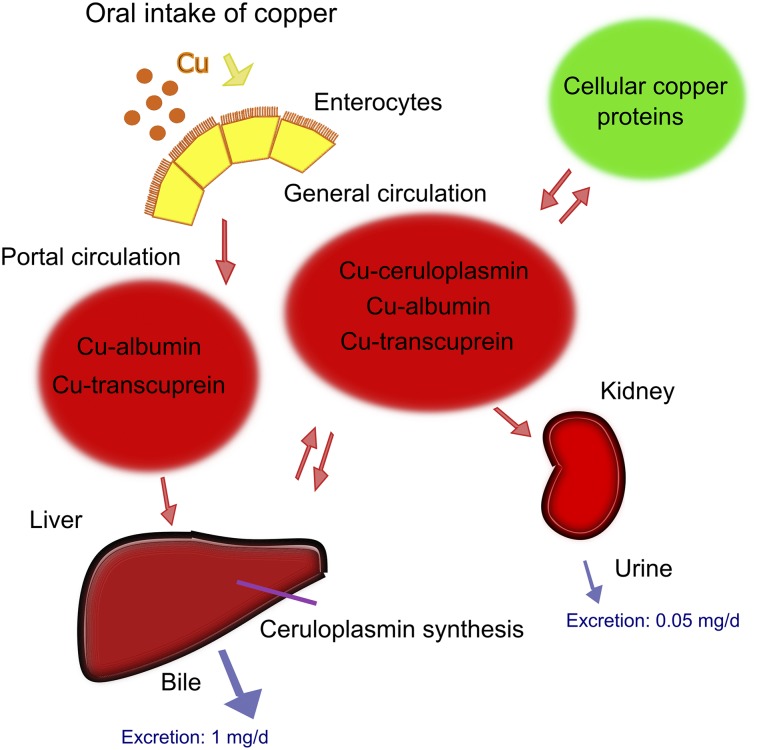
Essential trace metals such as copper, zinc, iron, and manganese perform critical functions in cellular and physiologic processes including catalytic, regulatory, and signaling roles. Disturbed metal homeostasis is associated with the pathogenesis of diseases such as dementia, cancer, and inherited metabolic abnormalities. Intracellular pathways involving essential metals have been extensively studied but whole-body fluxes and transport between different compartments remain poorly understood. The growing availability of PET scanners and positron-emitting isotopes of key essential metals, particularly Cu, Zn, and Mn, provide new tools with which to study these processes in vivo. This review highlights opportunities that now present themselves, exemplified by studies of copper metabolism that are in the vanguard of a new research front in molecular imaging: "PET metallomics."
必需微量元素如铜、锌、铁和锰在细胞和生理过程中发挥着关键作用,包括催化、调节和信号作用。金属稳态失衡与痴呆、癌症和遗传性代谢异常等疾病的发病机制有关。涉及必需金属的细胞内途径已得到广泛研究,但全身通量和不同隔室之间的转运仍知之甚少。正电子发射断层扫描(PET)扫描仪和关键必需金属的放射性同位素(特别是 Cu、Zn 和 Mn)的日益普及为研究这些体内过程提供了新的工具。本文综述了这些新工具带来的机遇,以铜代谢的研究为例,这是分子成像中新研究前沿的先驱:“正电子发射断层扫描金属组学”。