Departments of Neuroscience and Cell Biology, Howard Hughes Medical Institute, Kavli Institute for Neuroscience, Program in Cellular Neuroscience, Neurodegeneration and Repair, Yale University School of Medicine, New Haven, CT, USA.
Science. 2018 Aug 10;361(6402):604-607. doi: 10.1126/science.aat5671. Epub 2018 Jul 5.
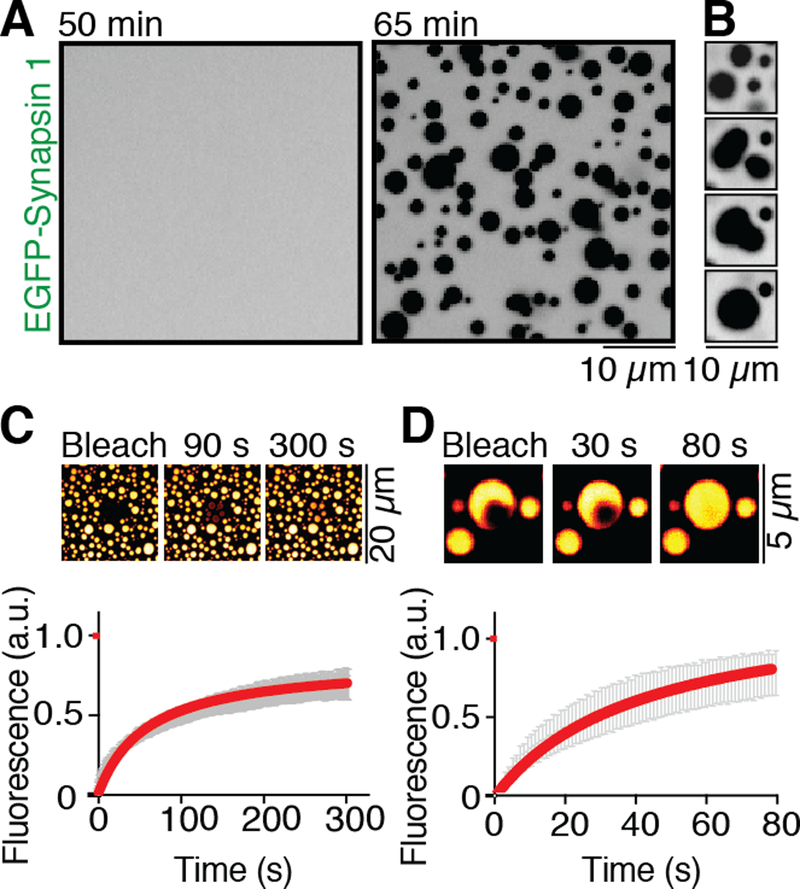
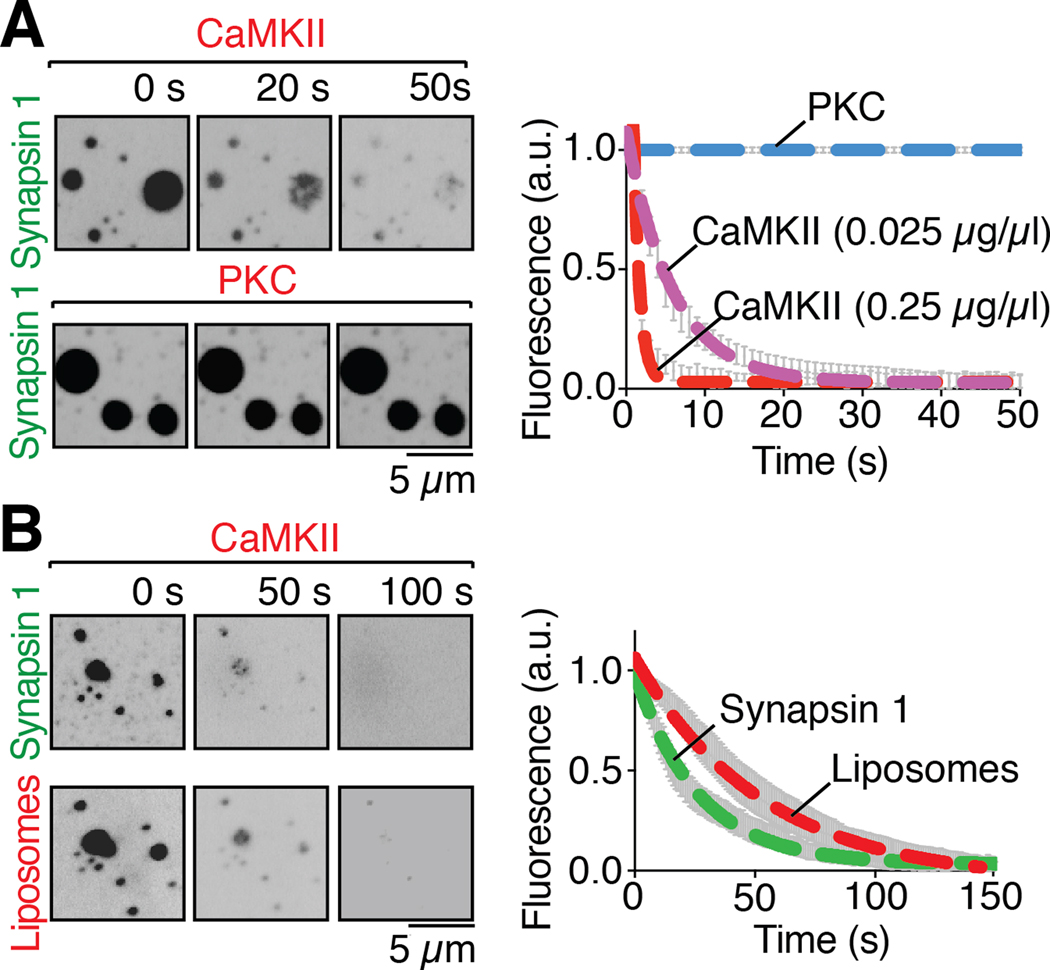
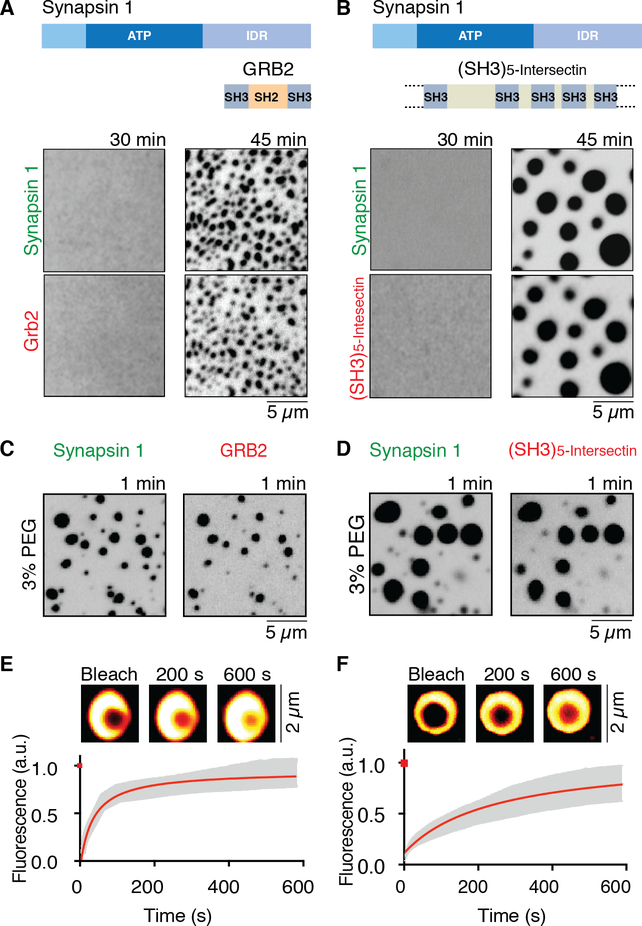
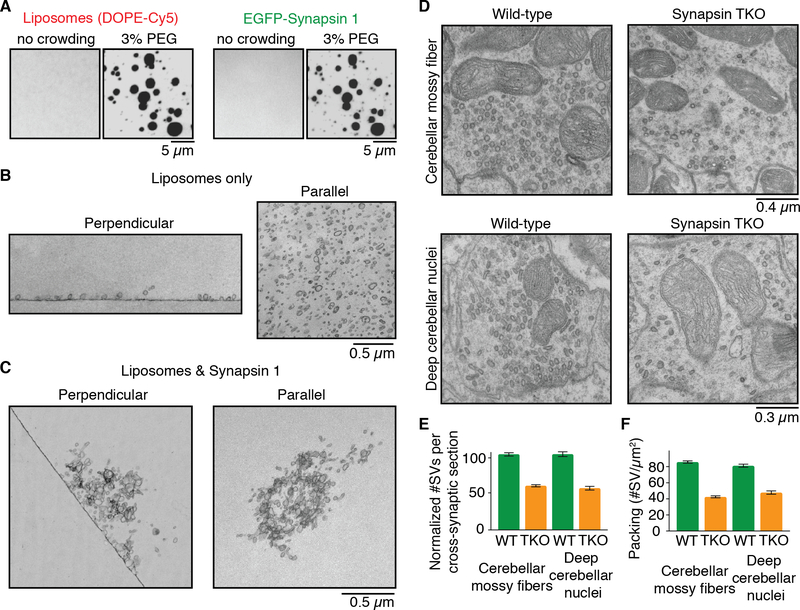
Neurotransmitter-containing synaptic vesicles (SVs) form tight clusters at synapses. These clusters act as a reservoir from which SVs are drawn for exocytosis during sustained activity. Several components associated with SVs that are likely to help form such clusters have been reported, including synapsin. Here we found that synapsin can form a distinct liquid phase in an aqueous environment. Other scaffolding proteins could coassemble into this condensate but were not necessary for its formation. Importantly, the synapsin phase could capture small lipid vesicles. The synapsin phase rapidly disassembled upon phosphorylation by calcium/calmodulin-dependent protein kinase II, mimicking the dispersion of synapsin 1 that occurs at presynaptic sites upon stimulation. Thus, principles of liquid-liquid phase separation may apply to the clustering of SVs at synapses.
含神经递质的突触小泡 (SVs) 在突触处形成紧密的簇。这些簇作为一个储库,在持续活动期间,SVs 从中被抽取出来进行胞吐作用。已经报道了一些与 SVs 相关的可能有助于形成这种簇的成分,包括突触结合蛋白。在这里,我们发现突触结合蛋白可以在水相环境中形成一个独特的液相。其他支架蛋白可以共同组装到这个凝聚物中,但对于其形成不是必需的。重要的是,突触结合蛋白相可以捕获小的脂质囊泡。当被钙/钙调蛋白依赖性蛋白激酶 II 磷酸化时,突触结合蛋白相迅速解体,模拟了刺激时突触前位点发生的突触结合蛋白 1 的分散。因此,液-液相分离的原则可能适用于突触处 SVs 的聚类。