Zhu Xinyi, Chen Yuqi, Xiang Li, You Tao, Jiao Yang, Xu Weiting, Chen Jianchang
Department of Cardiology, The Second Affiliated Hospital, Soochow University, Suzhou, Jiangsu Province, China.
Medicine (Baltimore). 2018 Jul;97(27):e10679. doi: 10.1097/MD.0000000000010679.
In the current meta-analysis, we aim to assess the effect of high-sensitive C-reactive protein (hs-CRP) on in-stent restenosis (ISR) outcome in patients receiving stent implantation.
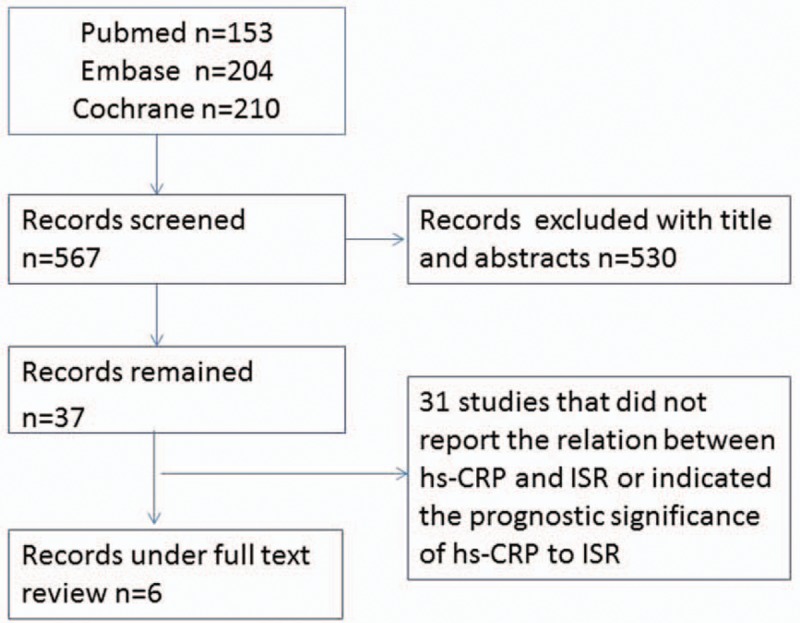
Embase, PubMed, and Cochrane databases were searched through October 2016 using the keywords "high-sensitive C-reactive protein," "in-stent restenosis." An odds ratio (OR) of on ISR endpoints among patients receiving stent implantation was calculated using random-effects models.
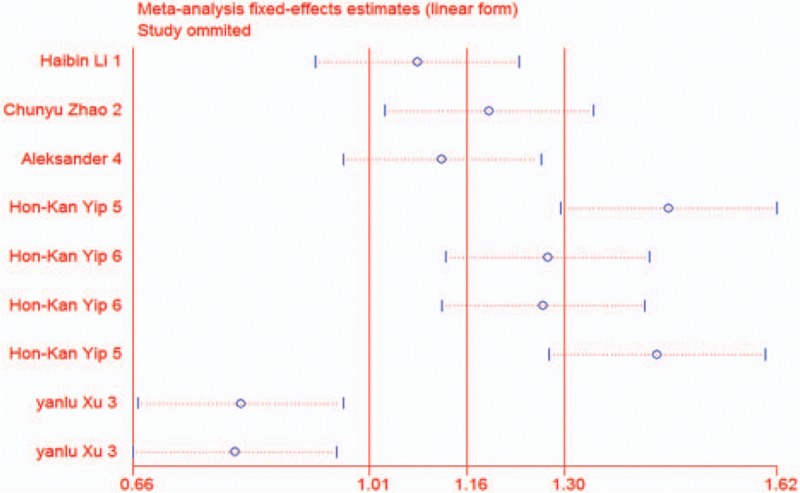
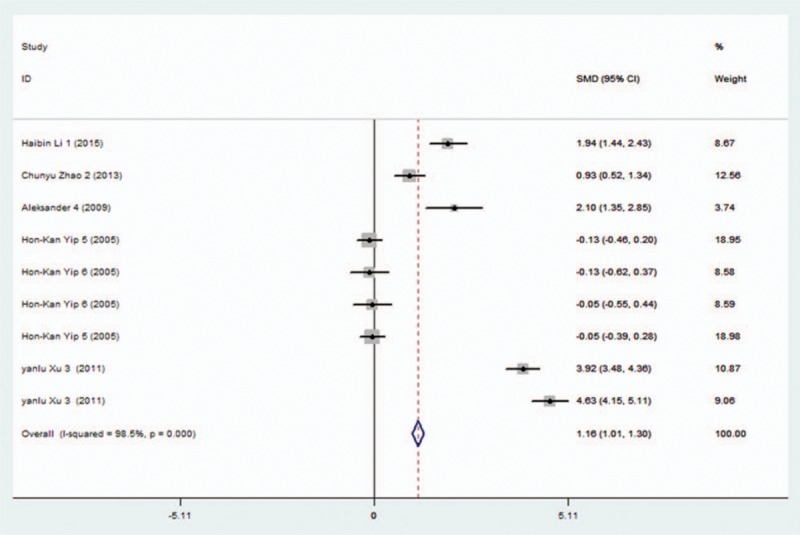
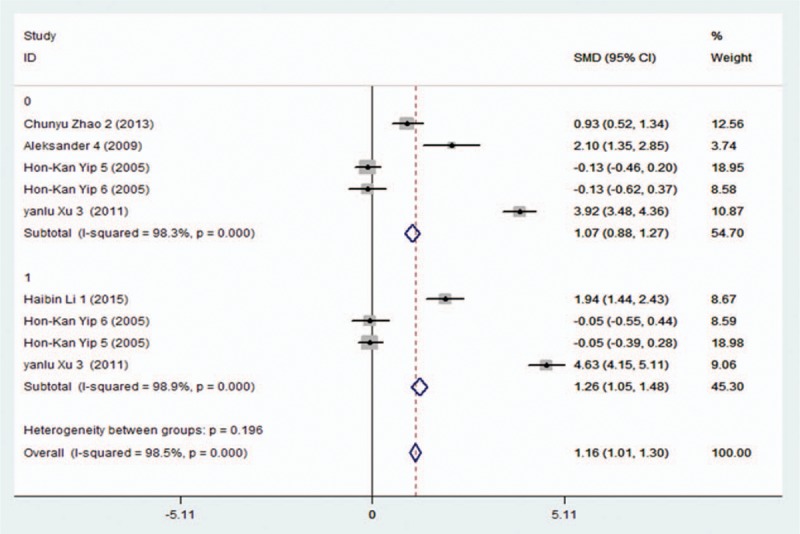
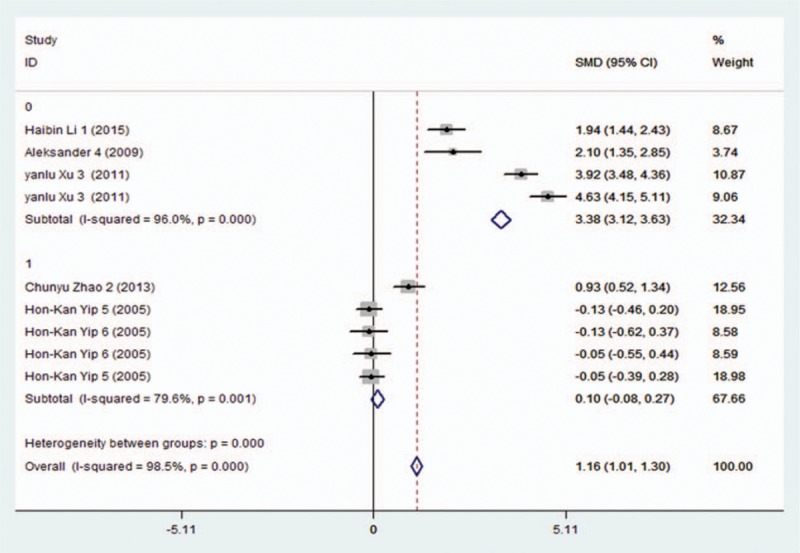
In the meta-analysis of 6 prospective observational studies, there are 1156 coronary heart disease (CHD) patients, a total of 885 stents were implanted and 194 ISR events had been followed up for 6 to 12 months; high-sensitive C-reactive protein levels are associated with the prediction of in-stent restenosis among patients receiving stent implantation. The OR of hs-CRP for ISR was 1.16 [95% confidence interval (CI), 1.01-1.30, P < .05].
This meta-analysis shows that higher levels of hs-CRP are associated with an increased risk of ISR and indicate a poorer prognosis in CHD patients after stent implantation.
在当前的荟萃分析中,我们旨在评估高敏C反应蛋白(hs-CRP)对接受支架植入患者支架内再狭窄(ISR)结局的影响。
通过使用关键词“高敏C反应蛋白”、“支架内再狭窄”检索截至2016年10月的Embase、PubMed和Cochrane数据库。使用随机效应模型计算接受支架植入患者中ISR终点的比值比(OR)。
在对6项前瞻性观察性研究的荟萃分析中,有1156例冠心病(CHD)患者,共植入885个支架,194例ISR事件随访6至12个月;高敏C反应蛋白水平与接受支架植入患者的支架内再狭窄预测相关。hs-CRP对ISR的OR为1.16 [95%置信区间(CI),1.01 - 1.30,P<0.05]。
这项荟萃分析表明,较高水平的hs-CRP与ISR风险增加相关,提示冠心病患者支架植入后预后较差。