Jiangsu Key Laboratory of Oral Diseases, Nanjing Medical University, Nanjing, China.
Department of Prosthodontics, Affiliated Hospital of Stomatology, Nanjing Medical University,Nanjing, China.
PLoS One. 2018 Jul 6;13(7):e0199603. doi: 10.1371/journal.pone.0199603. eCollection 2018.
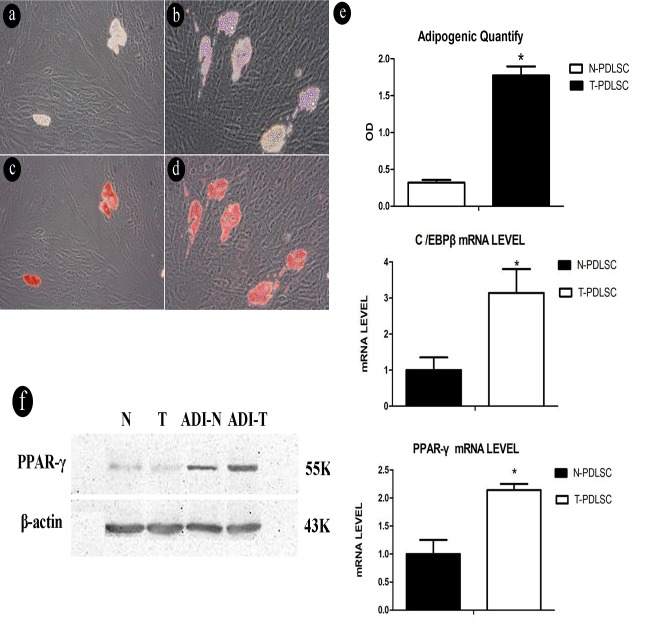
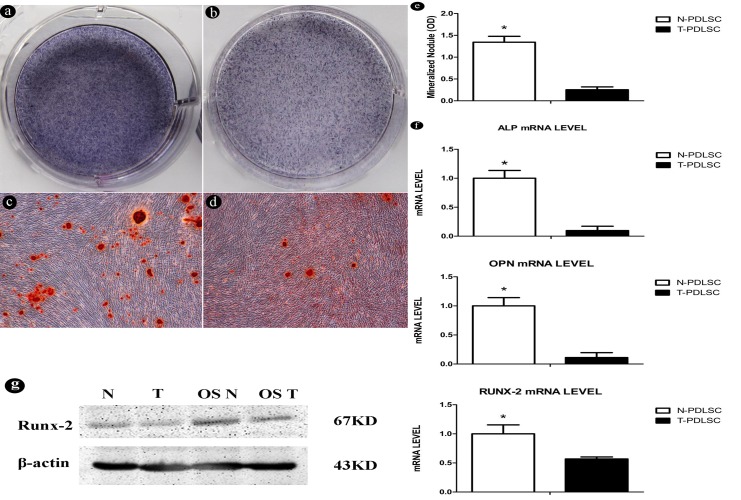
Periodontal tissue damage, accompanied by the degradation and destruction of periodontal tissue collagen, is one of the most clinically common complications and difficulty self-repair in patients with diabetes. Human periodontal ligament stem cells (PDLSC) are the undifferentiated mesenchymal cells that persist in the periodontal ligament after development of periodontal tissue and the ability of PDLSC osteogenic differentiation is responsible for repairing periodontal tissue defects. However, the reasons of high glucose environment in diabetic patients inhibiting PDLSC to repair periodontal tissues are unclear. To address these issues, we propose exposing PDLSC to high-sugar mimics the diabetic environment and investigating the activity of osteogenic differentiation and adipogenic differentiation of PDLSC. At the cellular level, high glucose can promote the adipogenic differentiation and inhibit osteogenic differentiation to decrease the self-repair ability of PDLSC in periodontal tissues. Mechanistically at the molecular level, these effects are elicited via regulating the mRNA and protein expression of C/EBPβ, PPAR-γ.
牙周组织损伤,伴随着牙周组织胶原的降解和破坏,是糖尿病患者最常见的临床并发症之一,也是自我修复的难点。人牙周韧带干细胞(PDLSC)是牙周组织发育后仍存在于牙周韧带中的未分化间充质细胞,PDLSC 的成骨分化能力负责修复牙周组织缺损。然而,糖尿病患者高血糖环境抑制 PDLSC 修复牙周组织的原因尚不清楚。针对这些问题,我们提出用高糖模拟糖尿病环境,研究 PDLSC 的成骨分化和脂肪分化活性。在细胞水平上,高葡萄糖可促进脂肪分化,抑制成骨分化,降低 PDLSC 在牙周组织中的自我修复能力。在分子水平的机制上,这些作用是通过调节 C/EBPβ、PPAR-γ 的 mRNA 和蛋白表达来实现的。