Department of Nuclear Medicine, College of Medicine, Gyeongsang National University Hospital, Gyeongsang National University, Jinju, Gyeongnam, Republic of Korea.
Department of Anatomy and Convergence Medical Science, Bio Anti-aging Medical Research Center, Institute of Health Sciences, College of Medicine, Gyeongsang National University, Jinju, Gyeongnam, Republic of Korea.
PLoS One. 2018 Jul 6;13(7):e0200336. doi: 10.1371/journal.pone.0200336. eCollection 2018.
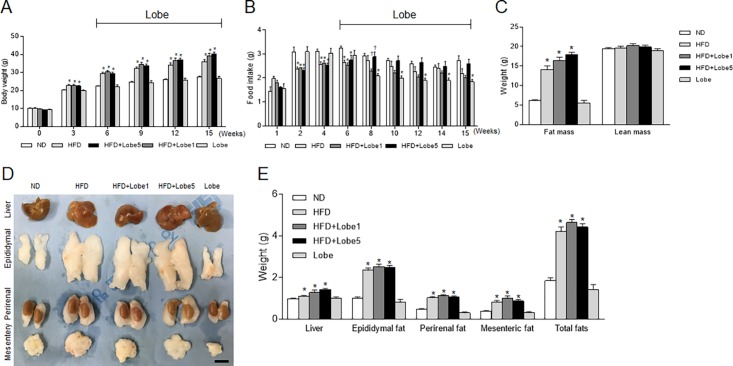
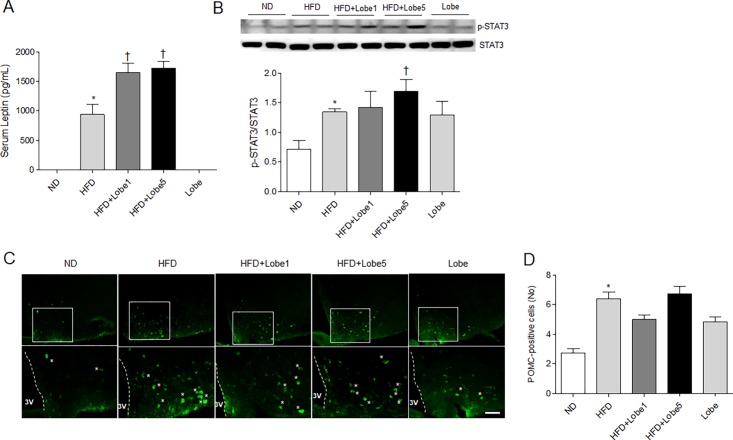
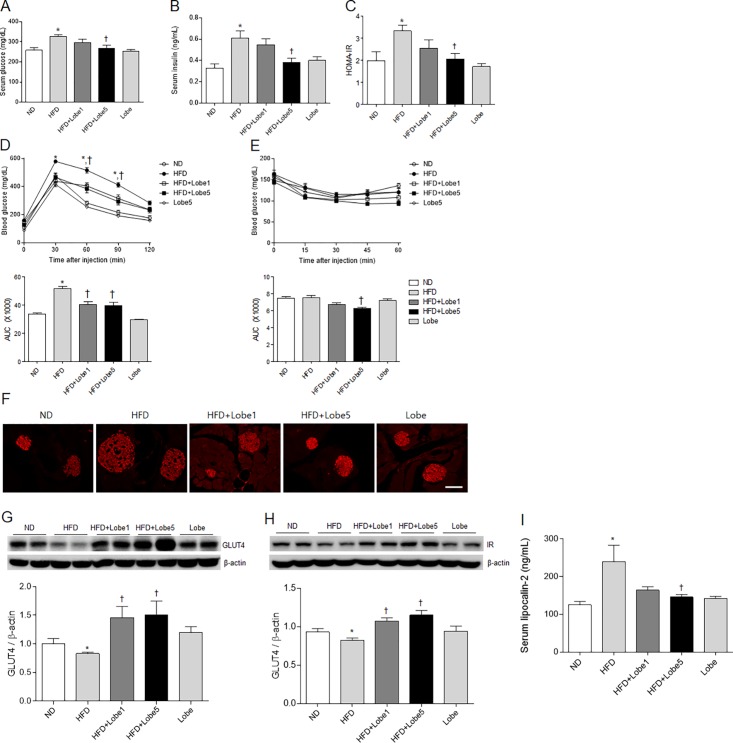
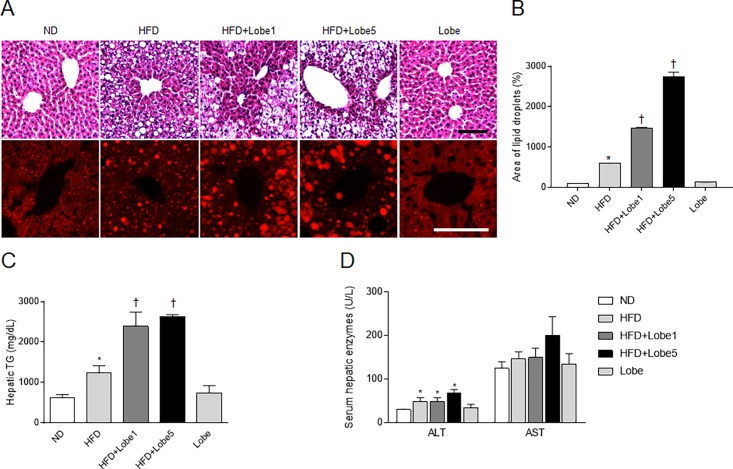
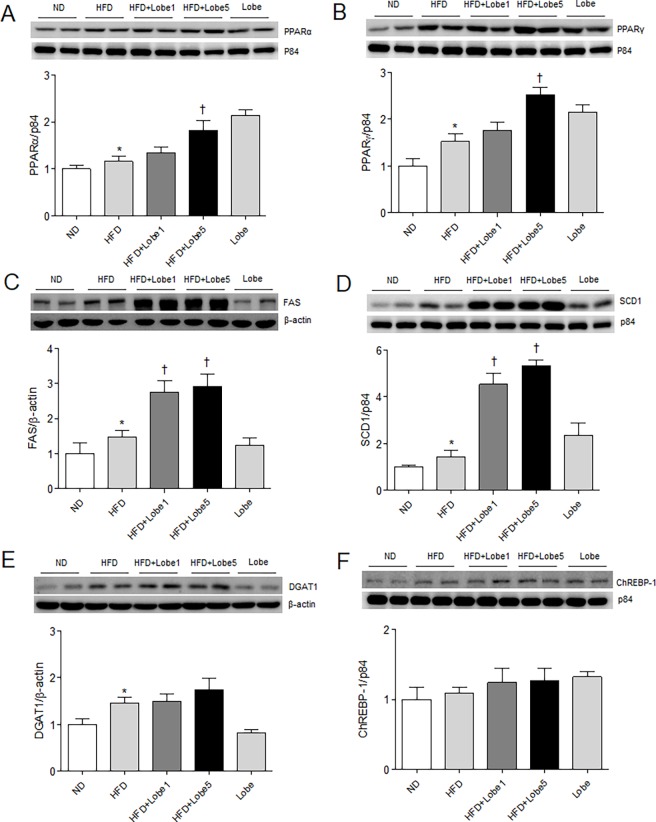
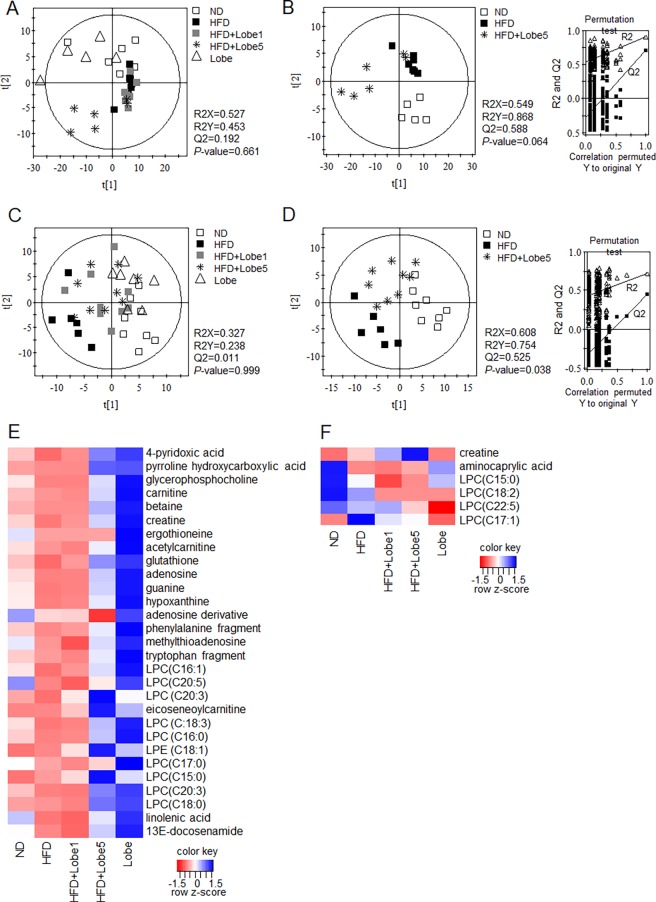
Lobeglitazone (Lobe) is a novel thiazolidinedione antidiabetic drug that reduces insulin resistance by activating peroxisome proliferator-activated receptor-gamma (PPARγ). However, the exact mechanisms of antidiabetic effects of Lobe have not been established in an animal model. The aim of this study was to evaluate the hypoglycemic effects of Lobe and investigate possible factors involved in Lobe-enhanced hepatic steatosis in high-fat diet (HFD)-fed mice. Mice were fed an HFD for 15 weeks. Lobe was administrated orally during the last 9 weeks. Lobe treatment significantly reduced insulin resistance and increased expression of hepatic glucose transporter 4 (GLUT4) and PPARs in HFD-fed mice. However, increased body weight and hepatic steatosis were not reduced by Lobe in these mice. Metabolomics fingerprinting showed that several lipogenesis-related hepatic and serum metabolites in HFD-fed mice had positive or negative correlations with Lobe administration. In particular, increased leptin levels during HFD were further increased by Lobe. HFD-induced signaling transducer and activator of transcription 3 (STAT3) phosphorylation in the hypothalamus was increased by Lobe. In addition, immunohistochemical analysis showed more proopiomelanocortin (POMC)-positive neurons in the hypothalamus of HFD-fed mice (with or without Lobe) compared with normal diet-fed mice. Despite improving leptin signaling in the hypothalamus and enhancing insulin sensitivity in HFD-fed mice, Lobe increased body weight and steatosis. Further research is necessary regarding other factors affecting Lobe-enhanced hepatic steatosis and hyperphagia.
罗格列酮(Lobe)是一种新型噻唑烷二酮类抗糖尿病药物,通过激活过氧化物酶体增殖物激活受体-γ(PPARγ)来降低胰岛素抵抗。然而,在动物模型中,Lobe 的抗糖尿病作用的确切机制尚未确定。本研究旨在评估 Lobe 的降血糖作用,并研究高脂肪饮食(HFD)喂养的小鼠中 Lobe 增强肝脂肪变性的可能相关因素。小鼠喂食 HFD 15 周。在最后 9 周期间,通过口服给予 Lobe。Lobe 治疗可显著降低 HFD 喂养小鼠的胰岛素抵抗并增加肝葡萄糖转运蛋白 4(GLUT4)和 PPAR 的表达。然而,Lobe 并不能减轻这些小鼠的体重增加和肝脂肪变性。代谢组学指纹图谱显示,HFD 喂养小鼠的肝脏和血清中几种与脂生成相关的代谢物与 Lobe 给药呈正相关或负相关。特别是,Lobe 进一步增加了 HFD 期间瘦素水平的增加。Lobe 增加了 HFD 诱导的下丘脑信号转导和转录激活因子 3(STAT3)磷酸化。此外,免疫组织化学分析显示,与正常饮食喂养的小鼠相比,HFD 喂养的小鼠(有或没有 Lobe)下丘脑的促黑皮质素原(POMC)阳性神经元更多。尽管 Lobe 改善了 HFD 喂养小鼠的瘦素信号和增强了胰岛素敏感性,但它增加了体重和脂肪变性。需要进一步研究其他影响 Lobe 增强肝脂肪变性和多食的因素。