Tanaka Hiroyuki, Nagata Yuma, Ishimaru Daiki, Ogawa Yasuhiro, Fukuhara Keita, Nishikawa Takashi
Osaka Prefecture University Graduate School of Comprehensive Rehabilitation, Habikino City, Japan.
Dement Geriatr Cogn Dis Extra. 2018 Jun 7;8(2):214-225. doi: 10.1159/000488937. eCollection 2018 May-Aug.
This study sought to conduct additional analyses of the Cognitive Test for Severe Dementia (CTSD) using the COSMIN checklist to ensure the development of adequate outcome measures.
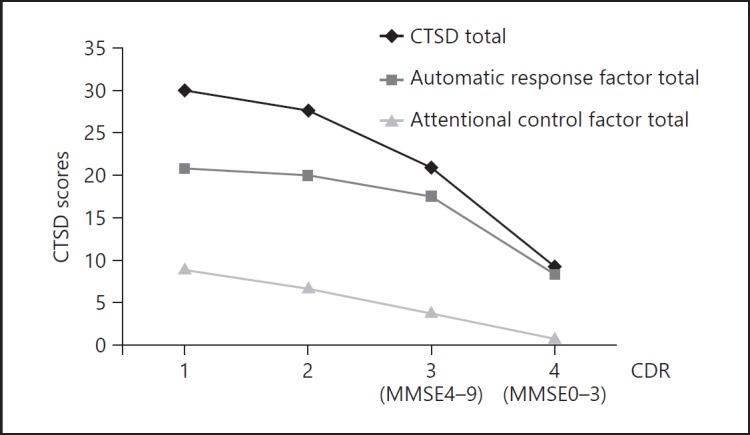
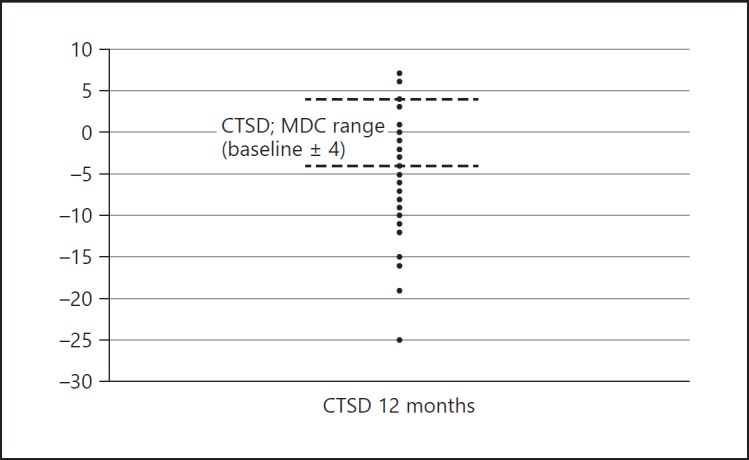
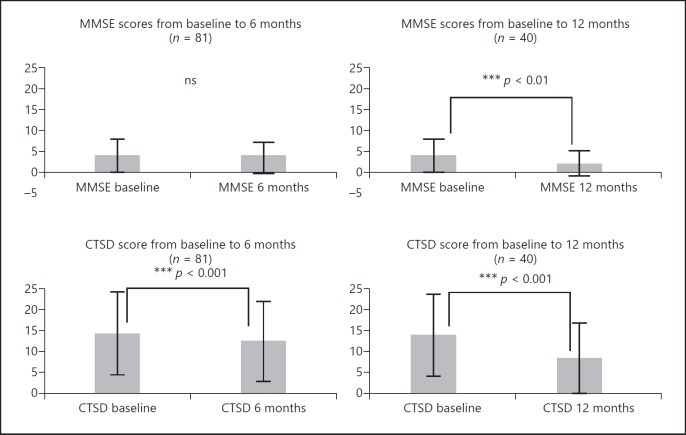
The following analyses were conducted: (1) factor analyses were used to evaluate construct validity; (2) the standard error of measurement (SEM) and minimal detectable change (MDC) were assessed to evaluate reliability and interpretability; and (3) longitudinal change was assessed to evaluate responsiveness.
The CTSD factor analysis yielded 2 factors, each of which was dichotomized by the passage rate of each item. We calculated a SEM and MDC of 1.6 and 3.6 points, respectively. Finally, the mean CTSD score showed a significant reduction ( < 0.001) over time, and the change in score exceeded the SEM and MDC.
Our results indicate that the CTSD could provide a reliable outcome measure in severe dementia.
本研究旨在使用COSMIN清单对重度痴呆认知测试(CTSD)进行额外分析,以确保开发出合适的结果测量指标。
进行了以下分析:(1)使用因子分析评估结构效度;(2)评估测量标准误差(SEM)和最小可检测变化(MDC)以评估可靠性和可解释性;(3)评估纵向变化以评估反应性。
CTSD因子分析产生了2个因子,每个因子通过每个项目的通过率进行二分法划分。我们分别计算出SEM和MDC为1.6分和3.6分。最后,CTSD平均得分随时间显示出显著降低(<0.001),且得分变化超过了SEM和MDC。
我们的结果表明,CTSD可为重度痴呆提供可靠的结果测量指标。