Ishizuka Satoshi, Jin Zhe Wu, Yamamoto Masahito, Murakami Gen, Takayama Takeshi, Hayashi Katsuhiko, Abe Shin-Ichi
Department of Anatomy, Tokyo Dental College, Tokyo, Japan.
Department of Anatomy, Wuxi Medical School, Jiangnan University, Wuxi, China.
Anat Cell Biol. 2018 Jun;51(2):105-112. doi: 10.5115/acb.2018.51.2.105. Epub 2018 Jun 27.
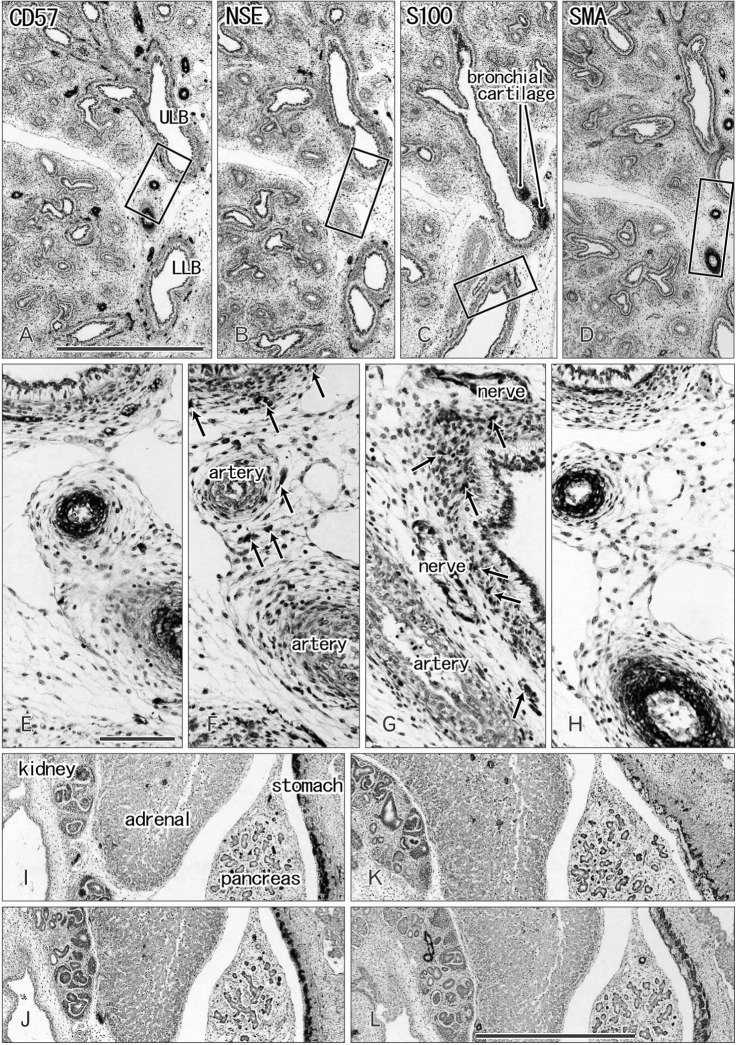
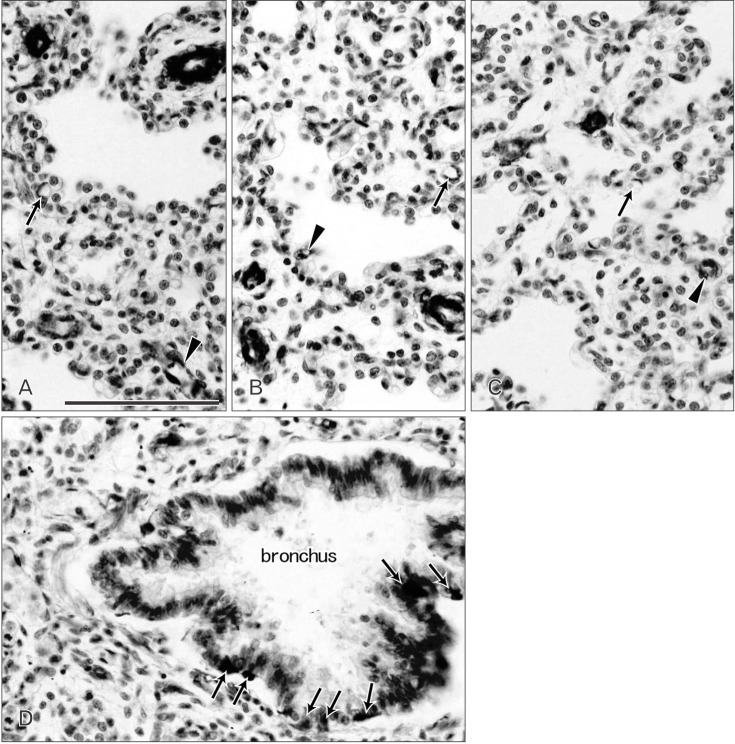
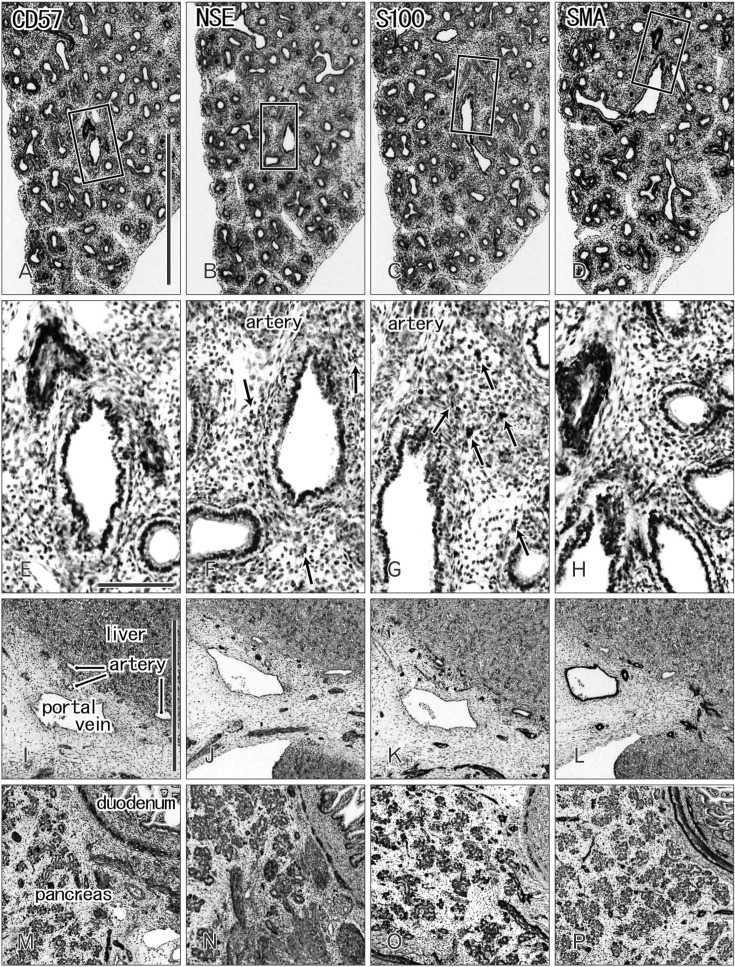
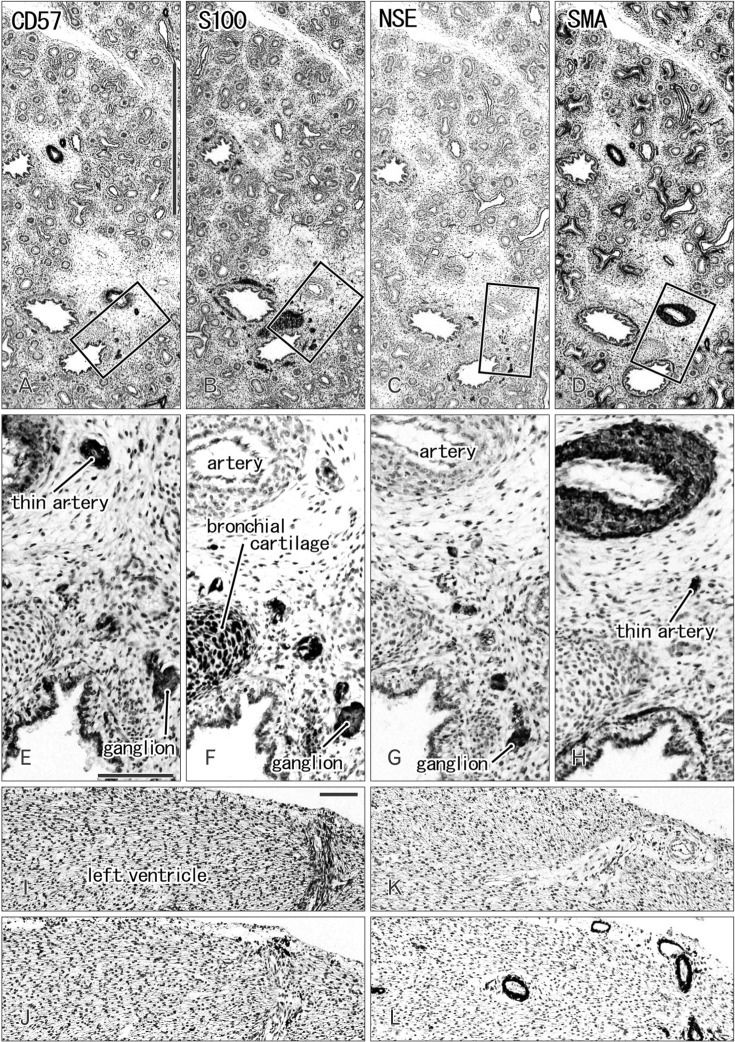
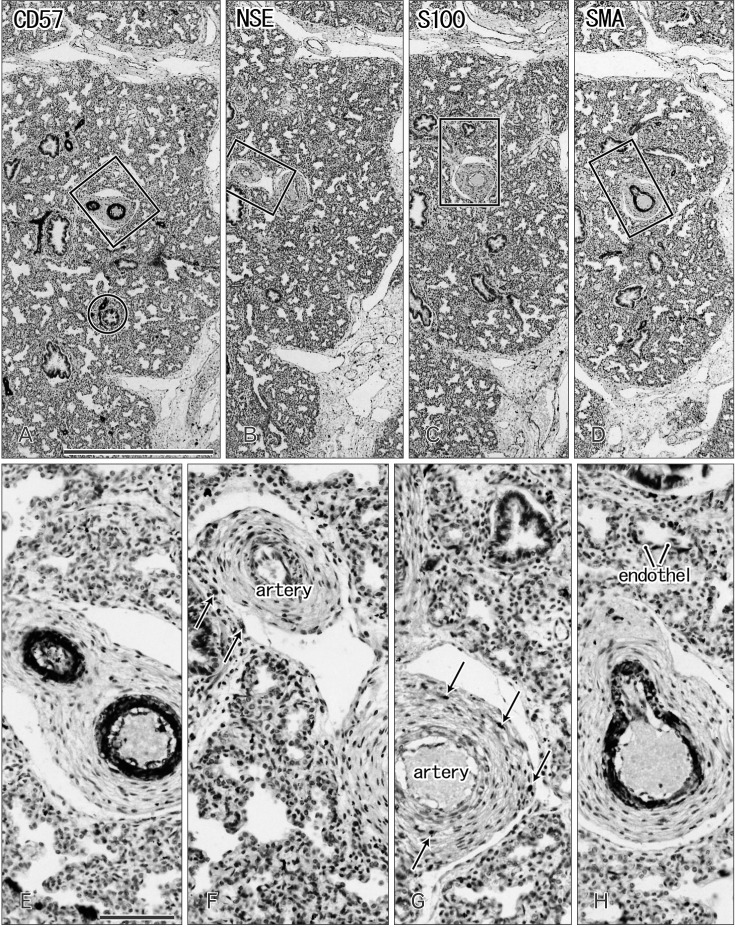
CD57 (synonyms: Leu-7, HNK-1) is a well-known marker of nerve elements including the conductive system of the heart, as well as natural killer cells. In lung specimens from 12 human fetuses at 10-34 weeks of gestation, we have found incidentally that segmental, subsegmental, and more peripheral arteries strongly expressed CD57. Capillaries near developing alveoli were often or sometimes positive. The CD57-positive tissue elements within intrapulmonary arteries seemed to be the endothelium, internal elastic lamina, and smooth muscle layer, which corresponded to tissue positive for a DAKO antibody reactive with smooth muscle actin we used. However, the lobar artery and pulmonary arterial trunk as well as bronchial arteries were negative. Likewise, arteries in and along any abdominal viscera, as well as the heart, thymus, and thyroid, did not express CD57. Thus, the lung-specific CD57 reactivity was not connected with either of an endodermal- or a branchial arch-origin. CD57 antigen is a sugar chain characterized by a sulfated glucuronic acid residue that is likely to exist in some glycosphingolipids. Therefore, a chemical affinity or an interaction might exist between CD57-positive arterioles and glycosphingolipids originating from alveoli, resulting in acceleration of capillary budding to make contact with the alveolar wall. CD57 might therefore be a functional marker of the developing air-blood interface that characterizes the fetal lung at the canalicular stage.
CD57(同义词:Leu-7、HNK-1)是一种知名的神经元素标志物,包括心脏传导系统以及自然杀伤细胞。在12例妊娠10 - 34周的人类胎儿的肺标本中,我们偶然发现节段性、亚节段性及更外周的动脉强烈表达CD57。发育中肺泡附近的毛细血管常呈阳性或有时呈阳性。肺内动脉中CD57阳性的组织成分似乎是内皮、内弹性膜和平滑肌层,这与我们使用的与平滑肌肌动蛋白反应的DAKO抗体阳性的组织相对应。然而,叶间动脉、肺动脉主干以及支气管动脉均为阴性。同样,任何腹部脏器内及周围的动脉,以及心脏、胸腺和甲状腺均不表达CD57。因此,肺特异性的CD57反应性与内胚层或鳃弓起源均无关。CD57抗原是一种以硫酸化葡萄糖醛酸残基为特征的糖链,可能存在于某些糖鞘脂中。因此,CD57阳性的小动脉与源自肺泡的糖鞘脂之间可能存在化学亲和力或相互作用,从而加速毛细血管出芽以与肺泡壁接触。因此,CD57可能是发育中的气血界面的功能标志物,该界面是小管期胎儿肺的特征。