Unité de Biologie Fonctionnelle et Adaptative (BFA), Sorbonne Paris Cité, Université Paris Diderot, UMR8251 CNRS, 75013 Paris, France.
Department of Genetics, University of Valencia, Campus of Burjassot, 96100 Valencia, Spain.
Int J Mol Sci. 2018 Jul 7;19(7):1989. doi: 10.3390/ijms19071989.
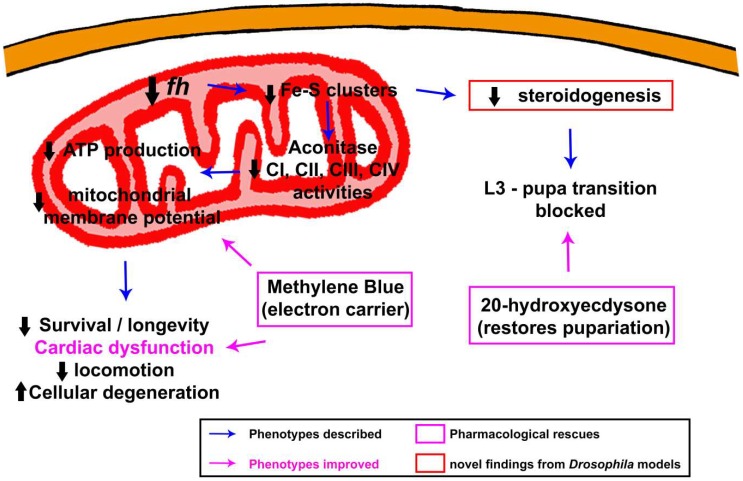
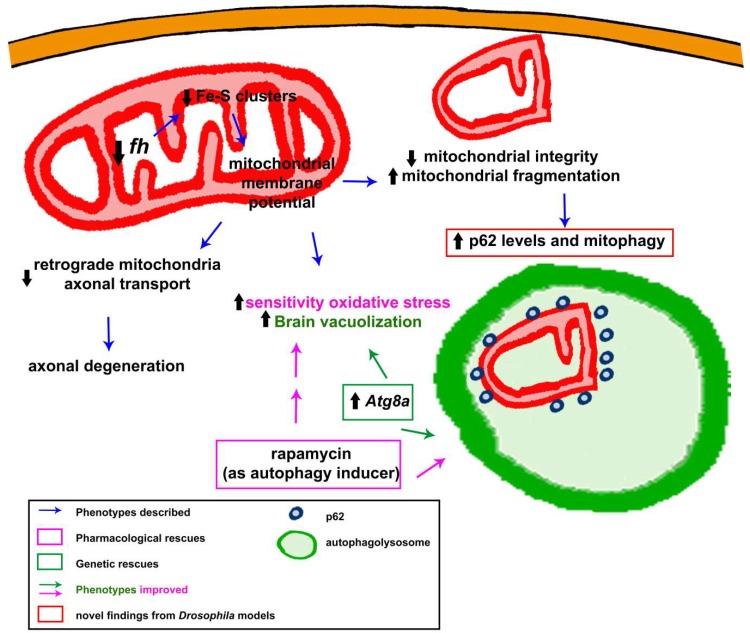
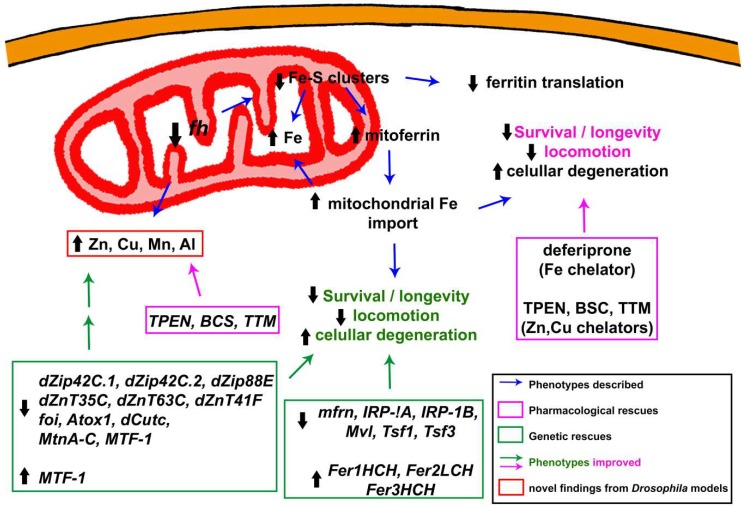
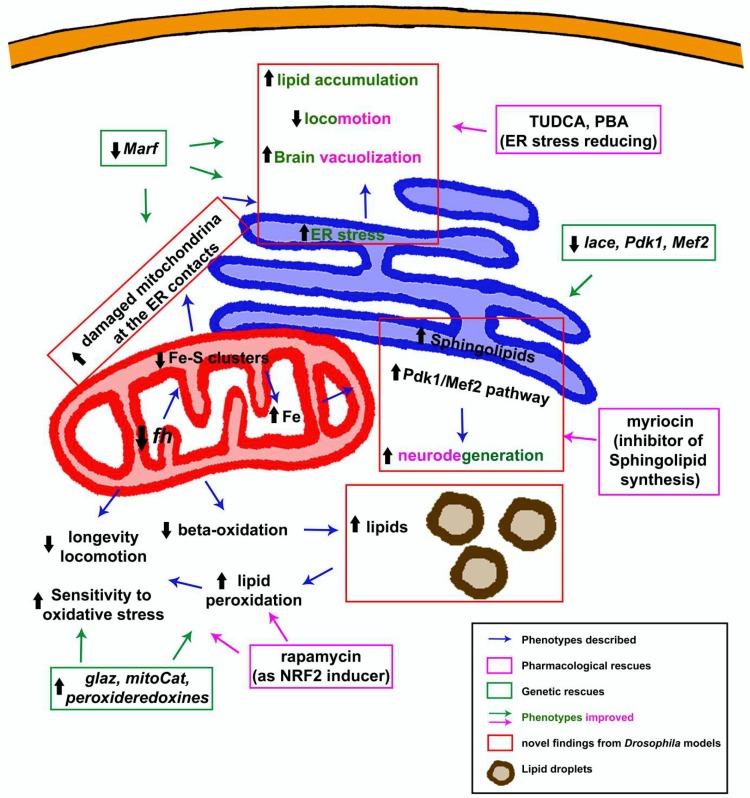
has been for over a century the model of choice of several neurobiologists to decipher the formation and development of the nervous system as well as to mirror the pathophysiological conditions of many human neurodegenerative diseases. The rare disease Friedreich’s ataxia (FRDA) is not an exception. Since the isolation of the responsible gene more than two decades ago, the analysis of the fly orthologue has proven to be an excellent avenue to understand the development and progression of the disease, to unravel pivotal mechanisms underpinning the pathology and to identify genes and molecules that might well be either disease biomarkers or promising targets for therapeutic interventions. In this review, we aim to summarize the collection of findings provided by the models but also to go one step beyond and propose the implications of these discoveries for the study and cure of this disorder. We will present the physiological, cellular and molecular phenotypes described in the fly, highlighting those that have given insight into the pathology and we will show how the ability of to perform genetic and pharmacological screens has provided valuable information that is not easily within reach of other cellular or mammalian models.
果蝇已被多位神经生物学家选为研究神经系统形成和发育以及模拟多种人类神经退行性疾病病理生理条件的模式生物,长达一个多世纪。罕见病弗里德里希共济失调症(FRDA)也不例外。自二十多年前分离出致病基因以来,对果蝇同源基因的分析已被证明是了解疾病发展和进展、揭示潜在病理机制以及鉴定可能成为疾病生物标志物或有希望的治疗靶点的关键机制的绝佳途径。在这篇综述中,我们旨在总结果蝇模型提供的一系列发现,但也要更进一步,提出这些发现对研究和治疗这种疾病的意义。我们将介绍果蝇中描述的生理、细胞和分子表型,突出那些深入了解疾病病理的表型,并展示 进行遗传和药理学筛选的能力如何提供了其他细胞或哺乳动物模型不易获得的有价值信息。