Trace and Environmental DNA Laboratory, School of Molecular and Life Sciences, Curtin University, Bentley, WA 6102, Australia;
Long-Term Ecology Laboratory, Manaaki Whenua Landcare Research, Lincoln, 7640 Canterbury, New Zealand.
Proc Natl Acad Sci U S A. 2018 Jul 24;115(30):7771-7776. doi: 10.1073/pnas.1803573115. Epub 2018 Jul 9.
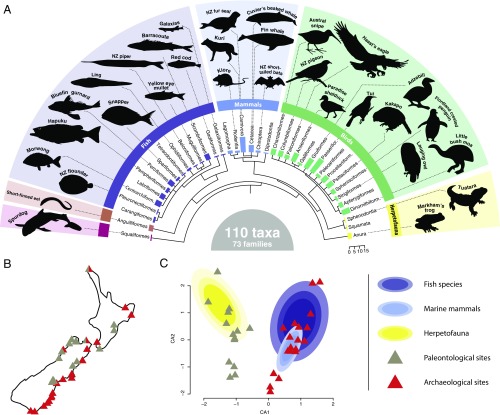
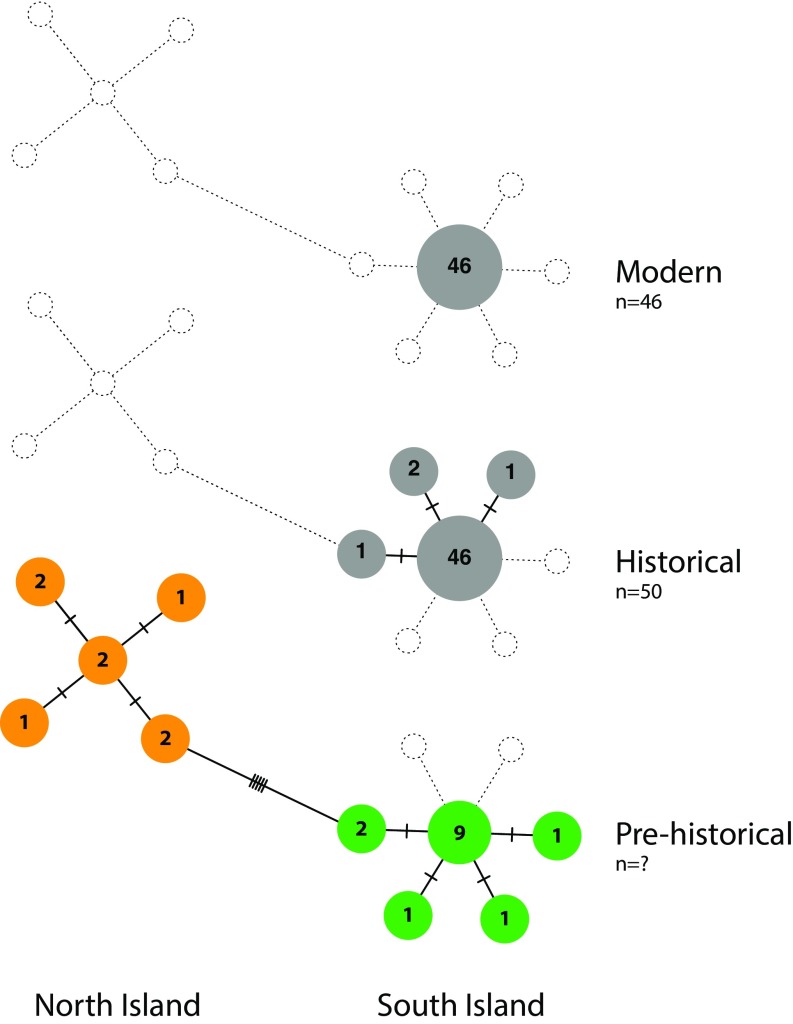
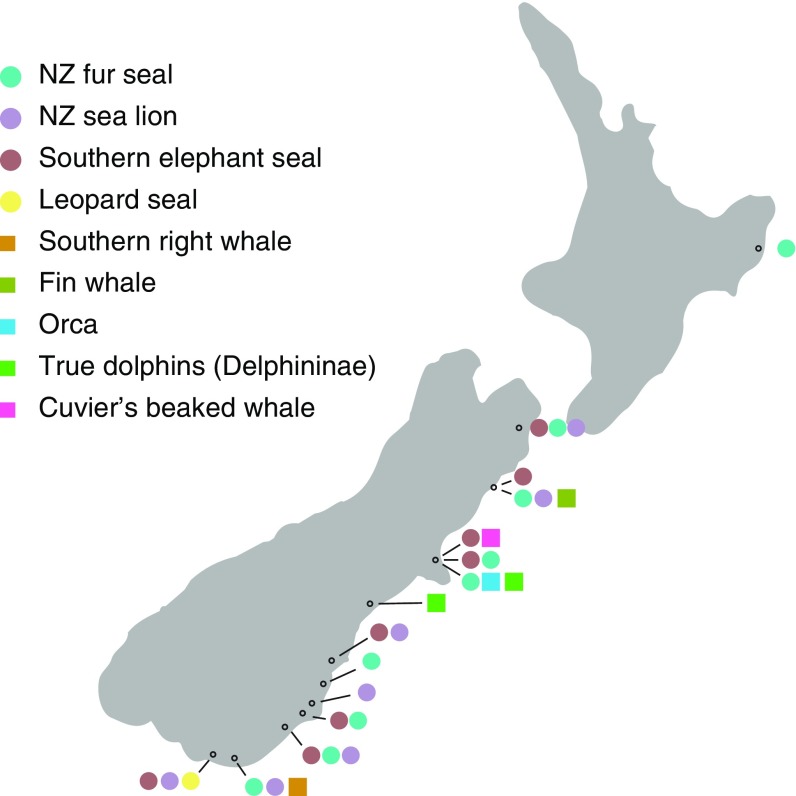
New Zealand's geographic isolation, lack of native terrestrial mammals, and Gondwanan origins make it an ideal location to study evolutionary processes. However, since the archipelago was first settled by humans 750 y ago, its unique biodiversity has been under pressure, and today an estimated 49% of the terrestrial avifauna is extinct. Current efforts to conserve the remaining fauna rely on a better understanding of the composition of past ecosystems, as well as the causes and timing of past extinctions. The exact temporal and spatial dynamics of New Zealand's extinct fauna, however, can be difficult to interpret, as only a small proportion of animals are preserved as morphologically identifiable fossils. Here, we conduct a large-scale genetic survey of subfossil bone assemblages to elucidate the impact of humans on the environment in New Zealand. By genetically identifying more than 5,000 nondiagnostic bone fragments from archaeological and paleontological sites, we reconstruct a rich faunal record of 110 species of birds, fish, reptiles, amphibians, and marine mammals. We report evidence of five whale species rarely reported from New Zealand archaeological middens and characterize extinct lineages of leiopelmatid frog ( sp.) and kākāpō () haplotypes lost from the gene pool. Taken together, this molecular audit of New Zealand's subfossil record not only contributes to our understanding of past biodiversity and precontact Māori subsistence practices but also provides a more nuanced snapshot of anthropogenic impacts on native fauna after first human arrival.
新西兰的地理位置隔绝,缺乏本地陆生哺乳动物,且起源于冈瓦纳大陆,这些特点使它成为研究进化过程的理想之地。然而,自从人类在 750 年前首次定居该群岛以来,其独特的生物多样性一直面临压力,如今估计有 49%的陆地鸟类已经灭绝。目前,为了保护剩余的动物群,人们正在努力更好地了解过去生态系统的组成,以及过去灭绝的原因和时间。然而,由于只有一小部分动物以形态可识别的化石形式保存下来,因此很难解释新西兰已灭绝动物群的确切时间和空间动态。在这里,我们对亚化石骨骼组合进行了大规模的遗传调查,以阐明人类对新西兰环境的影响。通过从考古和古生物学遗址中遗传鉴定出超过 5000 个非诊断性骨骼碎片,我们重建了 110 种鸟类、鱼类、爬行动物、两栖动物和海洋哺乳动物的丰富动物记录。我们报告了在新西兰考古遗址中很少有记录的 5 种鲸鱼物种的证据,并描述了从基因库中丢失的长尾蟾(sp.)和鸮鹦鹉()灭绝谱系的特征。总的来说,对新西兰亚化石记录的分子审计不仅有助于我们了解过去的生物多样性和接触前毛利人的生存实践,而且还更细致地描绘了人类首次到达后的对本地动物群的人为影响。