Department of Endocrinology, Chinese PLA General Hospital, Beijing, China.
Department of Molecular Biology, Institute of Basic Medicine, School of Life Science, Chinese PLA General Hospital, Beijing, China.
Cell Death Dis. 2018 Jul 9;9(7):760. doi: 10.1038/s41419-018-0801-9.
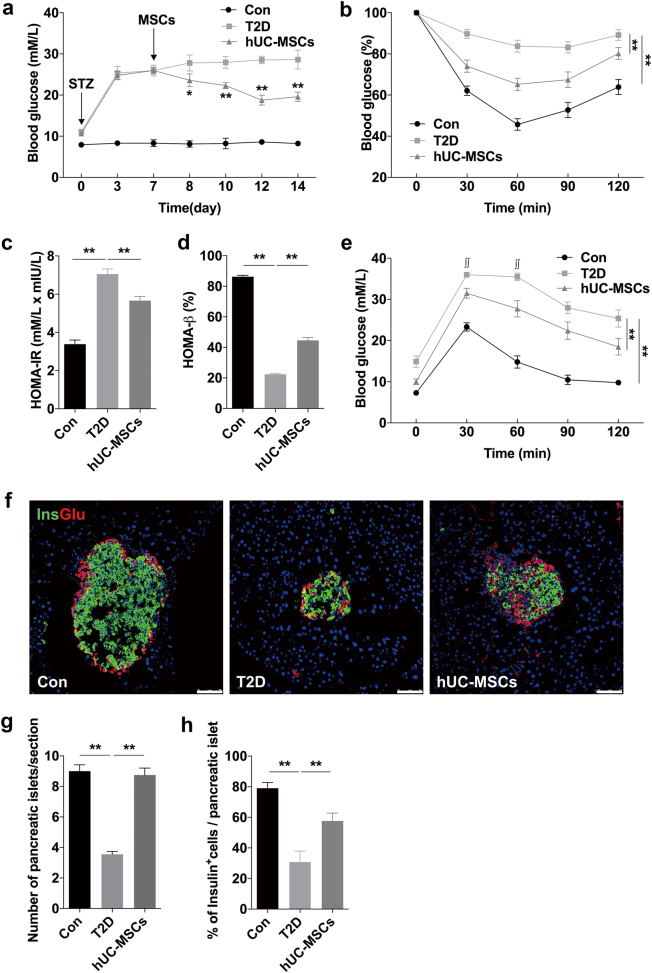
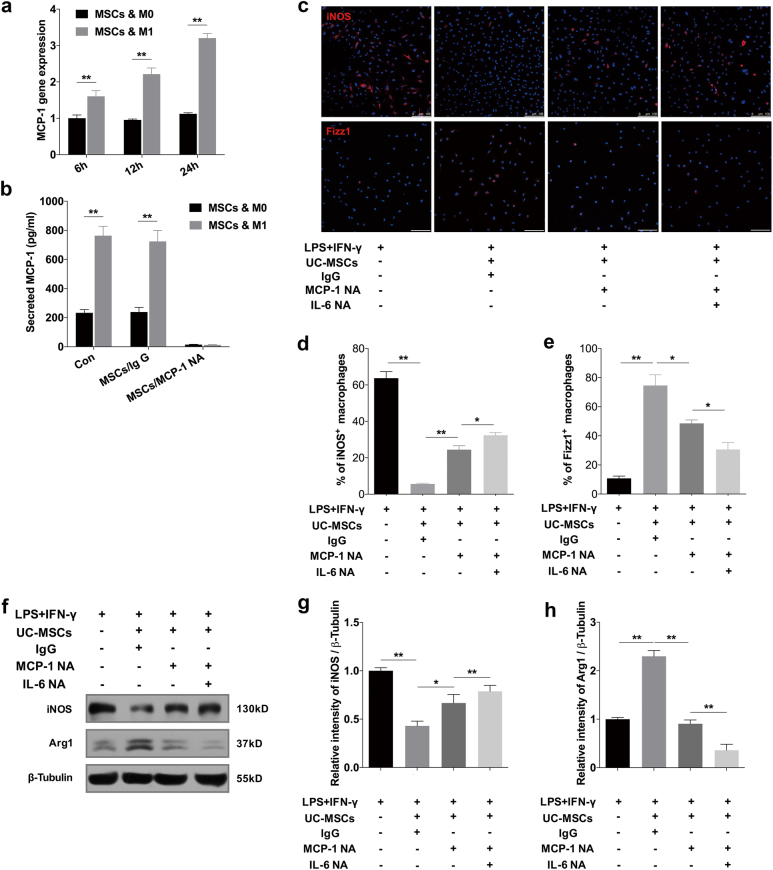
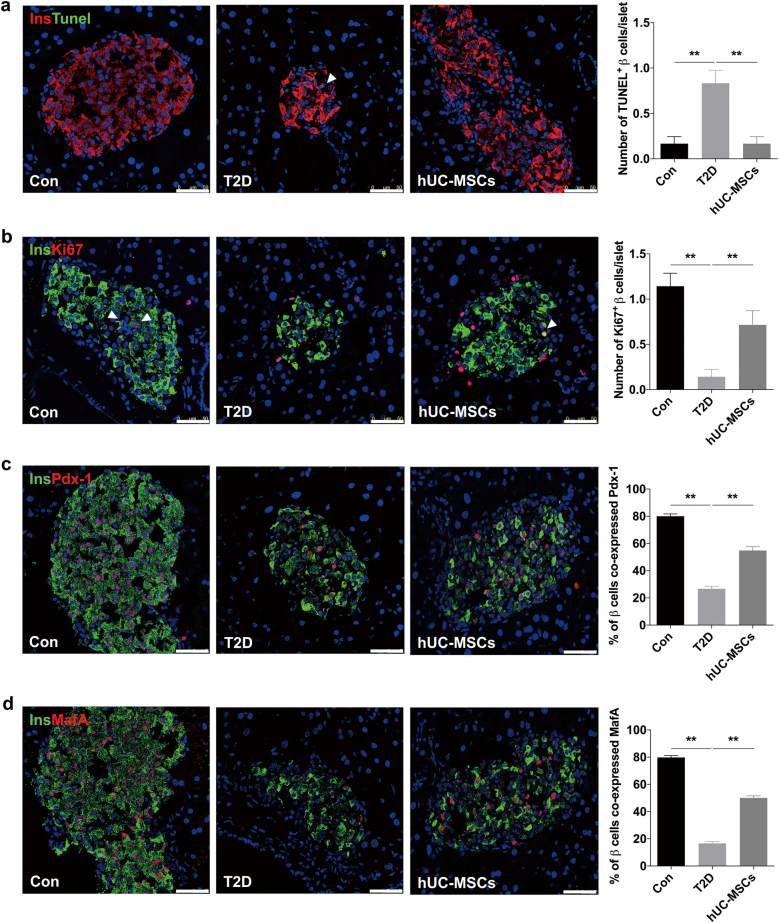
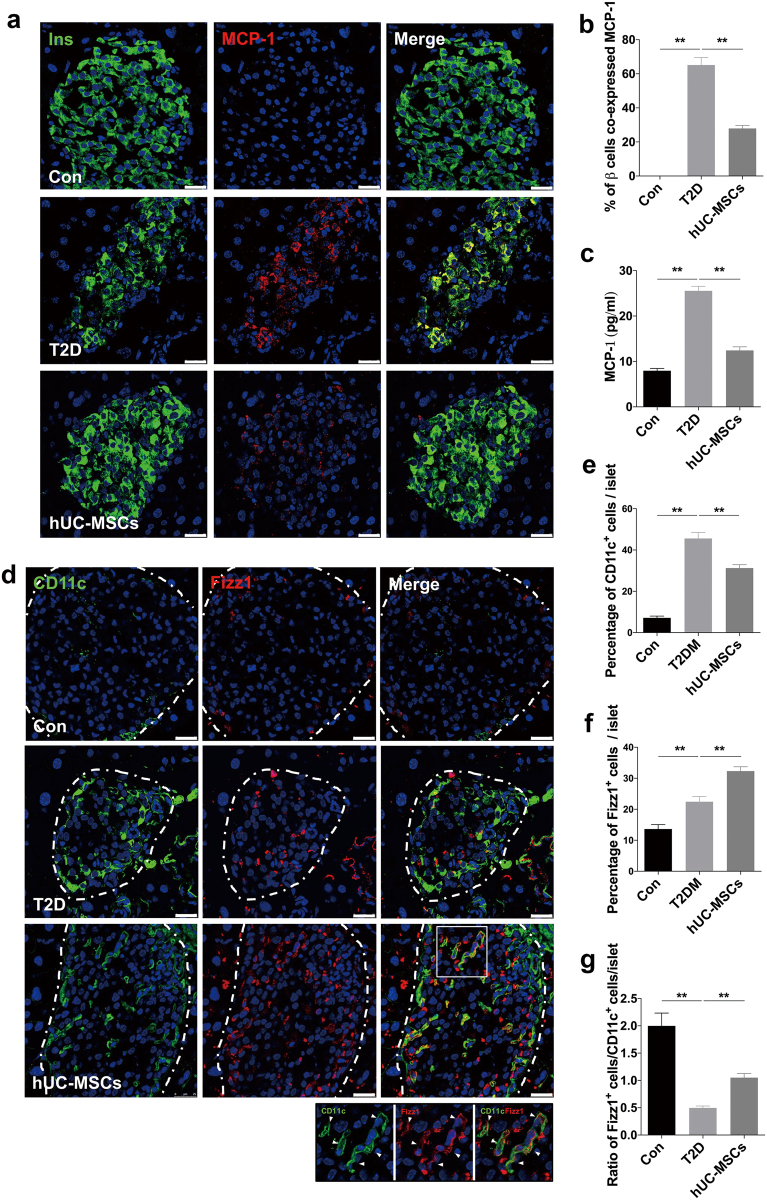
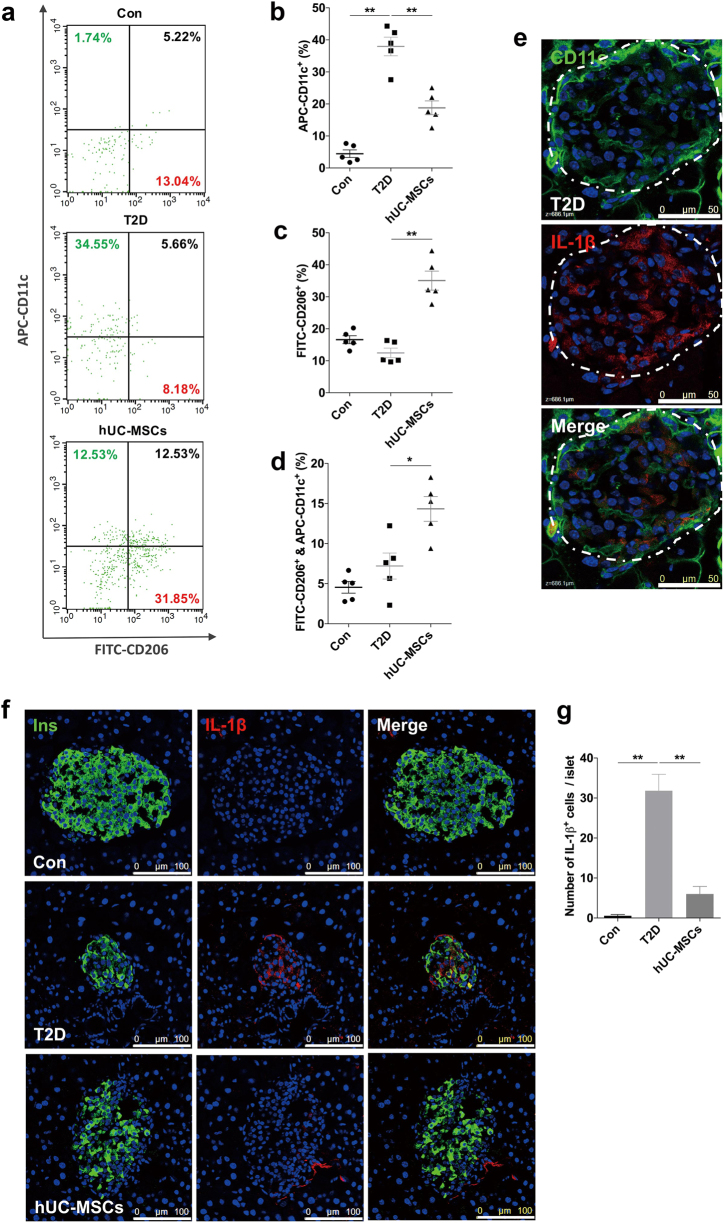
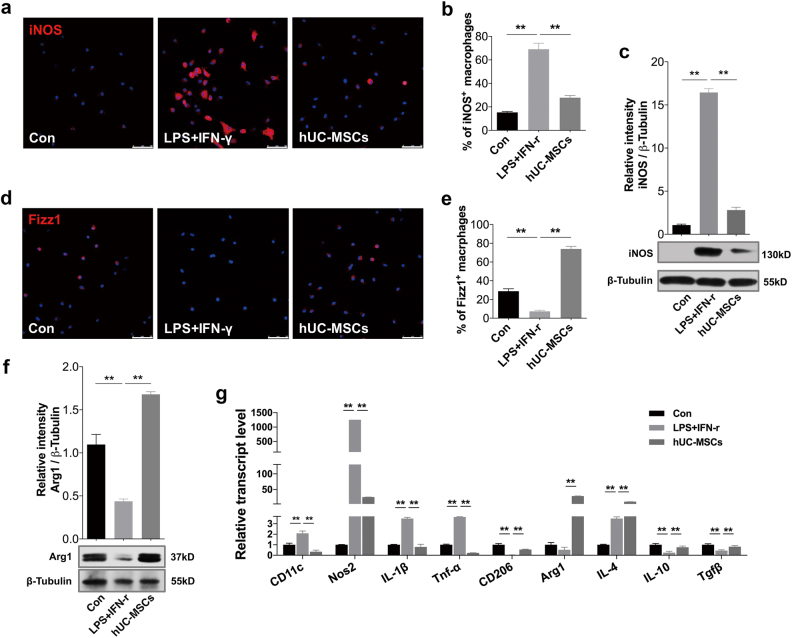
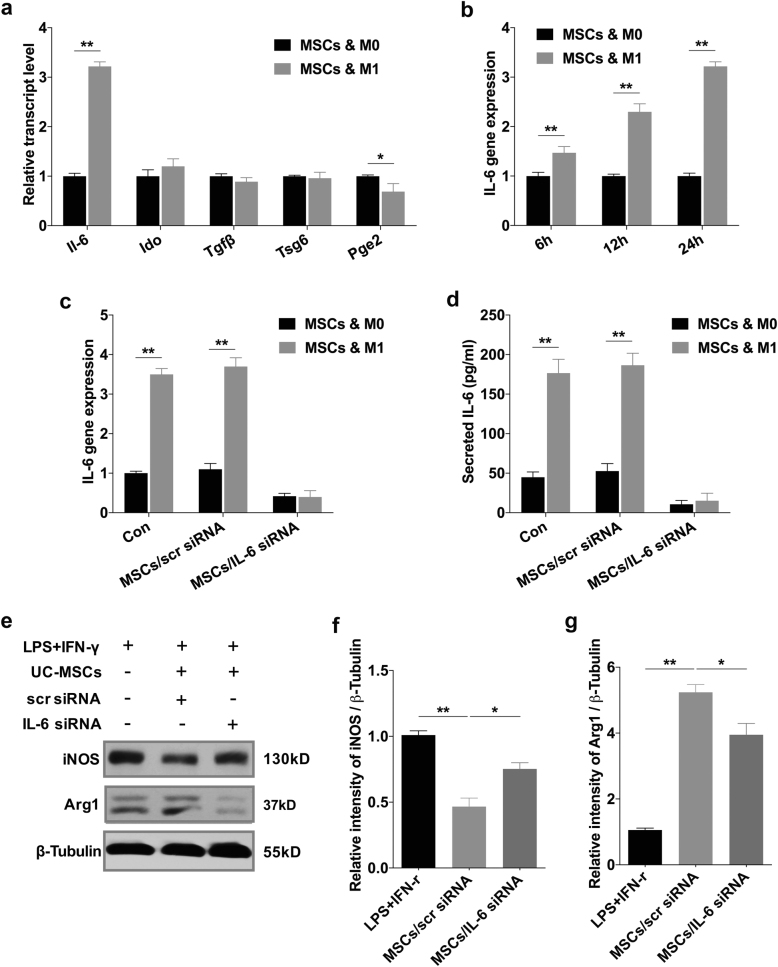
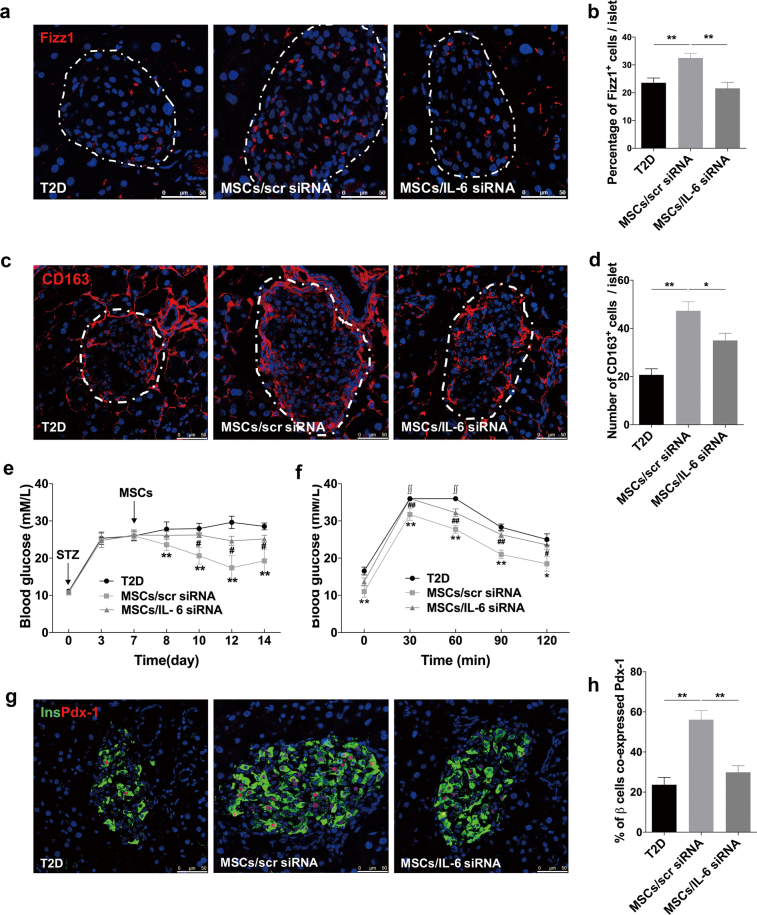
Progressive pancreatic β-cell dysfunction is recognized as a fundamental pathology of type 2 diabetes (T2D). Recently, mesenchymal stem cells (MSCs) have been identified in protection of islets function in T2D individuals. However, the underlying mechanisms remain elusive. It is widely accepted that β-cell dysfunction is closely related to improper accumulation of macrophages in the islets, and a series of reports suggest that MSCs possess great immunomodulatory properties by which they could elicit macrophages into an anti-inflammatory M2 state. In this study, we induced a T2D mouse model with a combination of high-fat diet (HFD) and low-dose streptozotocin (STZ), and then performed human umbilical cord-derived MSCs (hUC-MSCs) infusion to investigate whether the effect of MSCs on islets protection was related to regulation on macrophages in pancreatic islets. hUC-MSCs infusion exerted anti-diabetic effects and significantly promoted islets recovery in T2D mice. Interestingly, pancreatic inflammation was remarkably suppressed, and local M1 macrophages were directed toward an anti-inflammatory M2-like state after hUC-MSC infusion. In vitro study also proved that hUC-MSCs inhibited the activation of the M1 phenotype and induced the generation of the M2 phenotype in isolated mouse bone marrow-derived macrophages (BMDMs), peritoneal macrophages (PMs) and in THP-1 cells. Further analysis showed that M1-stimulated hUC-MSCs increased the secretion of interleukin (IL)-6, blocking which by small interfering RNA (siRNA) largely abrogated the hUC-MSCs effects on macrophages both in vitro and in vivo, resulting in dampened restoration of β-cell function and glucose homeostasis in T2D mice. In addition, MCP-1 was found to work in accordance with IL-6 in directing macrophage polarization from M1 to M2 state. These data may provide new clues for searching for the target of β-cell protection. Furthermore, hUC-MSCs may be a superior alternative in treating T2D for their macrophage polarization effects.
胰岛β细胞进行性功能障碍被认为是 2 型糖尿病(T2D)的基本病理学。最近,间充质干细胞(MSCs)已被确定可在 T2D 个体中保护胰岛功能。然而,其潜在机制仍不清楚。人们普遍认为,β细胞功能障碍与胰岛内巨噬细胞的异常积聚密切相关,一系列报道表明 MSCs 具有强大的免疫调节特性,可以将巨噬细胞诱导向抗炎 M2 状态。在这项研究中,我们使用高脂肪饮食(HFD)和低剂量链脲佐菌素(STZ)联合诱导 T2D 小鼠模型,然后进行人脐带间充质干细胞(hUC-MSCs)输注,以研究 MSCs 对胰岛保护的作用是否与调节胰岛内巨噬细胞有关。hUC-MSCs 输注发挥了抗糖尿病作用,并显著促进了 T2D 小鼠的胰岛恢复。有趣的是,hUC-MSCs 输注后,胰腺炎症明显受到抑制,局部 M1 巨噬细胞向抗炎 M2 样状态转变。体外研究还证明,hUC-MSCs 抑制了 M1 表型的激活,并诱导了分离的小鼠骨髓来源巨噬细胞(BMDMs)、腹腔巨噬细胞(PMs)和 THP-1 细胞中 M2 表型的产生。进一步分析表明,M1 刺激的 hUC-MSCs 增加了白细胞介素(IL)-6 的分泌,通过小干扰 RNA(siRNA)阻断其分泌在体外和体内均大大削弱了 hUC-MSCs 对巨噬细胞的作用,导致 T2D 小鼠β细胞功能和葡萄糖稳态的恢复减弱。此外,发现单核细胞趋化蛋白-1(MCP-1)与 IL-6 一起作用,将巨噬细胞从 M1 极化到 M2 状态。这些数据可能为寻找β细胞保护的靶点提供新线索。此外,hUC-MSCs 可能因其对巨噬细胞极化的作用而成为治疗 T2D 的更好选择。