Departamento de Infectómica y Patogénesis Molecular, Centro de Investigación y de Estudios Avanzados del Instituto Politécnico Nacional, Ciudad de México, Mexico.
Sección de Estudios de Posgrado e Investigación, Instituto Politécnico Nacional, Escuela Superior de Medicina, Ciudad de México, Mexico.
Front Cell Infect Microbiol. 2018 Jun 22;8:209. doi: 10.3389/fcimb.2018.00209. eCollection 2018.
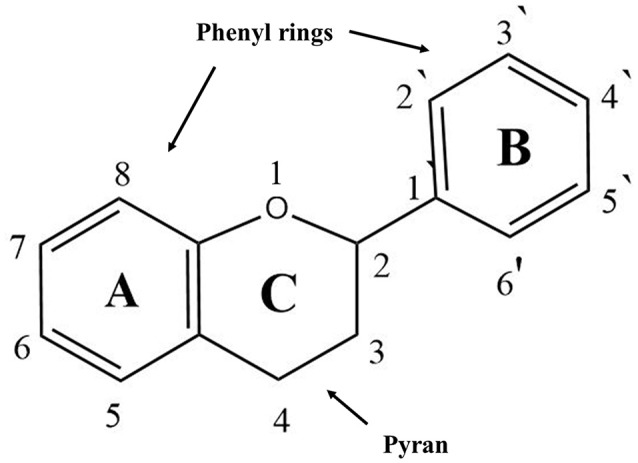
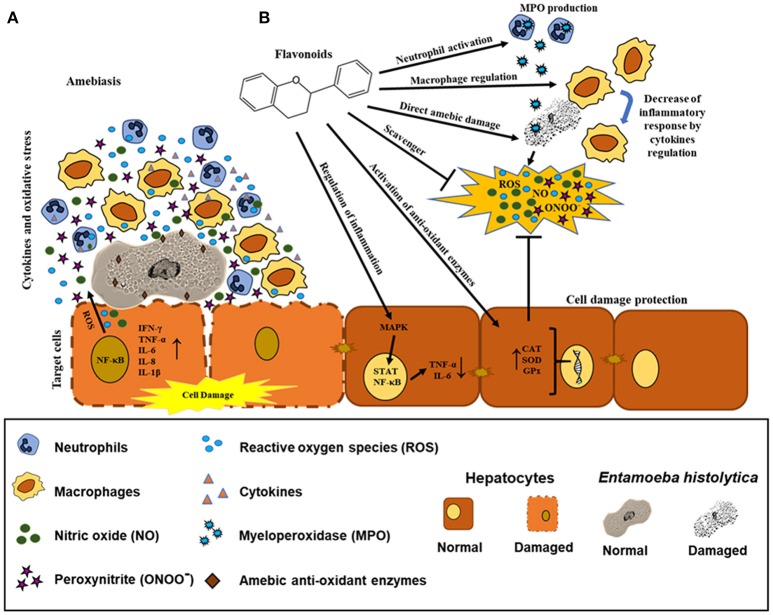
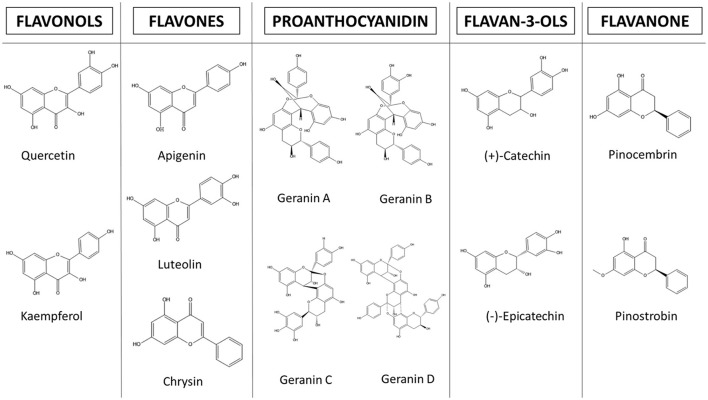
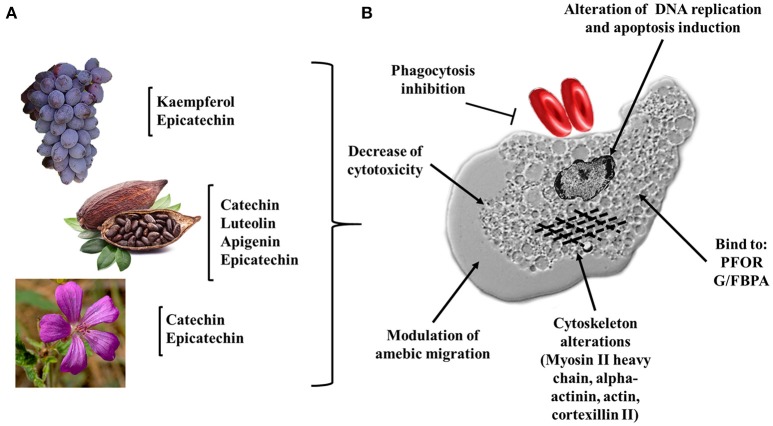
Over the past 20 years, gastrointestinal infections in developing countries have been a serious health problem and are the second leading cause of morbidity among all age groups. Among pathogenic protozoans that cause diarrheal disease, the parasite produces amebic colitis as well as the most frequent extra-intestinal lesion, an amebic liver abscess (ALA). Usually, intestinal amebiasis and ALA are treated with synthetic chemical compounds (iodoquinol, paromomycin, diloxanide furoate, and nitroimidazoles). Metronidazole is the most common treatment for amebiasis. Although the efficacy of nitroimidazoles in killing amebas is known, the potential resistance of to this treatment is a concern. In addition, controversial studies have reported that metronidazole could induce mutagenic effects and cerebral toxicity. Therefore, natural and safe alternative drugs against this parasite are needed. Flavonoids are natural polyphenolic compounds. Flavonoids depend on malonyl-CoA and phenylalanine to be synthesized. Several flavonoids have anti-oxidant and anti-microbial properties. Since the 1990s, several works have focused on the identification and purification of different flavonoids with amebicidal effects, such as, -(-)epicatechin, kaempferol, and quercetin. In this review, we investigated the effects of flavonoids that have potential amebicidal activity and that can be used as complementary and/or specific therapeutic strategies against trophozoites. Interestingly, it was found that these natural compounds can induce morphological changes in the amebas, such as chromatin condensation and cytoskeletal protein re-organization, as well as the upregulation and downregulation of fructose-1,6-bisphosphate aldolase, glyceraldehyde-phosphate dehydrogenase, and pyruvate:ferredoxin oxidoreductase (enzymes of the glycolytic pathway). Although the specific molecular targets, bioavailability, route of administration, and doses of some of these natural compounds need to be determined, flavonoids represent a very promising and innocuous strategy that should be considered for use against in the era of microbial drug resistance.
在过去的 20 年中,发展中国家的胃肠道感染一直是一个严重的健康问题,也是所有年龄段人群发病率的第二大主要原因。在引起腹泻病的致病性原生动物中,寄生虫会引起阿米巴结肠炎以及最常见的肠外病变,即阿米巴肝脓肿(ALA)。通常,肠道阿米巴病和 ALA 用合成化学化合物(碘喹啉、巴龙霉素、二硝羟喹和硝基咪唑类)治疗。甲硝唑是治疗阿米巴病最常用的药物。尽管已知硝基咪唑类药物具有杀灭阿米巴的功效,但 对此种治疗产生潜在耐药性令人担忧。此外,有争议的研究报告称,甲硝唑可能会引起致突变作用和脑毒性。因此,需要针对这种寄生虫寻找天然且安全的替代药物。类黄酮是天然多酚化合物。类黄酮的合成依赖于丙二酰辅酶 A 和苯丙氨酸。几种类黄酮具有抗氧化和抗微生物特性。自 20 世纪 90 年代以来,已有多项工作集中于鉴定和纯化具有杀阿米巴作用的不同类黄酮,如 (-)-表儿茶素、山柰酚和槲皮素。在本综述中,我们研究了具有潜在杀阿米巴活性且可作为对抗滋养体的补充和/或特异性治疗策略的类黄酮的作用。有趣的是,研究发现这些天然化合物可诱导阿米巴发生形态变化,如染色质浓缩和细胞骨架蛋白重新排列,以及果糖-1,6-二磷酸醛缩酶、甘油醛-3-磷酸脱氢酶和丙酮酸:铁氧还蛋白氧化还原酶(糖酵解途径的酶)的上调和下调。尽管一些天然化合物的特定分子靶标、生物利用度、给药途径和剂量尚待确定,但类黄酮代表了一种非常有前景且无害的策略,在微生物药物耐药时代,应考虑将其用于对抗 。