National Key Laboratory of Crop Genetic Improvement and National Center of Plant Gene Research (Wuhan), Huazhong Agricultural University, Wuhan, 430070, China.
Key Laboratory of Horticultural Plant Biology (Ministry of Education), College of Horticulture and Forestry Sciences, Huazhong Agricultural University, Wuhan, 430070, China.
Sci Rep. 2017 Sep 5;7(1):10549. doi: 10.1038/s41598-017-10970-2.
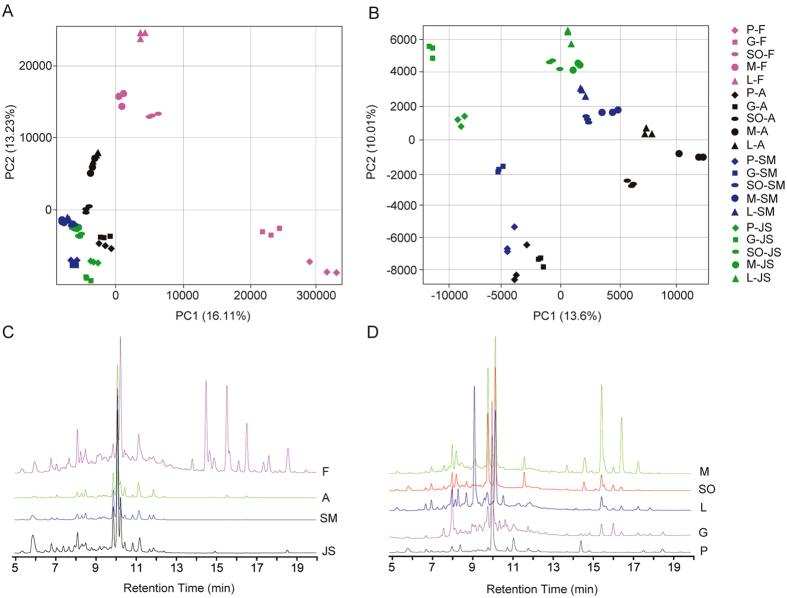
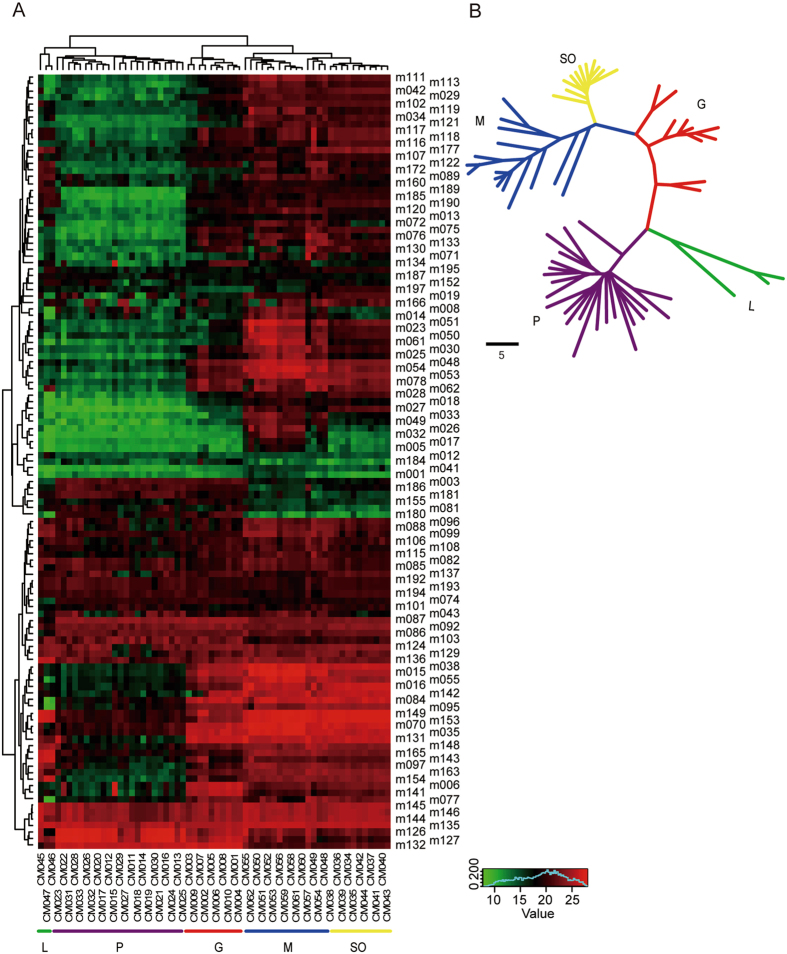
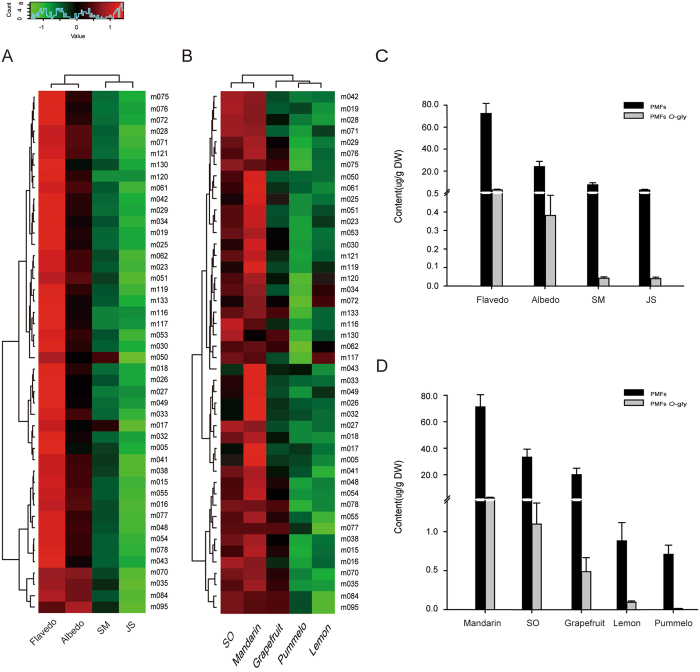
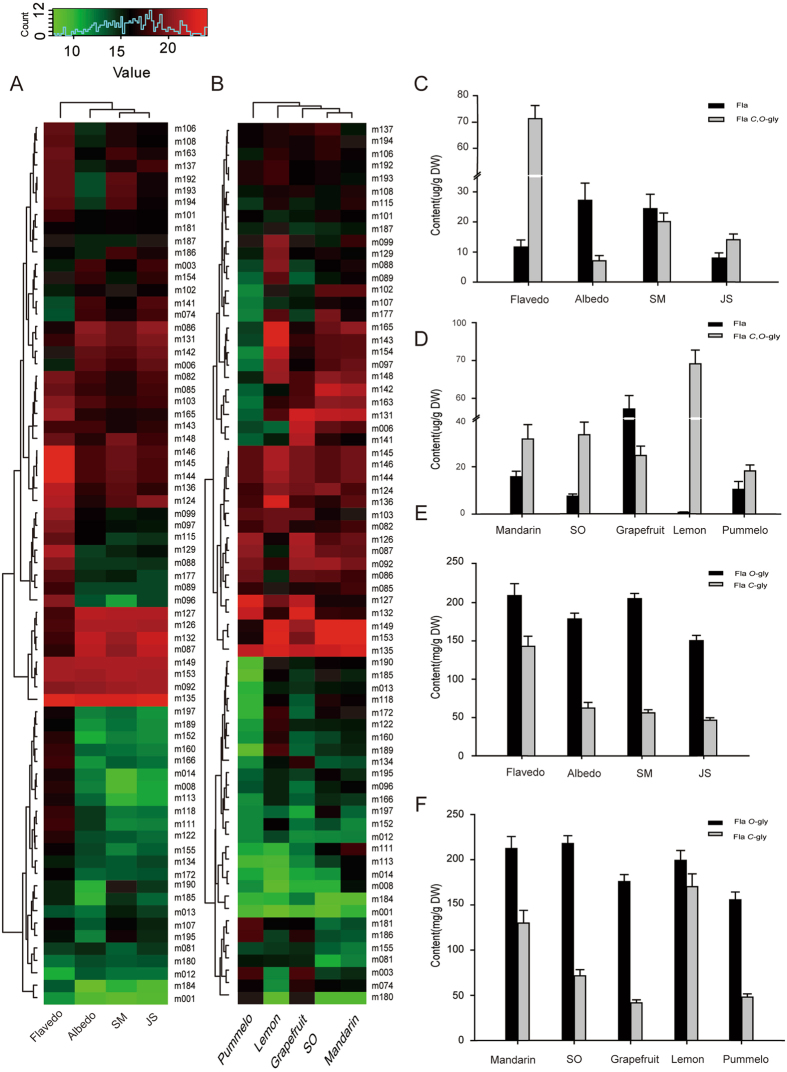
Flavonoids are widely distributed in plants and play important roles in many biological processes. Citrus fruits are rich dietary sources of flavonoids. However, there have been very few reports about the comprehensive metabolic profile and natural diversity of flavonoids in different tissues of various Citrus cultivars. In this study, based on the 7416 metabolic signals detected with non-targeted metabolomics approach, Principal Component Analysis revealed the flavedo has the largest differences from other tissues in metabolite levels; as many as 198 flavonoid signals were then detected in 62 Citrus germplasms from 5 species mainly cultivated worldwide, while 117 flavonoids were identified, including 39 polymethoxylated flavonoids (PMFs), 7 flavones, 10 C-O-glycosylflavonoids, 44 O-glycosylflavonoids, 10 C-glycosylflavonoids and 7 newly annotated O-glycosylpolymethoxylated flavonoids. Tissue-specific accumulations were observed: O-glycosylated flavonoids were abundant in all fruit tissues, while PMFs were accumulated preferentially in the flavedo. Among different species, mandarins had the highest levels of PMFs and O-glycosylpolymethoxylated flavonoids, followed by sweet oranges. Based on the flavonoid profiles, 62 germplasms could be clearly grouped into five distinct clusters via hierarchical clustering analysis, which were perfectly matched with their species, with sweet oranges and mandarins clustering closely and being further away from other three species.
类黄酮广泛分布于植物中,在许多生物过程中发挥着重要作用。柑橘类水果是类黄酮的丰富膳食来源。然而,关于不同柑橘品种不同组织中类黄酮的综合代谢谱和天然多样性,鲜有报道。在这项研究中,基于非靶向代谢组学方法检测到的 7416 种代谢物信号,主成分分析显示,果皮与其他组织在代谢物水平上的差异最大;然后在全世界主要栽培的 5 个种的 62 个柑橘种质中检测到 198 种类黄酮信号,鉴定出 117 种类黄酮,包括 39 种多甲氧基黄酮(PMFs)、7 种黄酮、10 种 C-O-糖苷黄酮、44 种 O-糖苷黄酮、10 种 C-糖苷黄酮和 7 种新注释的 O-糖苷多甲氧基黄酮。观察到组织特异性积累:O-糖苷类黄酮在所有果实组织中含量丰富,而 PMFs 则优先积累在果皮中。在不同的物种中,橘柚类具有最高水平的 PMFs 和 O-糖苷多甲氧基黄酮,其次是甜橙。基于类黄酮图谱,通过层次聚类分析,62 个种质可分为五个明显的聚类,与它们的物种完全匹配,甜橙和橘柚类聚类紧密,与其他三个物种的距离较远。