Meng Yuqing, Du Zhiyong, Li Yan, Wang Lichao, Gao Peng, Gao Xiaoyan, Li Chun, Zhao Mingbo, Jiang Yong, Tu Pengfei, Guo Xiaoyu
State Key Laboratory of Natural and Biomimetic Drugs, School of Pharmaceutical Sciences, Peking University, Beijing, China.
School of Chinese Material Medica, Beijing University of Chinese Medicine, Beijing, China.
Front Pharmacol. 2018 Jun 25;9:667. doi: 10.3389/fphar.2018.00667. eCollection 2018.
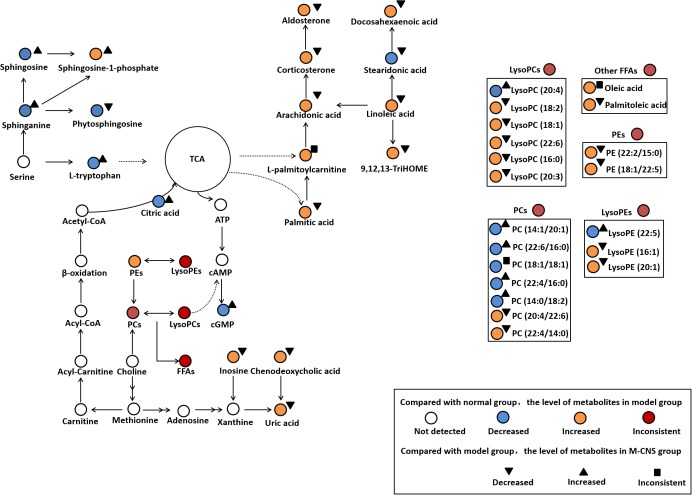
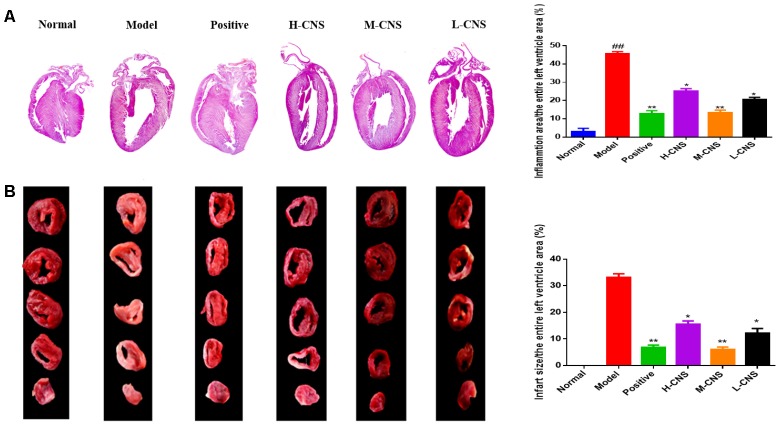
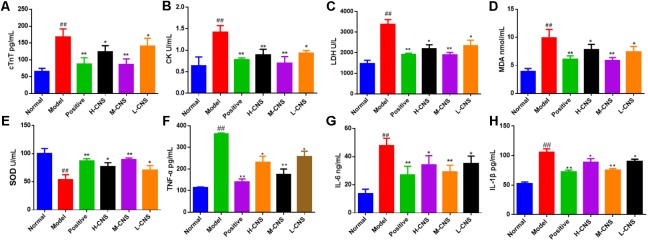
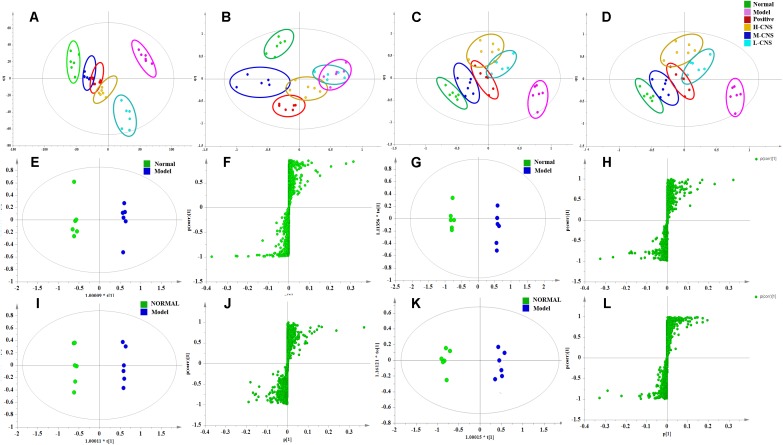
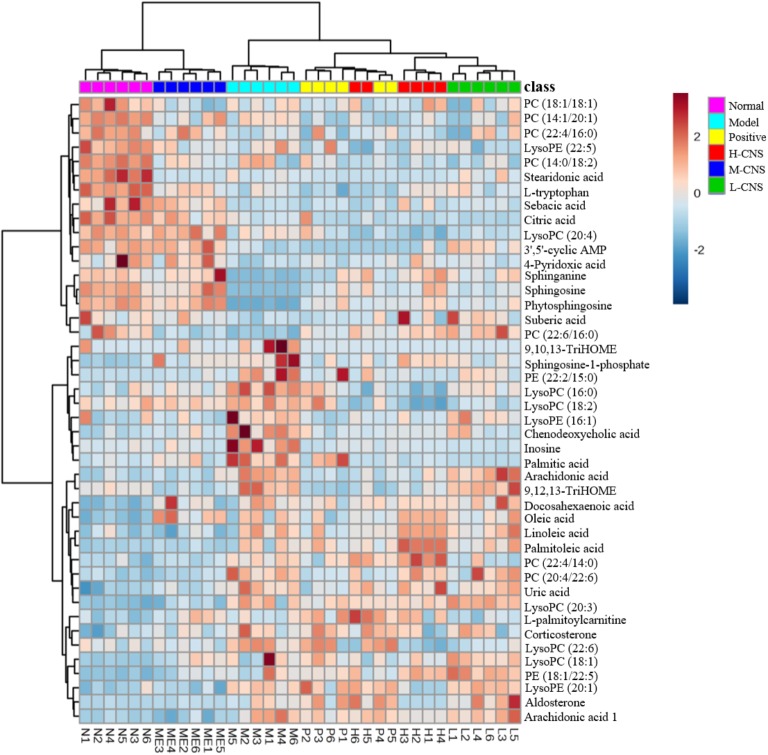
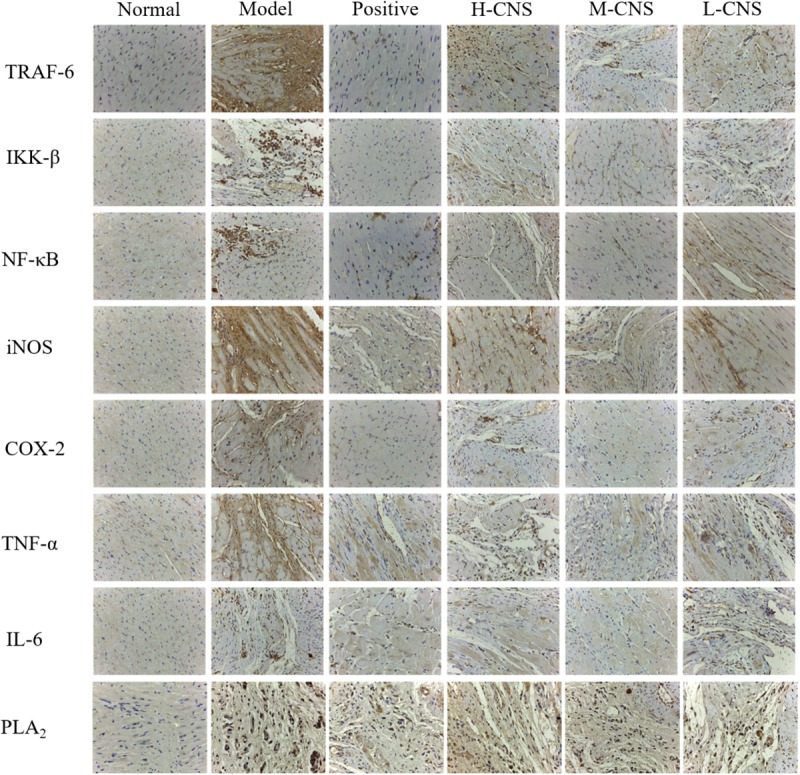
Notoginseng (Sanqi), the roots and rhizomes of and safflower, the flowers of , are widely used traditional Chinese medicines (TCMs) for the treatment of cardiovascular diseases. Positive evidences have fueled growing acceptance for cardioprotective effects of the combination of the notoginseng total saponins and safflower total flavonoids (CNS) against myocardial ischemia (MI). However, the underlying cardioprotective mechanisms of CNS are still obscured. Metabolomics is a comprehensive tool for investigating biological mechanisms of disease, monitoring therapeutic outcomes, and advancing drug discovery and development. Herein, we investigated the cardioprotective effects of CNS on the isoproterenol (ISO)-induced MI rats by using plasma and urine metabolomics based on ultra-performance liquid chromatography coupled with quadrupole-time of flight mass spectrometry (UPLC-Q-TOF/MS) and multiple pharmacodynamics approaches. The results showed that pretreatment with CNS could attenuate the cardiac injury resulting from ISO, as evidenced by decreasing the myocardial infarct size, converting the echocardiographic, histopathological, and plasma biochemical abnormalities, and reversing the perturbations of plasma and urine metabolic profiles, particularly for the 55.0 mg/kg dosage group. In addition, 44 metabolites were identified as the potential MI biomarkers, mainly including a range of free fatty acids (FFAs), sphingolipids, and glycerophospholipids. CNS pretreatment group may robustly ameliorate these potential MI-related biomarkers. The accumulation of LysoPCs and FFAs, caused by PLA, may activate NF-κB pathway and increase proinflammatory cytokines. However, our results showed that CNS at 55.0 mg/kg dosage could maximally attenuate the NF-κB signaling pathway, depress the expressions of TNF-α, IL-6, IL-1β, and PLA. The results suggested that the anti-inflammatory property of CNS may contribute to its cardioprotection against MI. Our results demonstrate that the integrating of metabolomics with pharmacodynamics provides a reasonable approach for understanding the therapeutic effects of TCMs and CNS provide a potential candidate for prevention and treatment of MI.
三七、红花,以及藏红花的花,都是广泛用于治疗心血管疾病的传统中药。已有确凿证据表明,三七总皂苷与红花总黄酮(CNS)联合使用对心肌缺血(MI)具有心脏保护作用,这使得人们对其的接受度不断提高。然而,CNS潜在的心脏保护机制仍不清楚。代谢组学是一种用于研究疾病生物学机制、监测治疗效果以及推动药物研发的综合工具。在此,我们通过基于超高效液相色谱-四极杆飞行时间质谱联用(UPLC-Q-TOF/MS)的血浆和尿液代谢组学以及多种药效学方法,研究了CNS对异丙肾上腺素(ISO)诱导的MI大鼠的心脏保护作用。结果表明,CNS预处理可减轻ISO所致的心脏损伤,表现为心肌梗死面积减小、超声心动图、组织病理学和血浆生化异常得到改善,以及血浆和尿液代谢谱的紊乱得到逆转,尤其是55.0 mg/kg剂量组。此外,鉴定出44种代谢物为潜在的MI生物标志物,主要包括一系列游离脂肪酸(FFA)、鞘脂和甘油磷脂。CNS预处理组可显著改善这些潜在的MI相关生物标志物。由磷脂酶A(PLA)引起的溶血磷脂酰胆碱(LysoPC)和FFA的积累可能激活核因子κB(NF-κB)通路并增加促炎细胞因子。然而,我们的结果表明,55.0 mg/kg剂量的CNS可最大程度地减弱NF-κB信号通路,抑制肿瘤坏死因子-α(TNF-α)、白细胞介素-6(IL-6)、白细胞介素-1β(IL-1β)和PLA的表达。结果表明,CNS的抗炎特性可能有助于其对MI的心脏保护作用。我们的结果表明,代谢组学与药效学相结合为理解中药的治疗作用提供了一种合理的方法,并且CNS为MI的预防和治疗提供了一个潜在的候选药物。