Department of Immunology and Infectious Diseases, Harvard T.H. Chan School of Public Health, Boston, Massachusetts, USA.
Department of Immunology and Infectious Diseases, Harvard T.H. Chan School of Public Health, Boston, Massachusetts, USA
mBio. 2018 Jul 10;9(4):e00673-18. doi: 10.1128/mBio.00673-18.
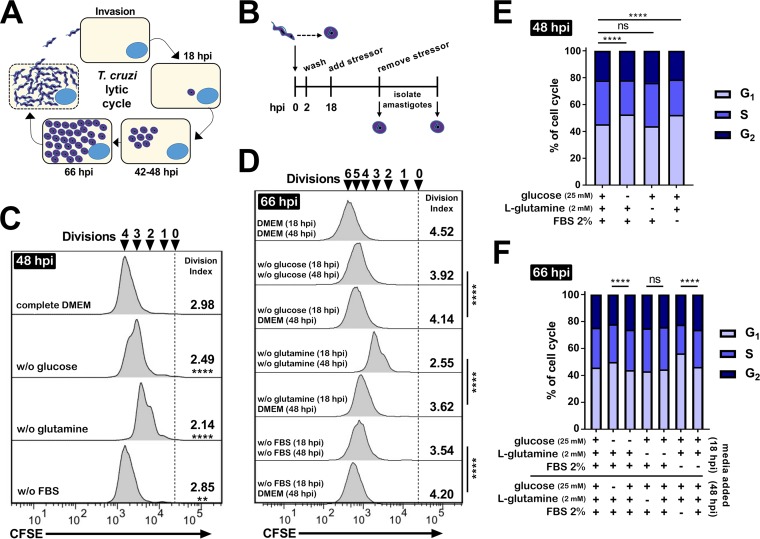
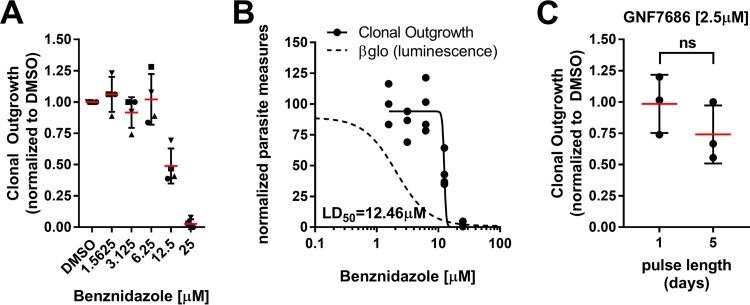
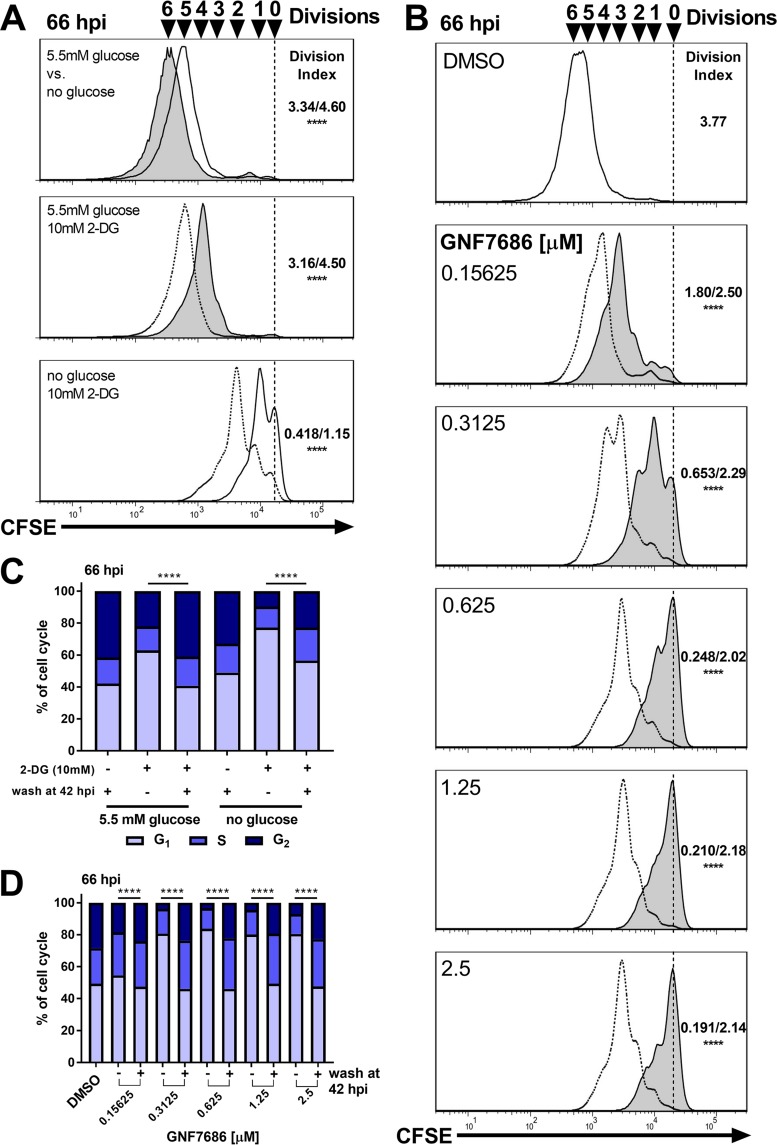
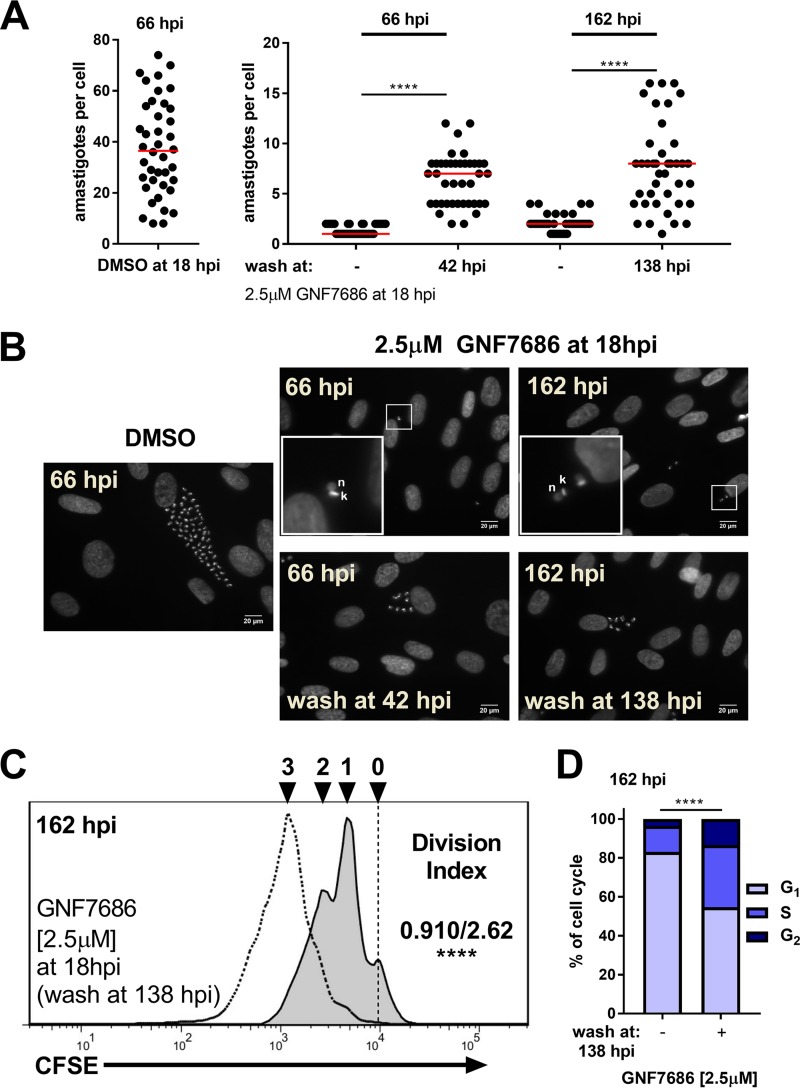
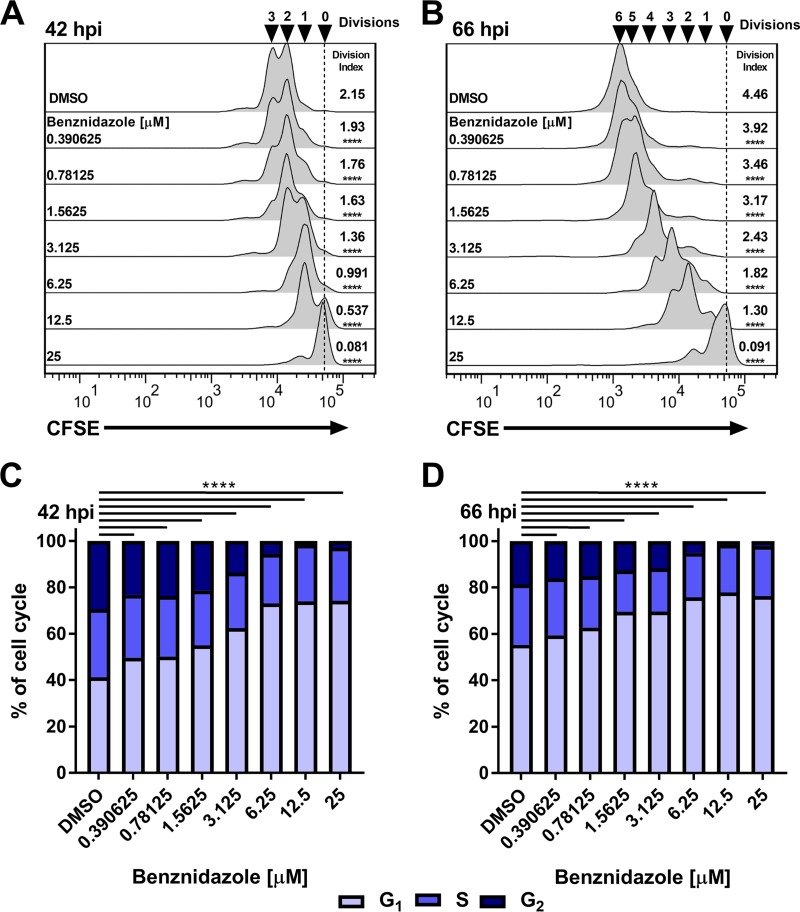
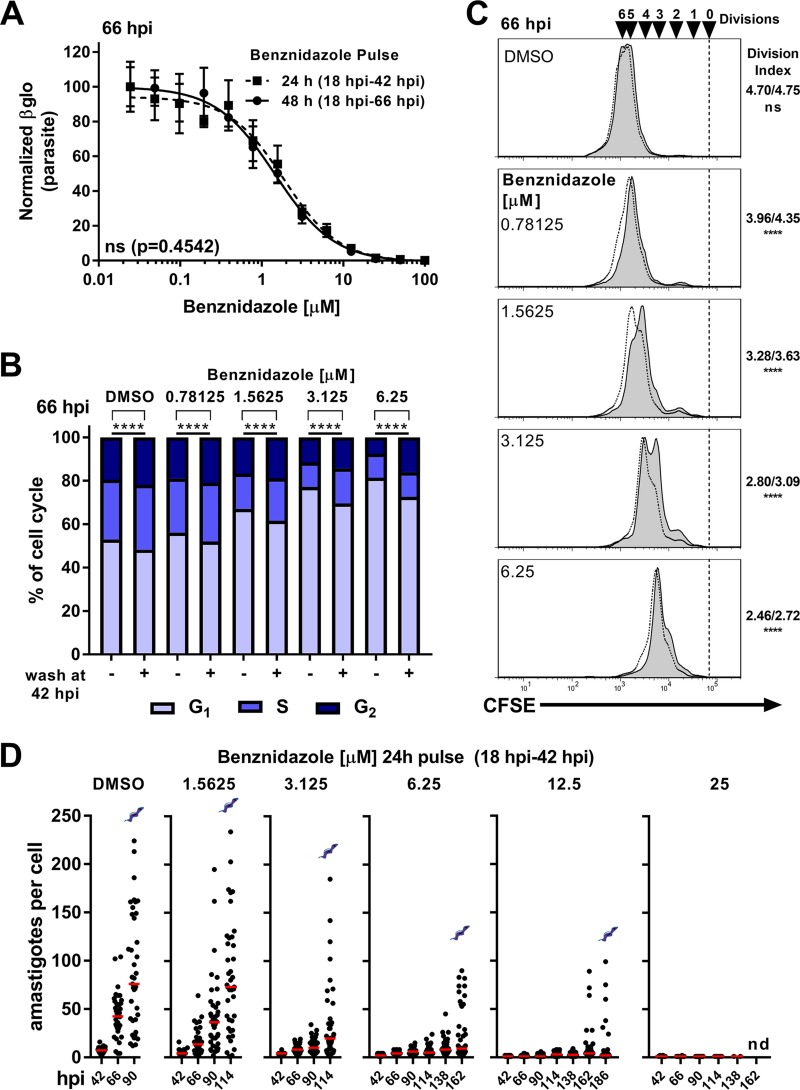
The mammalian stages of the parasite , the causative agent of Chagas disease, exhibit a wide host species range and extensive within-host tissue distribution. These features, coupled with the ability of the parasites to persist for the lifetime of the host, suggest an inherent capacity to tolerate changing environments. To examine this potential, we studied proliferation and cell cycle dynamics of intracellular amastigotes experiencing transient metabolic perturbation or drug pressure in the context of an infected mammalian host cell. Parasite growth plasticity was evident and characterized by rapid and reversible suppression of amastigote proliferation in response to exogenous nutrient restriction or exposure to metabolic inhibitors that target glucose metabolism or mitochondrial respiration. In most instances, reduced parasite proliferation was accompanied by the accumulation of amastigote populations in the G phase of the cell cycle, in a manner that was rapidly and fully reversible upon release from the metabolic block. Acute amastigote cell cycle changes at the G stage were similarly observed following exposure to sublethal concentrations of the first-line therapy drug, benznidazole, and yet, unlike the results seen with inhibitors of metabolism, recovery from exposure occurred at rates inversely proportional to the concentration of benznidazole. Our results show that amastigote growth plasticity is an important aspect of parasite adaptation to stress, including drug pressure, and is an important consideration for growth-based drug screening. Infection with the intracellular parasite can cause debilitating and potentially life-threatening Chagas disease, where long-term parasite persistence is a critical determinant of clinical disease progression. Such tissue-resident amastigotes are refractory to immune-mediated clearance and to drug treatment, suggesting that in addition to exploiting immune avoidance mechanisms, amastigotes can facilitate their survival by adapting flexibly to diverse environmental stressors. We discovered that intracellular amastigotes exhibit growth plasticity as a strategy to adapt to and rebound from environmental stressors, including metabolic blockades, nutrient starvation, and sublethal exposure to the first-line therapy drug benznidazole. These findings have important implications for understanding parasite persistence, informing drug development, and interpreting drug efficacy.
寄生虫的哺乳动物阶段,恰加斯病的病原体,表现出广泛的宿主物种范围和广泛的组织内分布。这些特征,加上寄生虫能够在宿主的一生中持续存在,表明它们具有内在的耐受环境变化的能力。为了研究这种潜力,我们研究了在感染哺乳动物宿主细胞的情况下,经历短暂代谢干扰或药物压力的细胞内无鞭毛体的增殖和细胞周期动态。寄生虫的生长可塑性是显而易见的,其特征是对外源营养限制或暴露于靶向葡萄糖代谢或线粒体呼吸的代谢抑制剂的快速和可逆抑制无鞭毛体的增殖。在大多数情况下,寄生虫增殖的减少伴随着无鞭毛体种群在细胞周期的 G 期的积累,这种方式在从代谢阻断中释放后迅速而完全可逆。在暴露于一线治疗药物苯并咪唑的亚致死浓度下,也观察到急性无鞭毛体细胞周期在 G 期的变化,但与代谢抑制剂的结果不同,从暴露中恢复的速度与苯并咪唑的浓度成反比。我们的研究结果表明,无鞭毛体的生长可塑性是寄生虫适应应激(包括药物压力)的一个重要方面,也是基于生长的药物筛选的一个重要考虑因素。细胞内寄生虫的感染会导致虚弱和潜在的致命性恰加斯病,其中寄生虫的长期持续存在是临床疾病进展的关键决定因素。这种组织驻留的无鞭毛体对免疫介导的清除和药物治疗具有抗性,这表明无鞭毛体除了利用免疫逃避机制外,还可以通过灵活适应各种环境应激来促进其生存。我们发现,细胞内无鞭毛体表现出生长可塑性,作为一种适应和从环境应激中反弹的策略,包括代谢阻断、营养饥饿和亚致死暴露于一线治疗药物苯并咪唑。这些发现对于理解寄生虫的持续存在、为药物开发提供信息以及解释药物疗效具有重要意义。