Department of Electronics, Graduate School of Engineering, Tohoku Institute of Technology, 35-1 Yagiyama Kasumicho, Taihaku-ku, Sendai, Miyagi, 982-8577, Japan.
Advanced Institute for Materials Research, Tohoku University, 2-1-1 Katahira, Aoba-ku, Sendai, Miyagi, 982-8577, Japan.
Sci Rep. 2018 Jul 10;8(1):10416. doi: 10.1038/s41598-018-28835-7.
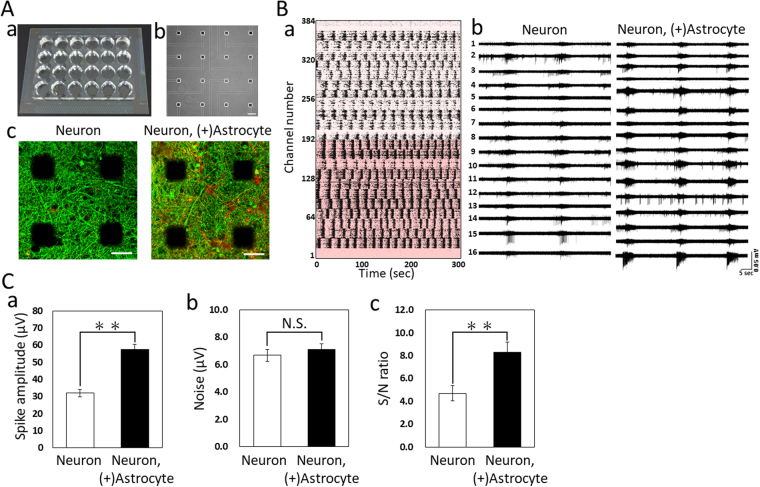
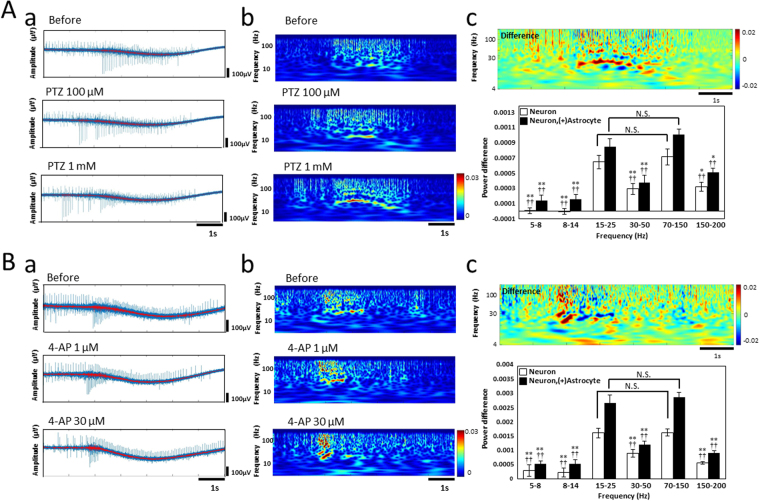
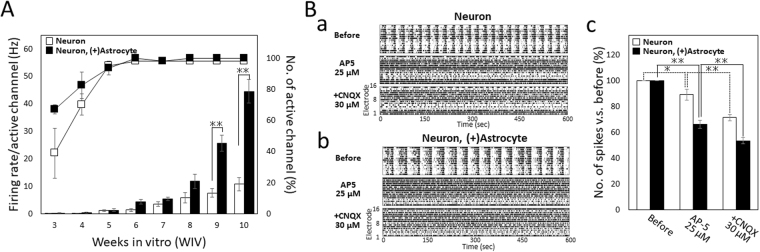
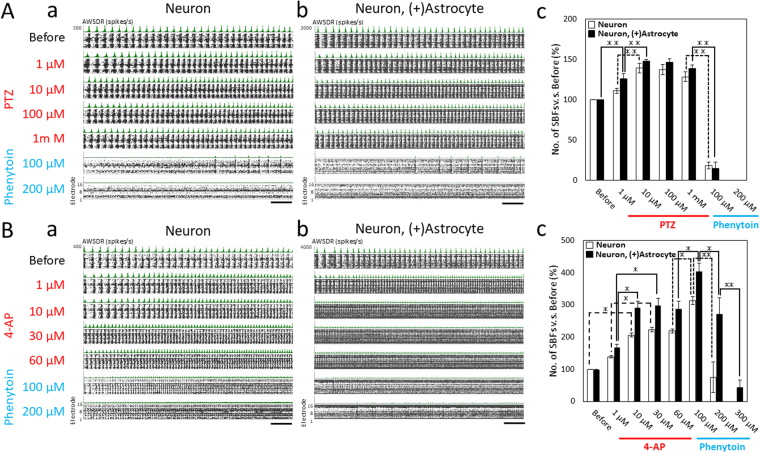
Functional evaluation assays using human induced pluripotent stem cell (hiPSC)-derived neurons can predict the convulsion toxicity of new drugs and the neurological effects of antiepileptic drugs. However, differences in responsiveness depending on convulsant type and antiepileptic drugs, and an evaluation index capable of comparing in vitro responses with in vivo responses are not well known. We observed the difference in synchronized burst patterns in the epileptiform activities induced by pentylentetrazole (PTZ) and 4-aminopryridine (4-AP) with different action mechanisms using multi-electrode arrays (MEAs); we also observed that 100 µM of the antiepileptic drug phenytoin suppressed epileptiform activities induced by PTZ, but increased those induced by 4-AP. To compare in vitro results with in vivo convulsive responses, frequency analysis of below 250 Hz, excluding the spike component, was performed. The in vivo convulsive firing enhancement of the high γ wave and β wave component were observed remarkably in in vitro hiPSC-derived neurons with astrocytes in co-culture. MEA measurement of hiPSC-derived neurons in co-culture with astrocytes and our analysis methods, including frequency analysis, appear effective for predicting convulsion toxicity, side effects, and their mechanism of action as well as the comparison of convulsions induced in vivo.
使用人诱导多能干细胞(hiPSC)衍生神经元进行功能评估测定可以预测新药物的惊厥毒性和抗癫痫药物的神经影响。然而,根据致惊厥剂类型和抗癫痫药物的反应性差异,以及能够将体外反应与体内反应进行比较的评估指标尚不清楚。我们使用多电极阵列(MEA)观察了具有不同作用机制的戊四氮(PTZ)和 4-氨基吡啶(4-AP)诱导的癫痫样活动中同步爆发模式的差异;我们还观察到 100µM 的抗癫痫药苯妥英抑制了 PTZ 诱导的癫痫样活动,但增加了 4-AP 诱导的癫痫样活动。为了将体外结果与体内惊厥反应进行比较,对低于 250Hz 的频率进行了分析,排除了尖峰成分。在共培养的星形胶质细胞中,hiPSC 衍生神经元的体内高γ波和β波成分的惊厥放电增强明显。与星形胶质细胞共培养的 hiPSC 衍生神经元的 MEA 测量和我们的分析方法,包括频率分析,似乎可有效预测惊厥毒性、副作用及其作用机制,以及体内诱导的惊厥的比较。